A step-by-step method for placing sofas, chairs, and tables in compact living rooms so you get clear walkways, cozy conversation zones, and a bigger-feeling ...
Havitza Home
5 Essentials for Decorating a Narrow Entryway
Turn a tight entryway into a polished welcome with five smart essentials: a mirror that bounces light, a slim console, layered lighting, a tidy drop zone, and a runner that warms everything up.

Clara Jenkins
Clara Jenkins is a former theater set designer turned interior styling expert with over a decade of experience transforming everyday spaces into beautiful sanctuaries. Through her work at havitza.com, she shares practical styling tips, accessible furniture layouts, and inspiring color palettes to help anyone create a home they truly love.
Published October 17, 2026
Updated October 17, 2026
If your entryway is narrow, you are not alone. So many homes and apartments have that long hallway moment where you are juggling keys, bags, shoes, and mail while trying not to scrape the wall with a tote. The good news is that a tight foyer can be easier to style than a big one, because a few strategic choices can make it feel instantly finished.
I come at this like a set designer. In theater, we used “first read” elements to tell the audience where to look the second the curtain went up. Your entryway works the same way. You do not need a lot of furniture. You need the right five elements, placed with intention.
1) A mirror that works hard
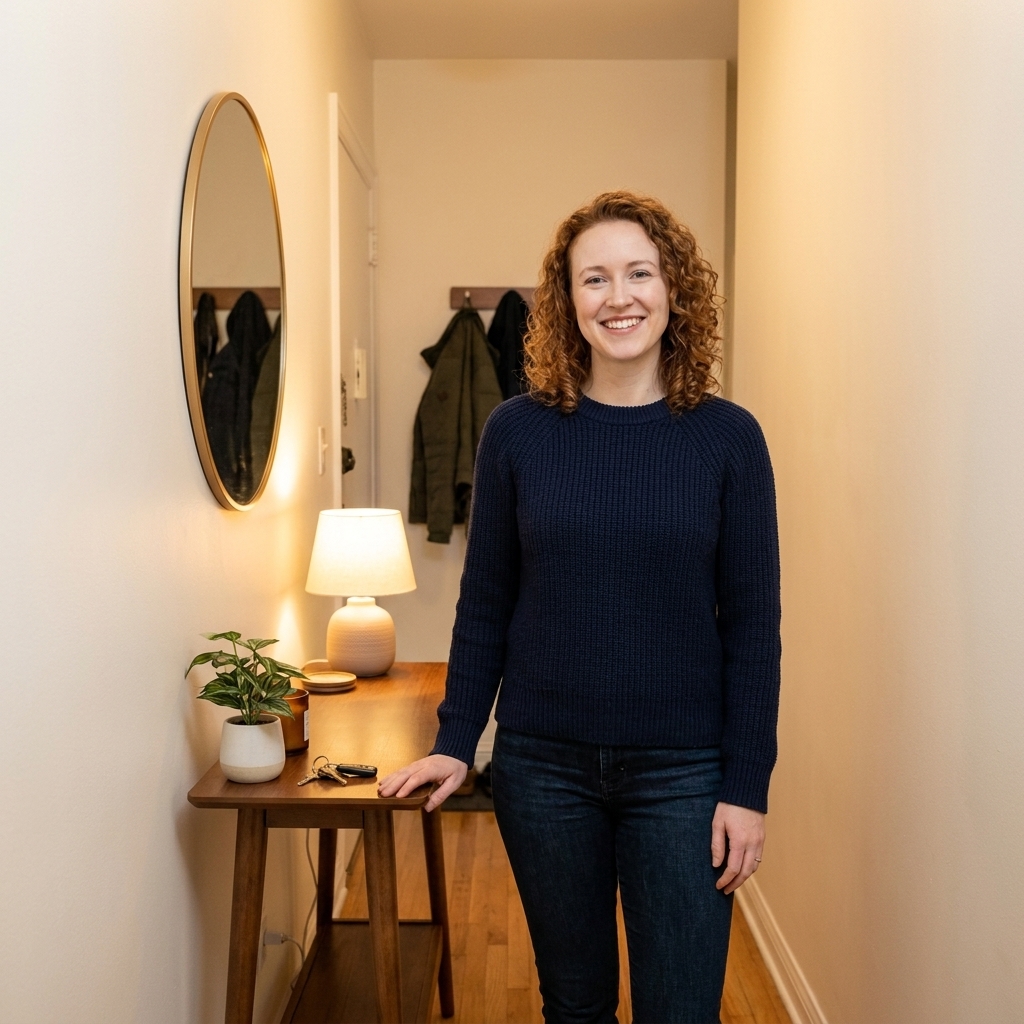
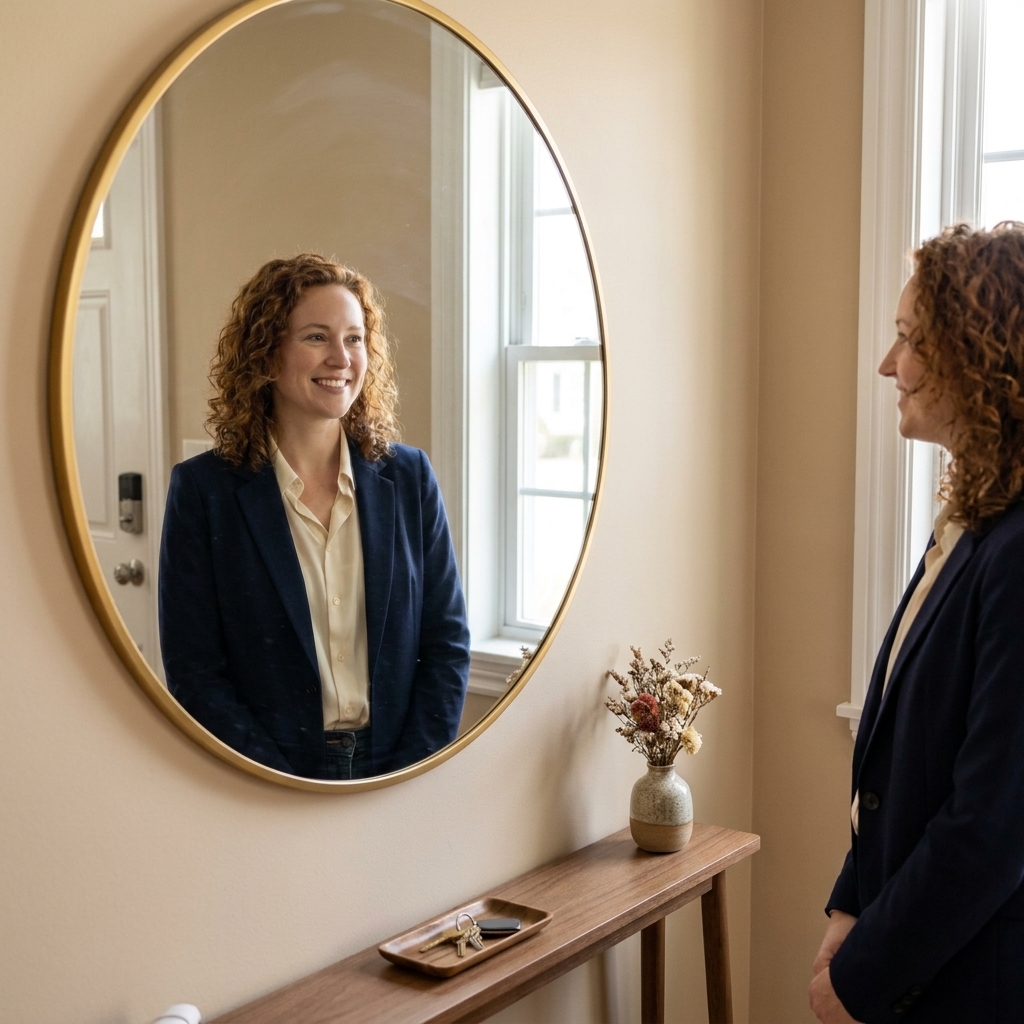
A mirror is one of the quickest ways to make a narrow entry feel brighter and more open, because it can bounce existing light around the space. It also adds function, because you actually get a last look before you head out the door.
How to choose the right mirror
- Go larger than you think: A bigger mirror reads calmer and more intentional than a tiny one floating on the wall.
- Round mirrors soften tight hallways: If your entry has lots of sharp corners, a round mirror adds instant ease.
- Arched mirrors feel architectural: They create a “designed” moment even in a rental.
Where to place it
Hang your mirror centered above your console or shelf, with the bottom edge roughly 6 to 10 inches above the surface. If you do not have room for a console, anchor the mirror over a narrow wall hook rail or a slim floating ledge instead.
Clara tip: Place the mirror where it can catch light from a nearby window or a lamp. The goal is bounce, not just reflection.
Safety note: If you are leaning a large mirror, secure it. If it is hanging, use the right wall anchors for the weight.
2) A slim console or ledge
The mistake I see most often in tight foyers is choosing furniture that is too deep. You want a landing spot, not a roadblock.
What to look for
- Depth: Aim for about 8 to 14 inches deep if you can. In very tight spaces, a floating ledge around 4 to 6 inches deep can still work beautifully.
- Leggy silhouettes: Furniture with open legs feels lighter than bulky closed storage.
- Rounded edges: If your hallway is a squeeze, curved corners are kinder to hips and elbows.
Check the swing first
Before you buy anything, open your front door and any nearby closet doors and watch the path. Make sure your console does not fight the door swing, and keep light switches and thermostats easy to reach.
Style it in three beats
Think like a set designer arranging props so the story reads instantly. On your console, aim for three simple beats:
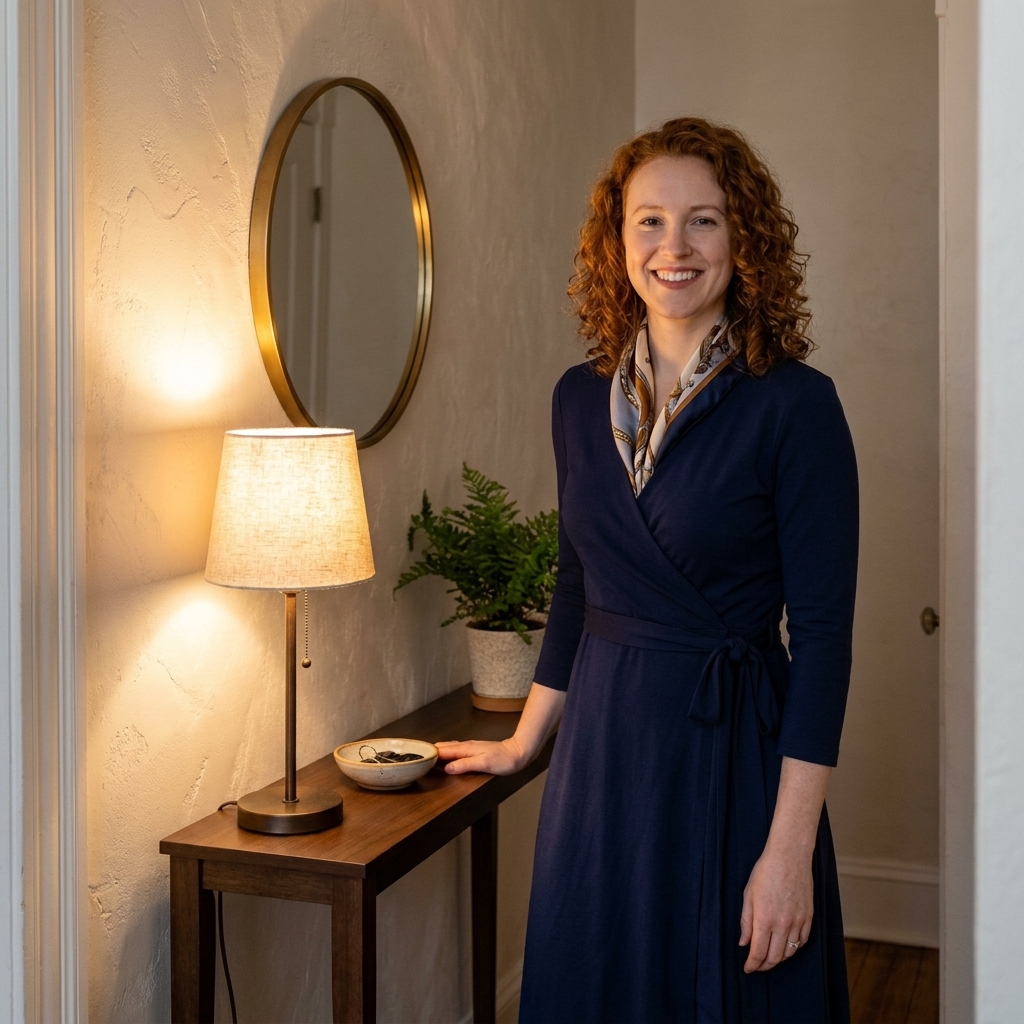
- Height: a lamp or a tall vase with branches
- Reflection: your mirror above
- Function: a small catchall dish for keys
Leave negative space. In a narrow entry, empty space is part of the design.
3) Warm, layered lighting
Narrow entryways often have one basic ceiling light or none at all. Lighting is what turns “hallway” into “welcome.”
Layer the glow
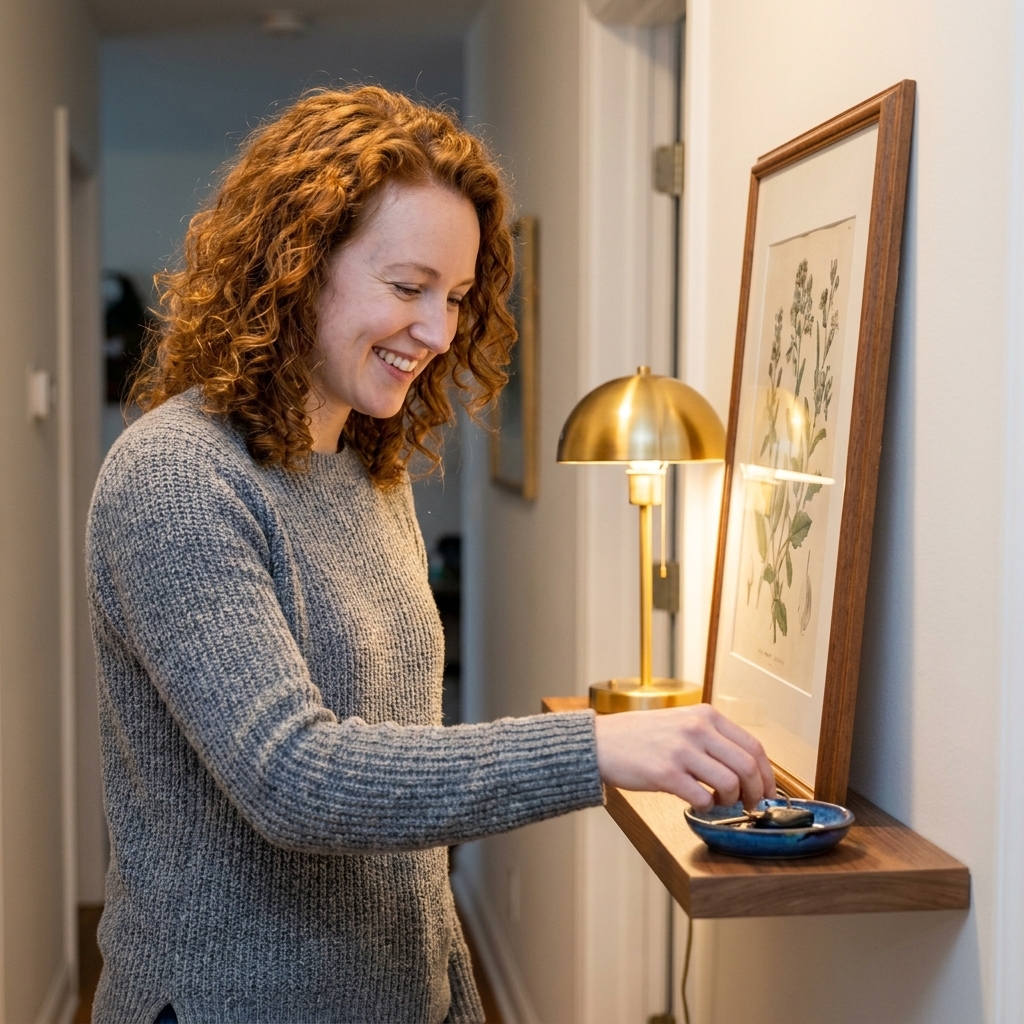
- Table lamp on a console: This is my favorite for instant warmth and a flattering, homey vibe.
- Plug-in sconce: Perfect when floor space is precious. Many plug-in sconces install with minimal tools.
- Rechargeable picture light: If you have art, a small light above it adds that boutique-hotel polish.
Choose warm bulbs in the 2700K to 3000K range for a cozy feel. If your walls are cool-toned, warm light makes everything feel more inviting and less stark.
Clara tip: Put your entry lamp on a timer or smart plug. Walking into a softly lit home is a tiny luxury you will feel every day.
4) A drop zone that lasts
A narrow entry lives or dies by containment. When there is no system, everything becomes the system, including the floor.
Build your drop zone in layers
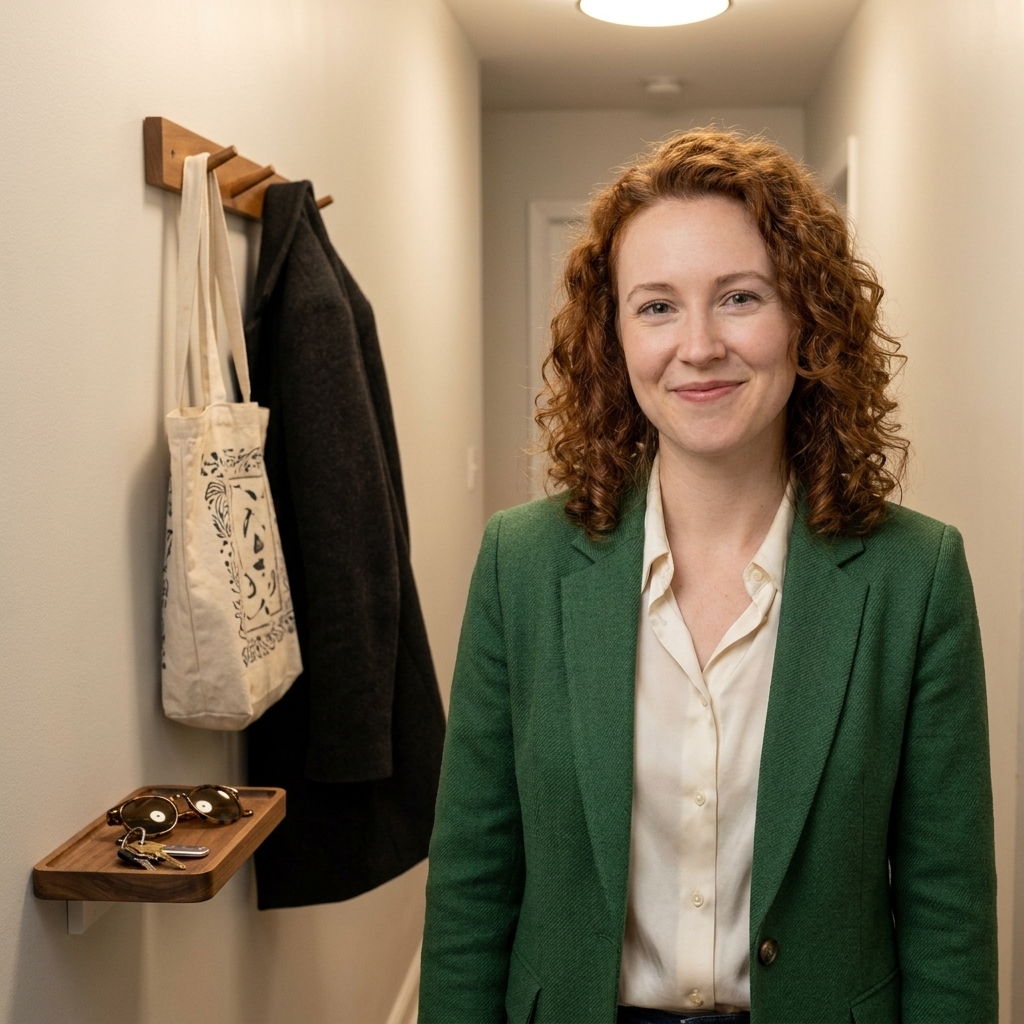
- Wall hooks: Use a row of sturdy hooks for everyday bags, a dog leash, and the one jacket you actually wear. Install them into studs when you can, or use proper anchors rated for the weight.
- A tray or bowl: Keep keys, earbuds, and sunglasses from wandering. One vessel. One home.
- Mail control: A slim wall file or a lidded box keeps paper from multiplying.
- Shoe solution: If shoes pile up, choose a vertical shoe cabinet, a low-profile shoe rack, or one pretty basket for “today’s pair.”
Make it rental friendly
For lightweight pieces like small frames, try removable hanging strips rated for the item’s weight and be mindful of paint. For anything heavy or frequently tugged, like hooks for bags, treat it like hardware and use anchors or studs.
Make it look intentional
The secret is choosing containers that match each other. Natural woven baskets, black metal trays, warm wood bowls, and ceramic catchalls all work. Pick a family and repeat it. Visual harmony reads as calm, even when life is busy.
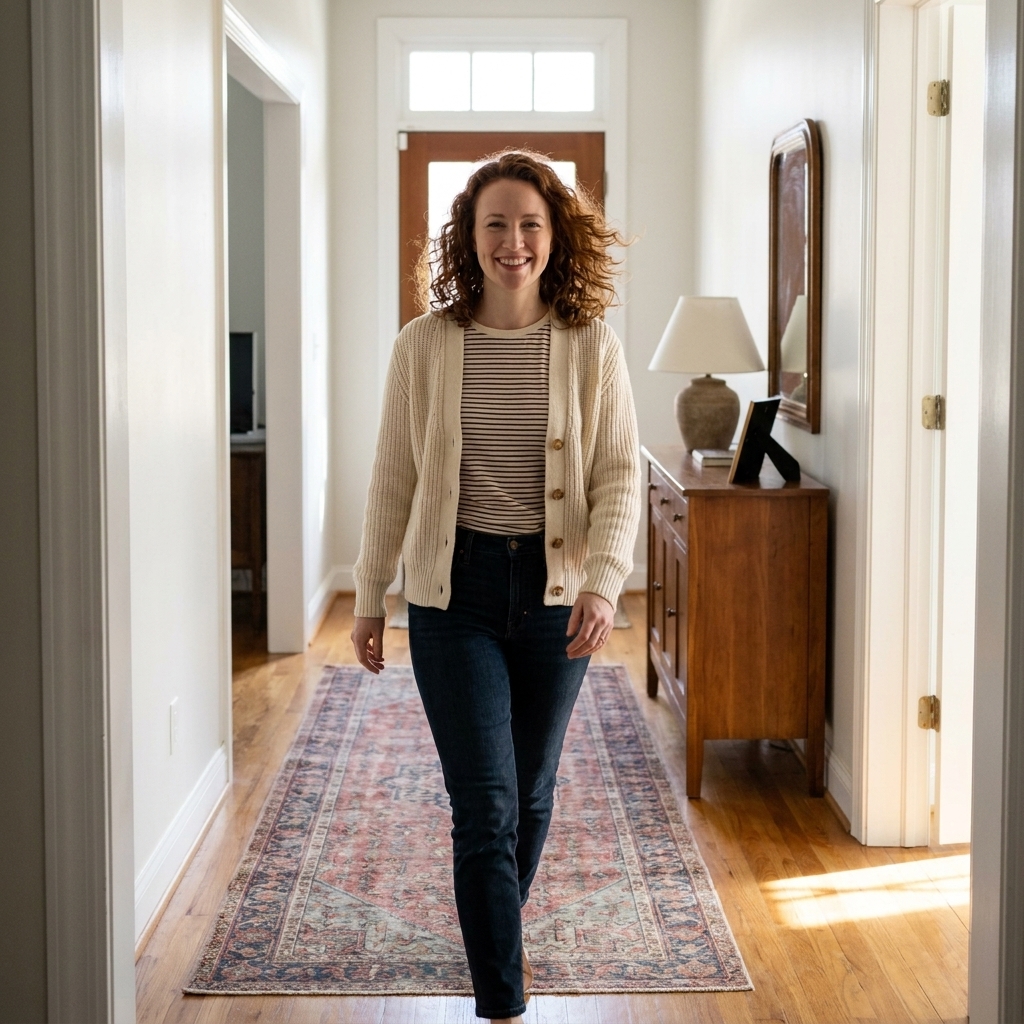
5) A runner rug that finishes it
If there is one thing that makes a narrow entry feel finished, it is a runner. It adds warmth, quiets echoes, protects your floors, and visually guides you into the home.
Size and placement basics
- Leave breathing room: Aim to show a few inches of floor on each side so the runner does not feel wall-to-wall.
- Go longer rather than wider: Length emphasizes the architecture and makes the space feel purposeful.
- Use a rug pad: In a high-traffic entry, it keeps the rug from creeping and makes it feel plusher underfoot.
- Mind the door: If the front door swings over the rug, choose a low-pile option so it clears easily.
Materials that hold up
Entry rugs take a beating. Wool is a classic for durability and looks better over time. Polypropylene is practical and easy-care. Washable runners are a lifesaver in muddy seasons or pet households.
Patterns that work in tight spaces
Vintage-style rugs are my weakness for a reason. They hide everyday grit and add instant character. Look for:
- Subtle pattern: Great if your walls or art are bold
- Classic Persian-inspired motifs: Timeless and forgiving
- Low pile or washable options: Especially if you have pets or messy weather
Putting it together
If you want a quick plan you can follow this weekend, here is the order I use when styling tight foyers:
- Start with the runner to set the palette and soften the space.
- Add the slim console or ledge for function.
- Hang the mirror to open it up visually.
- Bring in warm lighting so it feels welcoming at any hour.
- Finish with a drop zone system that keeps clutter from creeping in.
Optional but worth it in a narrow hall: protect your walls. A washable, scrubbable paint finish can save you from constant touch-ups, and a simple rail or wainscoting adds charm while taking the hits.
That is it. Five elements, one clear walking path, and an entry that feels like a deep breath instead of a bottleneck.
FAQ
How narrow is too narrow for a console table?
As a rule of thumb, designers often aim for about 30 to 36 inches of clear walkway in a main path. If you cannot keep at least around 30 inches once the console is in, it will likely feel tight. In that case, skip the console and use a floating ledge or wall-mounted pocket shelf instead.
What if my entry has no natural light?
Lean into layered lighting. A warm lamp plus a plug-in sconce can make the space feel intentionally cozy, not cave-like. Choose lighter wall art and a mirror to keep it from feeling heavy.
How do I keep a narrow entry from looking cluttered?
Limit surfaces and containers. One tray for small items, one hook area for daily carry, one shoe solution. When each category has a home, the entry stays visually quiet.