A former set designer’s guide to making open shelving beautiful and functional, with shelf formulas, color tricks, safety notes, and real-life storage solu...
Havitza Home
Laundry Room Makeovers for Small Spaces
Make your small laundry room feel bigger and work harder with peel-and-stick wallpaper, hidden cabinetry, smart drying racks, and storage ideas that still look beautiful.

Clara Jenkins
Clara Jenkins is a former theater set designer turned interior styling expert with over a decade of experience transforming everyday spaces into beautiful sanctuaries. Through her work at havitza.com, she shares practical styling tips, accessible furniture layouts, and inspiring color palettes to help anyone create a home they truly love.
Published October 17, 2026
Updated October 17, 2026
My theater brain will always see a laundry room as a “backstage” space. It is where the real work happens, the doors are usually closed, and the lighting is often… not kind. But backstage still deserves a set that functions beautifully. When you treat your laundry zone like a tiny stage, you start making choices that support the daily choreography: sorting, pretreating, washing, drying, folding, hanging, and getting it all back where it belongs.
This is a makeover roadmap for small utility spaces, with the three big upgrades that change everything: peel-and-stick wallpaper for instant personality, hidden cabinetry to calm the visual noise, and functional drying racks that do not hijack the whole room.
Start With a 10-Minute Space Audit
Before you buy anything, figure out what your laundry room needs to do for you. Small rooms feel frustrating when the workflow is fighting you, not because you lack square footage.
Ask these four questions
- Where does the dirty laundry land? Hamper, basket stack, floor pile (no shame, just information).
- Where do you pretreat and sort? If the answer is “wherever I can,” you likely need a small counter or a pull-out surface.
- Where does clean laundry pause? Folding zone, hanging zone, or “I’ll deal with it later” zone.
- What is always out? Detergent bottles, stain spray, dryer sheets, lint roller, pet hair tools, iron, steamer.
Circle the pain point that happens most often. That is your makeover priority. In tiny rooms, the best upgrades fix one recurring annoyance, then make it look intentional.
Peel-and-Stick Wallpaper: Fast Style
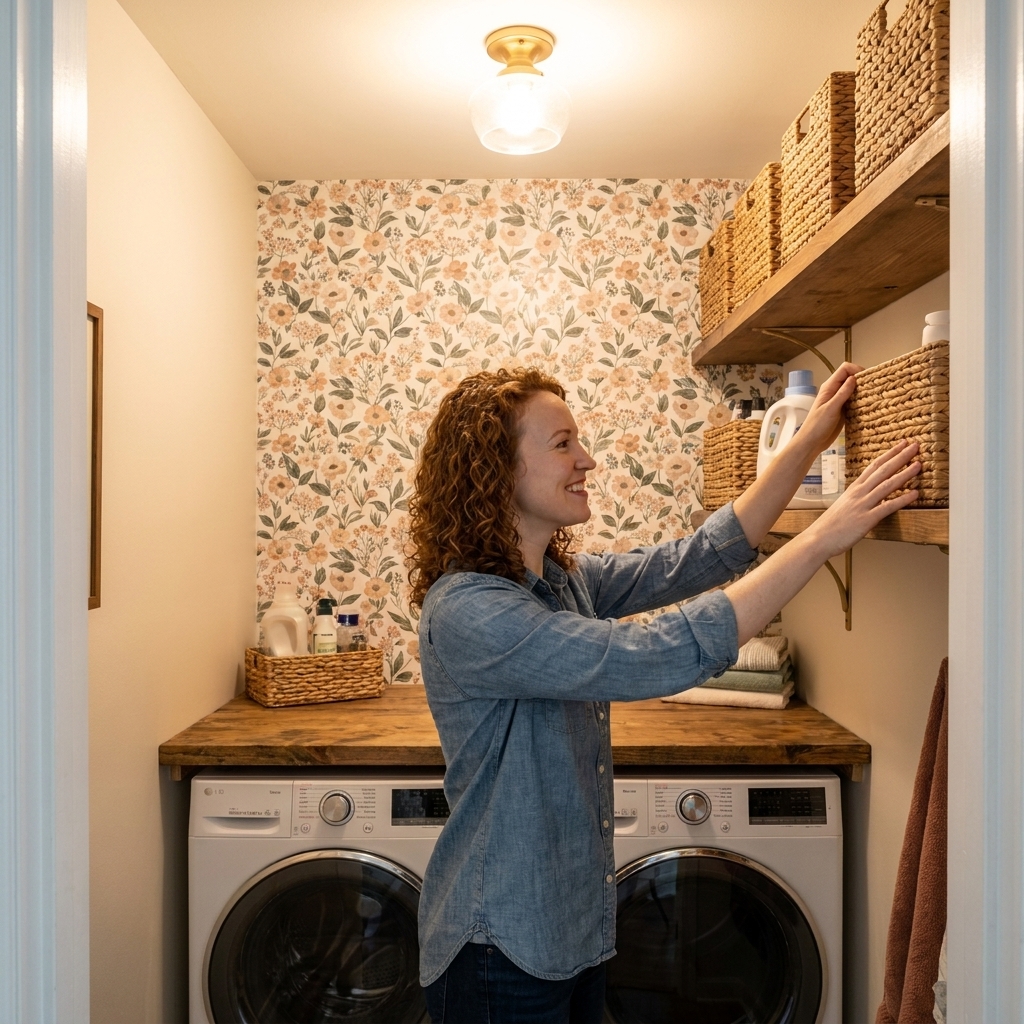
If you only do one aesthetic change, make it wallpaper. Peel-and-stick is basically set design magic for real life: dramatic impact, low commitment, and you can choose a pattern that sets the mood every time you walk in.
Quick reality check: performance is product-dependent. Vinyl removable wallpaper typically handles utility spaces better than delicate, fabric-like papers, but humidity and heat still matter. If your laundry room runs damp, prioritize ventilation and choose a paper rated for bathrooms or kitchens.
Where wallpaper works best
- Behind open shelving to make baskets and bottles feel curated instead of cluttered.
- The wall above the machines if you have a simple backsplash-height area and want a punch of pattern.
- One “moment” wall behind a hanging bar or drying rack, so it reads as decor, not utility.
Patterns that make small rooms feel bigger
- Tight, repeating prints (mini florals, small geometrics) create visual rhythm without overwhelming.
- Vertical motifs (thin stripes, climbing vines) pull the eye up and make ceilings feel taller.
- Soft, warm neutrals hide scuffs and lint better than stark white while still feeling clean.
Set-designer tip: Laundry rooms have humidity swings. Clean walls thoroughly, let them dry, and press wallpaper down firmly with a smoothing tool. If your machines vibrate, make sure corners are well sealed so they do not lift over time.
Another important tip: Do not apply peel-and-stick over fresh paint. Many paints need time to fully cure (often 2 to 4 weeks, depending on the product). Removable wallpaper can also be tougher on flat or matte paint during removal, so if your walls are very matte, test a small hidden section first.
Hidden Cabinetry: Quiet the Clutter
Most laundry rooms look messy for one reason: the supplies are shaped like chaos. Bright bottles, mismatched tools, and stacks of things that do not have a true home. Hidden cabinetry is not about being fancy. It is about giving your eyes a place to rest.
Three hidden-storage moves
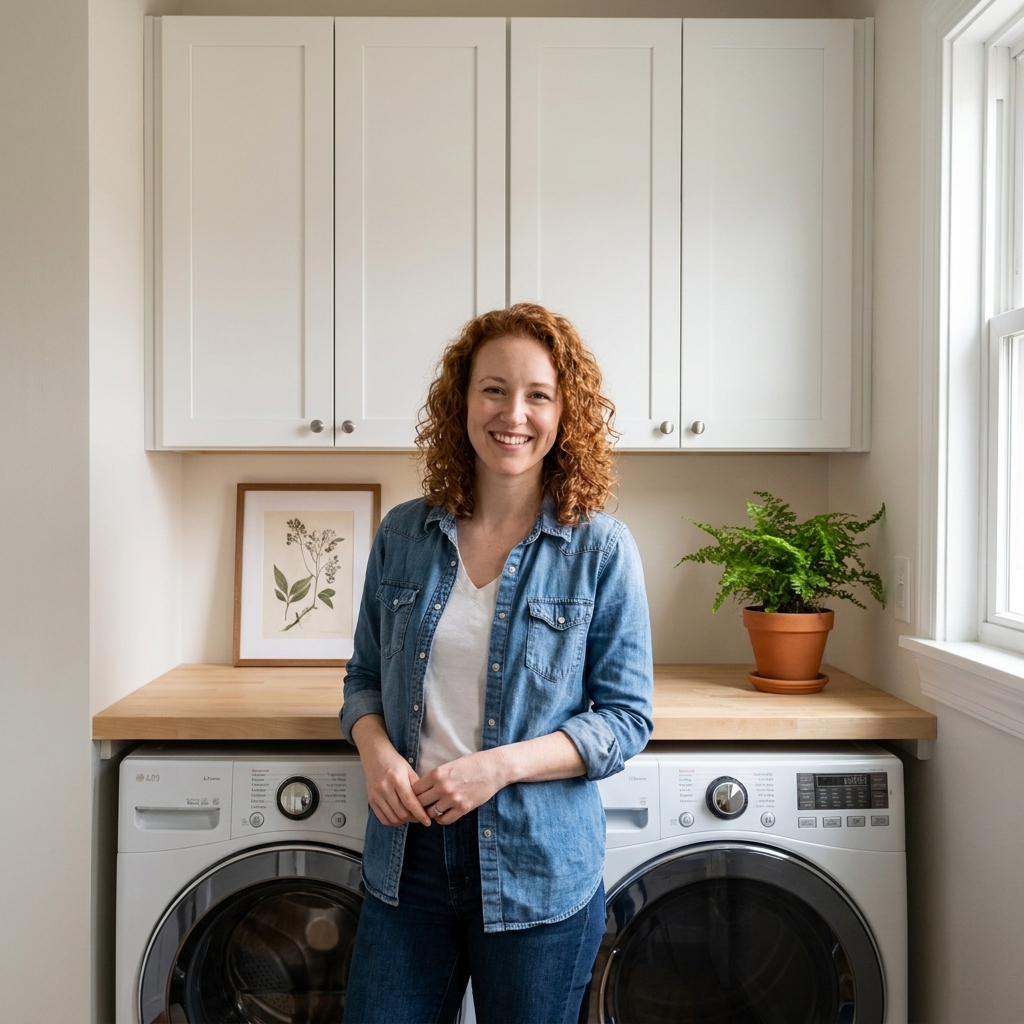
- Over-machine cabinets: Even shallow uppers can swallow a surprising amount. Depth depends on your clearance and any door swing, but 10 to 12 inches is a useful target in tight rooms. Add a small under-cabinet light strip and it will feel custom.
- A tall “broom closet” cabinet: One vertical unit can store a vacuum, mop, ironing board, drying rack accessories, and extra paper goods. Use door hooks inside for lint rollers and small tools.
- Toe-kick drawers (if you are remodeling cabinetry): That dead space under base cabinets is perfect for rags, mesh delicates bags, and extra sponges.
Make basic cabinets look built-in
- Run cabinets to the ceiling if possible. No dust shelf, and it feels taller.
- Use consistent hardware in a warm finish like brushed brass or aged nickel for instant polish.
- Add one continuous countertop over front-loading machines when you can. That single line visually simplifies the whole wall.
If closed cabinets are not an option, mimic the effect with matching lidded bins on shelves. Your goal is “contained,” not “perfect.”
Small safety note: Keep access to shutoff valves, outlets, and vent connections. A beautiful built-in is not worth it if you cannot service your machines easily.
Drying Racks That Save Space
Drying is the step that most often breaks a small laundry room. A freestanding rack is useful, but it becomes a permanent obstacle if you have nowhere to store it. The best solution is the one you can fold away in seconds.
Best space-saving options
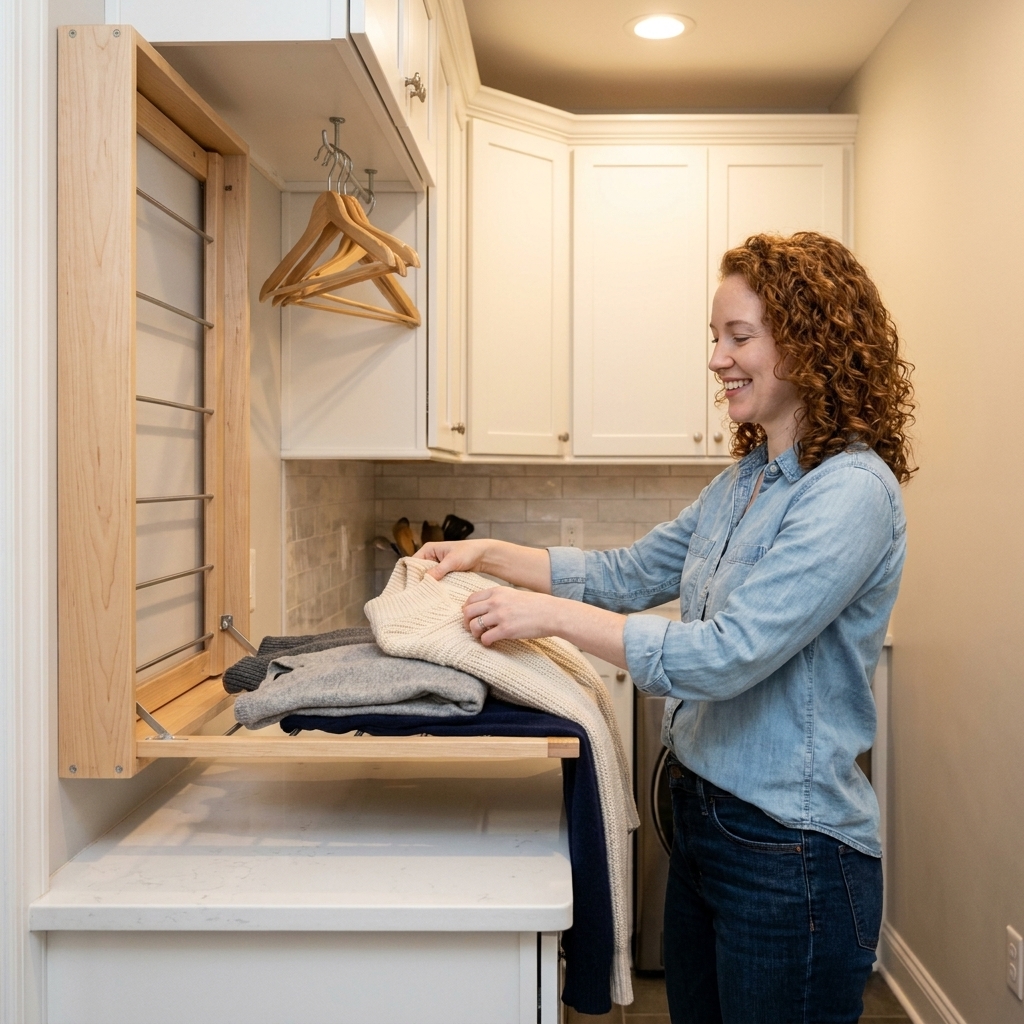
- Wall-mounted accordion rack: Folds almost flat when not in use. Great for delicates and kids’ clothes.
- Ceiling-mounted pulley rack: Fantastic if your floor space is tight and your ceiling is high enough. It feels old-world charming and very practical, but install it correctly. Hit joists or use appropriate anchors, keep head clearance in mind, and avoid conflicts with ducts, garage doors, or overhead storage.
- Fold-down wall drying shelf: Looks like a shallow cabinet when closed, opens into a rack when needed.
- Hanging bar under a shelf: A simple rod lets shirts drip dry on hangers. Add a slim drip tray below if you are drying very wet items.
Where to place it
Aim for a spot with airflow that does not block your path between the door, machines, and hamper. If your laundry room is also a hallway or mudroom, choose a drying solution that folds flat.
Storage That Works
Pretty laundry rooms stay pretty when every category has a home. Here are the simplest systems I keep coming back to, especially for small utility spaces.
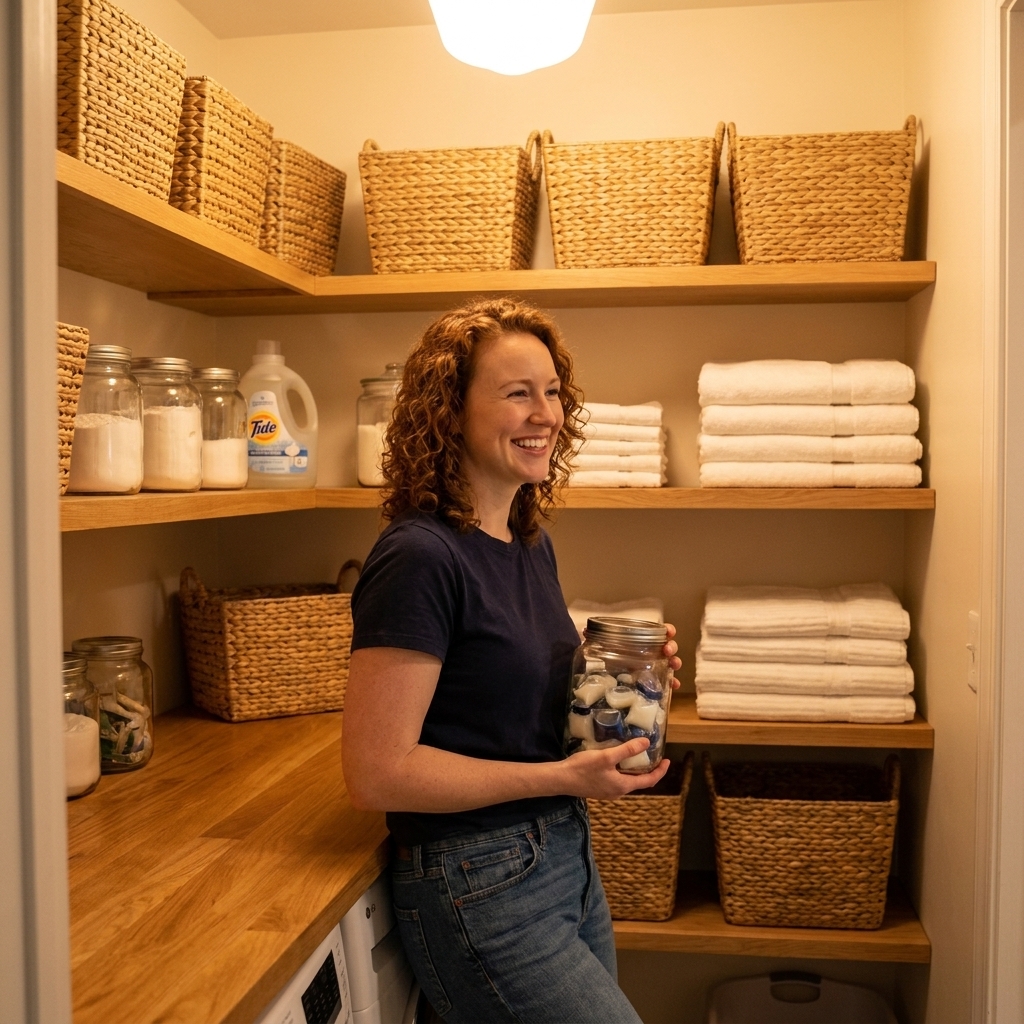
1) Decant the daily essentials
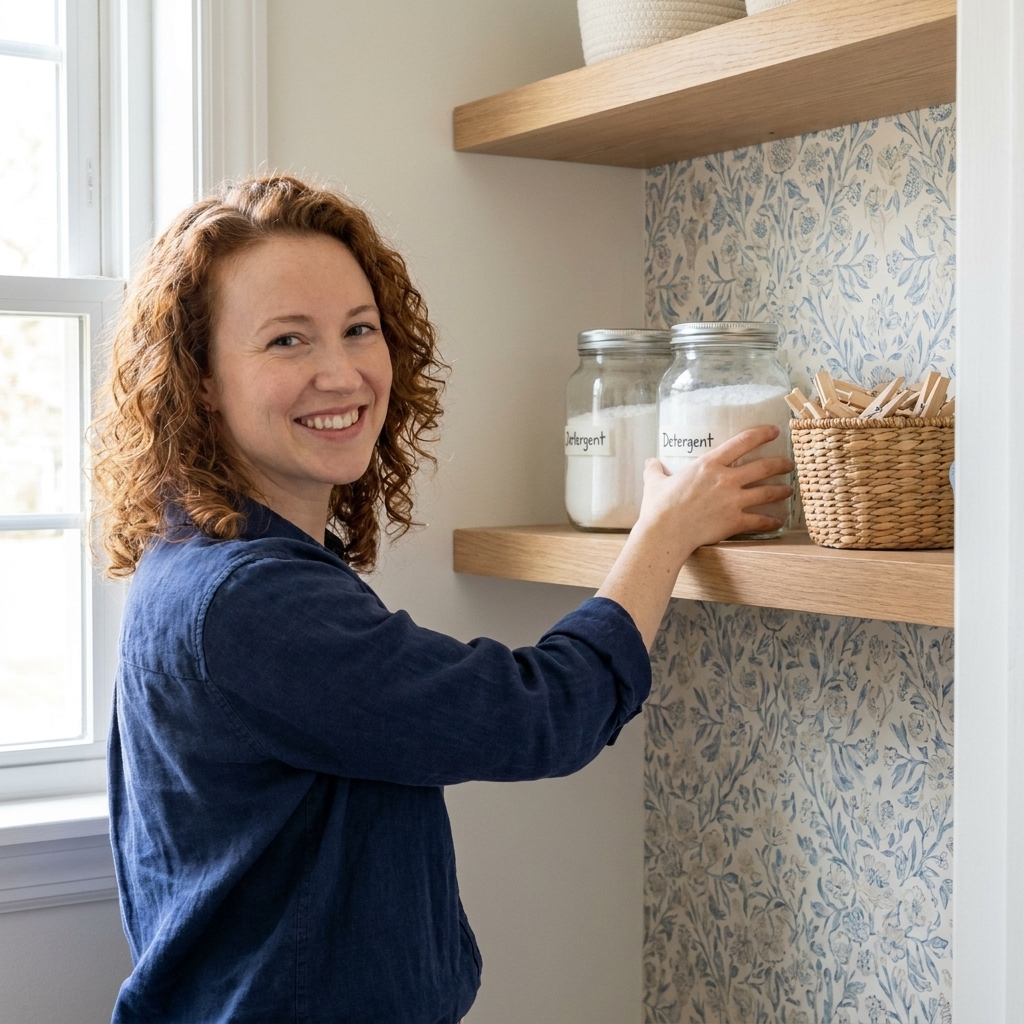
Decanting is not just for aesthetics. It makes grabbing what you need faster, and it reduces visual clutter.
- Use one large airtight container for detergent pods or powder.
- Use one pump bottle for liquid detergent if you prefer it.
- Keep one small jar for clothespins or stain-remover tabs.
Safety warning about pods: Detergent pods can be extremely harmful if ingested and can look like candy to children. The safest option is to keep pods in their original child-resistant packaging, stored high and out of reach. If you choose to decant them anyway, use a child-proof, truly opaque container with a secure latch, and keep it stored up high (never on open shelves or within easy reach).
Store backup refills elsewhere if you can. Tiny rooms love a “one open, one backup” rule.
2) Turn doors into storage
- Over-the-door rack: Great for sprays, lint rollers, and fabric refresher.
- Inside-door hooks: Hang delicates bags, a small dustpan, or your ironing mat.
- Magnetic side organizers: If your machines have metal sides (test that a magnet sticks first), magnetic caddies can hold dryer sheets or stain sticks.
3) Use baskets like drawers
On open shelving, baskets act like pull-out drawers without the expense.
- Label mentally by shape: tall basket for cleaning cloths, wide basket for towels, small bin for tools.
- Choose two basket styles max so the room feels cohesive.
4) Add a landing zone
Clean laundry needs a temporary home. Options that work in tight spaces:
- A slim rolling cart that tucks beside the machines.
- A fold-down wall table for folding.
- A countertop over the machines if you can install one.
Style That Feels Real
Once the function is handled, we get to do the fun part. The trick is choosing decor that also works hard.
Lighting that flatters
- Swap harsh bulbs for warm white (around 2700K to 3000K) so the room feels cozy, not clinical.
- If you can, add a flush-mount fixture with a glass shade to spread light evenly.
- Under-cabinet lighting makes nightly laundry feel 50 percent less annoying, in my completely scientific opinion.
Color palette ideas
- Soft clay + cream + warm wood: Calm and modern, great with brass hardware.
- Sage green + white + black accents: Fresh, clean, and hides lint better than pure white walls.
- Inky blue + ivory + rattan: Adds drama in a small space without feeling heavy.
Add one tactile element
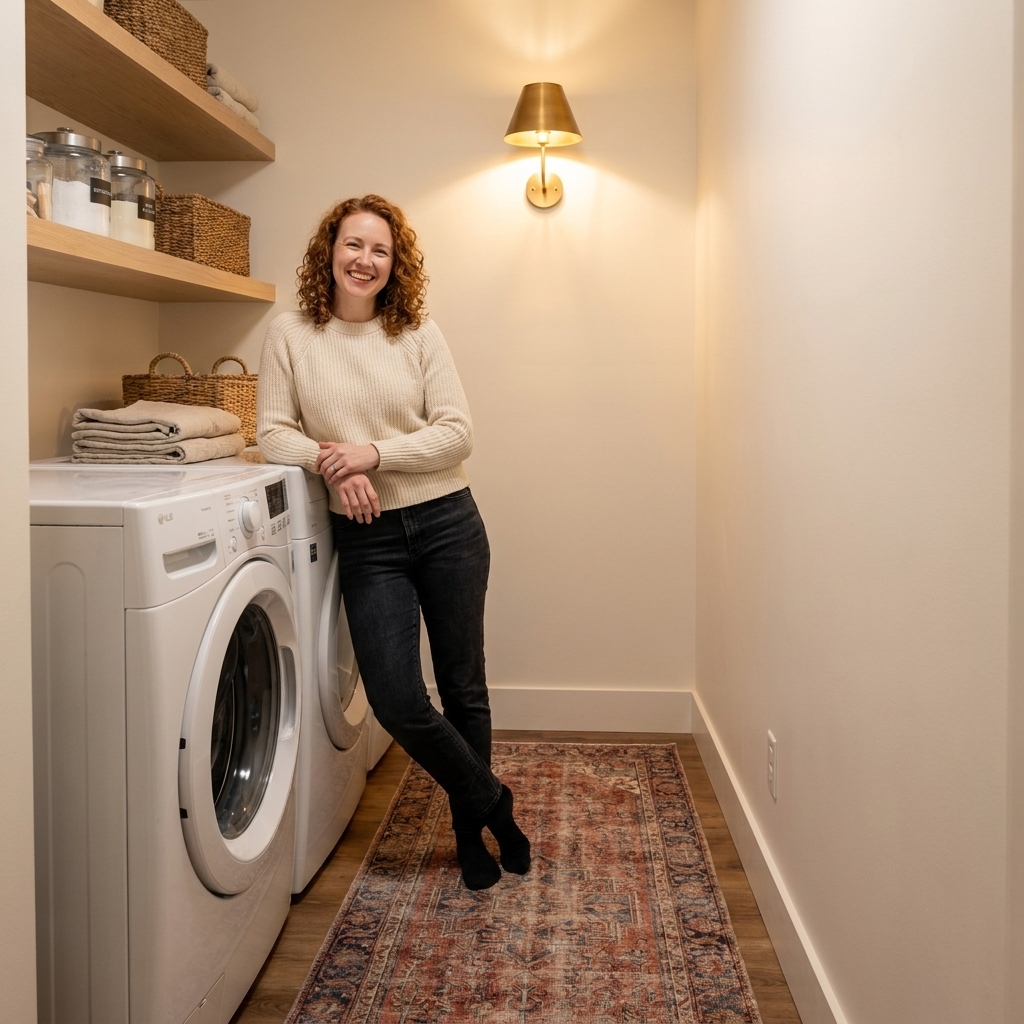
A small vintage runner rug, a textured basket, or linen curtains (if you have a window) instantly makes the room feel intentional. I am biased toward vintage rugs because they forgive scuffs and bring in that layered, lived-in softness.
Do not skip traction: Laundry rooms are slippery zones. Use a rug with grippy backing or add a non-slip pad underneath.
Mini Makeover Plans
If decision fatigue is hitting, choose one of these focused plans. Small rooms love a clear script.
The 1-Hour Refresh
- Clear surfaces and wipe everything down.
- Swap bulbs to warmer light.
- Group supplies into one tray or basket.
- Add one hook rail for hangers or bags.
The Weekend Upgrade
- Install peel-and-stick wallpaper on one wall or behind shelves.
- Add a wall-mounted drying rack.
- Introduce matching baskets on shelves.
- Add a runner rug that can handle traffic (and use a non-slip pad).
The Big Upgrade
- Install upper cabinets or a tall utility cabinet.
- Add a countertop over front-loading machines.
- Integrate lighting: flush mount plus under-cabinet strip.
- Finish with wallpaper and hardware for a cohesive look.
Common Mistakes (Easy Fixes)
Mistake: Storing everything in sight
Fix: Hide the bright stuff. Put daily essentials in cohesive containers and store backups in a closed cabinet or a lidded bin.
Mistake: No place to fold
Fix: Add a countertop, a slim fold-down table, or even a sturdy shelf at counter height.
Mistake: Drying takes over
Fix: Choose a folding wall or ceiling solution and commit to putting it away after use.
Mistake: Ignoring ventilation
Fix: Use a small dehumidifier if needed, run an exhaust fan, and choose humidity-friendly materials. Peel-and-stick wallpaper generally performs best on clean, smooth walls with stable conditions, but always check your specific product guidance.
Mistake: Blocking access and airflow
Fix: Leave clearance for hoses, vents, and shutoffs, and do not cram bins where they restrict airflow around machines. A smooth workflow is great. A safe, serviceable setup is better.
FAQ
Is peel-and-stick wallpaper safe for laundry rooms?
Usually, yes, as long as the wall is smooth, clean, and fully dry, and you choose a product that can handle humidity. Avoid installing over fresh paint until it is fully cured (often 2 to 4 weeks, but follow your paint manufacturer’s guidance). If your walls are flat or matte, test first since some removable papers can pull paint on removal.
What is the best storage for a tiny laundry closet?
Go vertical: a shelf over the machines, shallow cabinets if the doors allow, and a door-mounted organizer. A slim rolling cart can also be a lifesaver if you have even a few inches beside the washer.
How do I make my laundry room look expensive without renovating?
Focus on three things: warm lighting, cohesive containers, and one bold style moment like wallpaper. Finish with hardware upgrades and a runner rug (with a non-slip pad) for that “designed” feel.
Where should I put a drying rack in a small space?
Choose a rack that folds away and place it where it will not block your main pathway. Over a counter or near a vented area is ideal. Wall-mounted accordion racks are my go-to for tight rooms because they disappear when you are done.
A Final Set-Designer Thought
In theater, the best sets support the story without getting in the way of the actors. Your laundry room is the same. When storage is hidden, drying is handled, and the lighting is kind, the space stops feeling like a chore cave and starts feeling like a small, hardworking room you are genuinely happy to walk into.
If you try one change this week, make it the simplest: pick a wallpaper you love, then let the rest of the makeover fall in line around it.