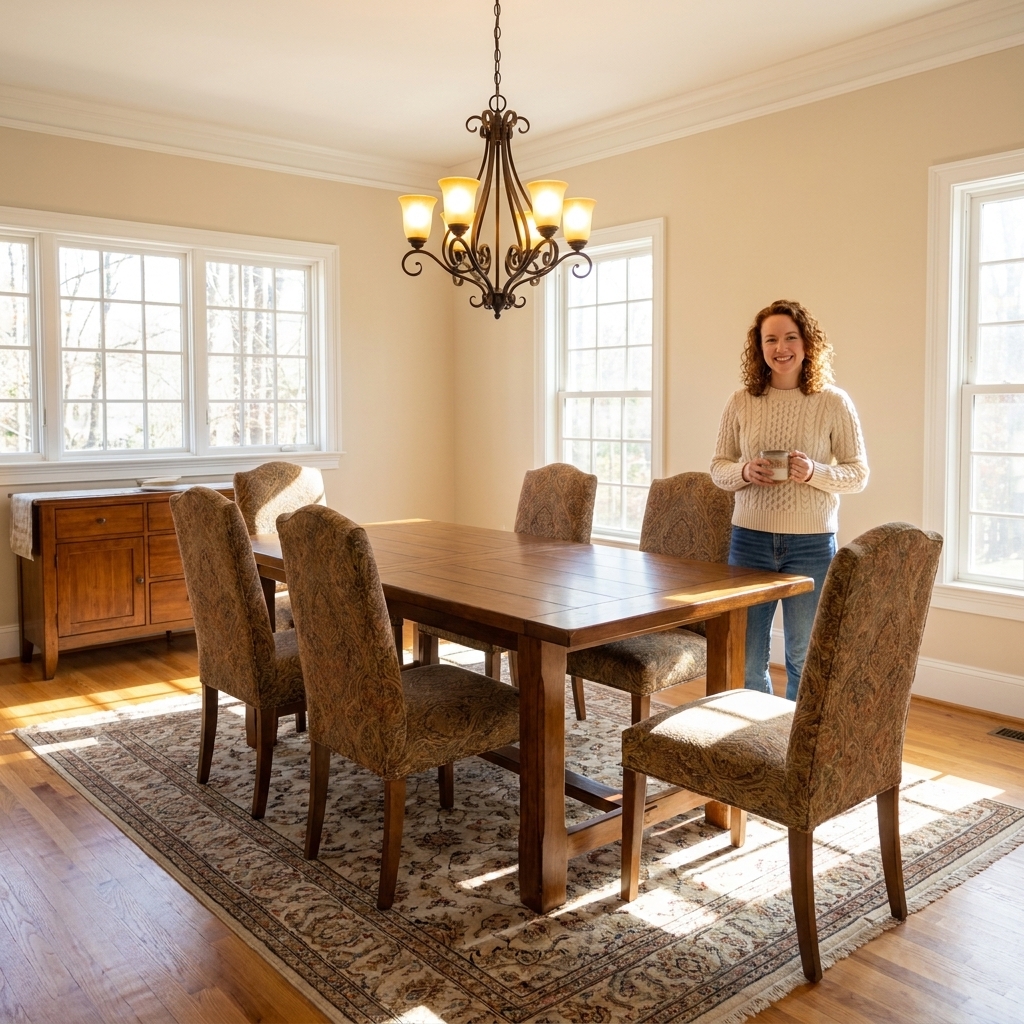
Get dining room scale right with an easy cheat sheet. Rug sizing, chandelier diameter and hanging height, and dining table measurements that create balance a...
Havitza Home
Mix and Match Dining Chairs
Learn the simple rules that make mismatched dining chairs look deliberate, not messy. Height lines, spacing ranges, materials, color formulas, and foolproof chair pairings for any table.

Clara Jenkins
Clara Jenkins is a former theater set designer turned interior styling expert with over a decade of experience transforming everyday spaces into beautiful sanctuaries. Through her work at havitza.com, she shares practical styling tips, accessible furniture layouts, and inspiring color palettes to help anyone create a home they truly love.
Published October 17, 2026
Updated October 17, 2026
If you have ever stared at a dining table and thought, “Why do everyone else’s mismatched chairs look charming, and mine looks like a yard sale?” you are not alone. Mixing dining chairs is a lot like blocking a scene in theater. You can swap costumes, props, and personalities, but the audience still needs to understand the story at a glance.
The secret is not buying a matching set. The secret is choosing a few design rules and repeating them on purpose: a consistent height line, a shared material or color note, and a layout that feels balanced from every angle.
The three anchors that keep it from looking messy
Before we talk pairings, decide which “anchor” will stay consistent. When one thing stays steady, your mix reads as collected instead of chaotic.
Anchor #1: A consistent height line
This is the unglamorous rule that makes everything else work. When chair heights fight each other, the whole table looks jittery.
- Seat height: Most dining chairs land around 16 to 20 inches, depending on style and cushion compression. Try to keep all seats within about 1 inch of each other if you can.
- Arm height: If you are using armchairs, make sure the arms can slide under the table underside (apron or rails), or at least do not smash into it.
- Back height: You can vary backs, but keep the visual top line calm. If one chair is noticeably taller than the rest (think 6 to 8 inches or more), give it a “role” (usually at the head) so it looks intentional.
Anchor #2: A repeating material note
You do not need all wood, or all metal, or all upholstery. You do need repetition. Repeat one material at least twice. Two creates a relationship, which is often all you need for the mix to feel deliberate.
- Two wood chairs in the same finish (even if the shapes differ)
- Two upholstered chairs in the same fabric family (linen, velvet, bouclé)
- Two chairs with cane or woven seats
- Two chairs with black metal legs
Anchor #3: A controlled color palette
Eclectic does not mean “every color I own.” Choose a palette and stick to it.
- Easy mode: two neutrals + one accent (example: black + oak + olive)
- Warm mode: camel + walnut + creamy white
- Cool mode: charcoal + ash wood + soft blue-gray
The measuring rules: comfort first, style second
Mixing chairs still has to feel good to sit in. Here are the proportions I use when I am styling a dining nook for real life, not just photos.
Table-to-seat spacing
- Seat to tabletop: Aim for about 10 to 12 inches between the seat and the underside of the tabletop for most standard dining tables (typically around 29 to 30 inches tall). If your chairs are upholstered, remember the seat may compress a bit once you sit.
- Width per person: Plan 24 inches per seat as a comfort guideline. You can sometimes get away with 22 inches for slimmer chairs, while wider silhouettes or armchairs may want 26 to 28 inches.
- Pull-out space: Leave about 30 to 36 inches behind chairs, depending on traffic flow. If the dining area is a main pathway, lean toward the larger end of the range.
Quick comfort checks beyond measurements
Because mismatched chairs often differ in feel, not just looks, do a fast “five-minute sit test” before you commit.
- Seat depth: If one chair has a much deeper seat, it can feel like a lounge chair next to a perch.
- Back support: A low back can look great, but make sure it does not feel like it disappears during a long dinner.
- Arm width: Arms add comfort, but they also steal elbow room fast.
When chair styles can vary a lot (and still work)
If the seats align and the table has enough breathing room, you can mix a lot more than you think. Slim chairs can happily live next to chunkier ones as long as elbows are not bumping and the overall silhouette feels balanced.
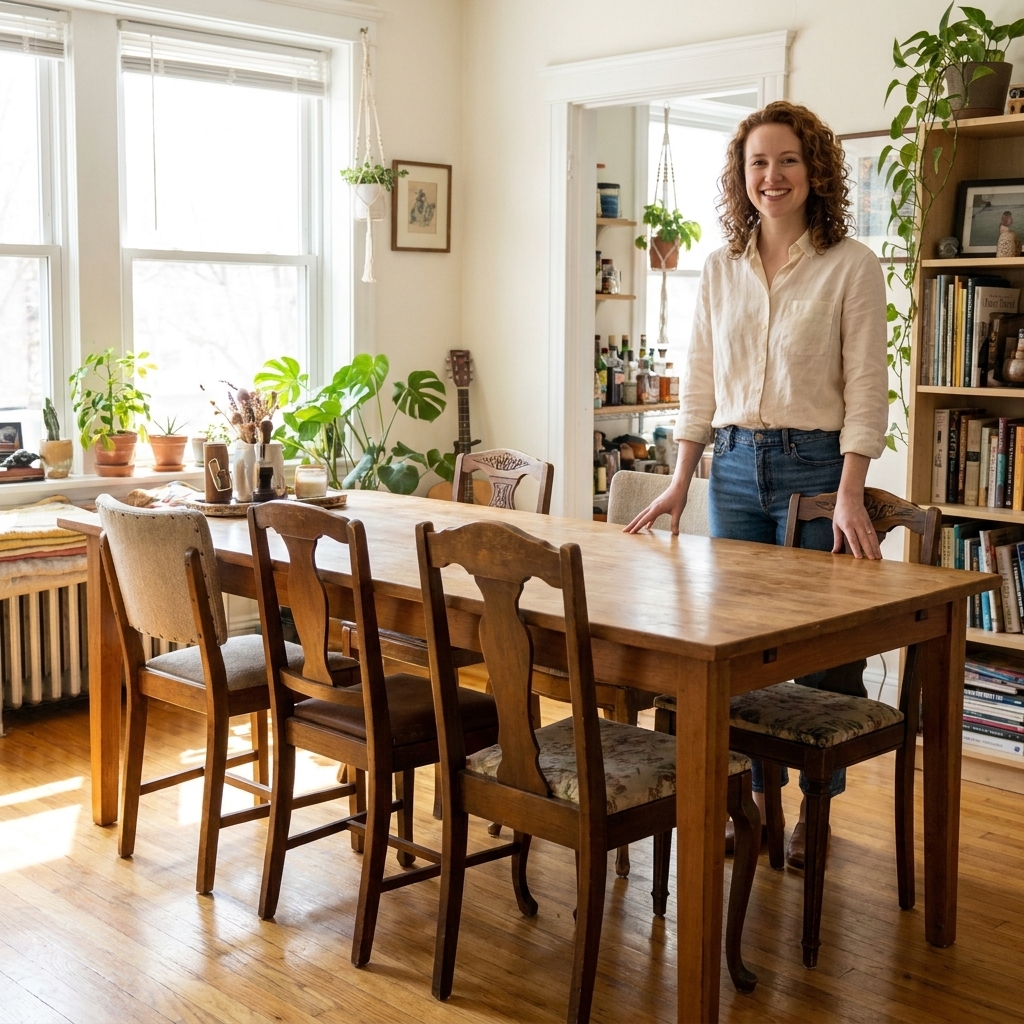
Foolproof mix-and-match formulas
If you are unsure where to start, choose one of these “stage directions” and follow it exactly. Once it looks good, you can improvise.
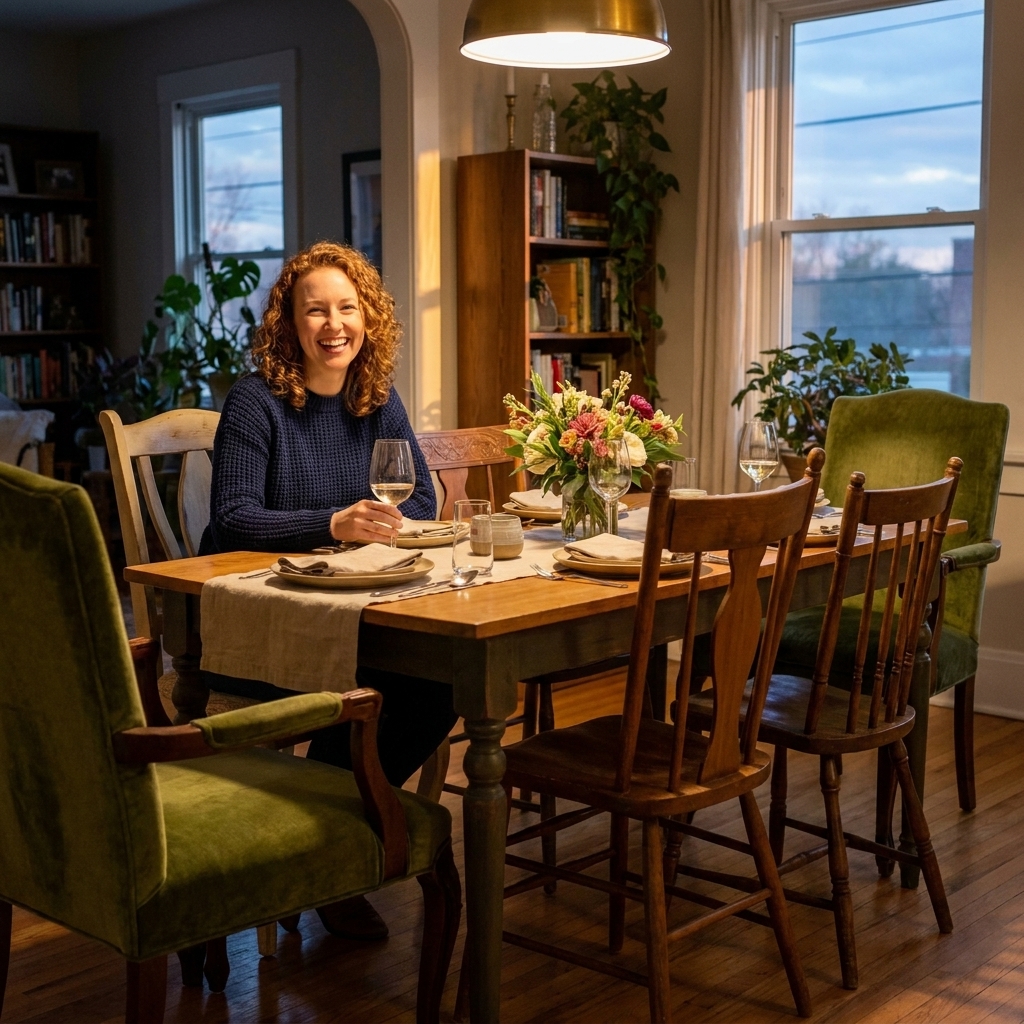
Formula 1: Matching ends, mixed sides
This is my number one recommendation because it looks deliberate instantly.
- Two matching host chairs (often upholstered or with arms) at the heads
- Four to six side chairs that can vary, but share a finish or shape detail
Why it works: the end chairs act like bookends, so your eyes accept variety in the middle.
Formula 2: All different chairs, one unifying element
This is the true collected look. The key is to unify hard.
- Keep all chairs within the same color family or keep all legs in the same finish
- Repeat one detail at least three times (curved backs, spindle backs, cane, black frames)
Why it works: three is where a detail stops looking like a coincidence and starts reading like a pattern.
I learned this one the hard way. I once had a set where everything felt like it was fighting until I repainted two sets of chair legs the same black as the pendant. Suddenly the “random” chairs started behaving like a team.
Formula 3: Two-and-two pairing (great for small tables)
For a four-top, pair chairs like you are casting two characters and giving them costumes that relate.
- Two matching chairs on one side, two matching chairs on the other
- Or two matching ends, two matching sides
Why it works: symmetry calms the mix, especially in open-plan spaces.
Formula 4: One statement chair + supporting cast
Have one chair you love too much to give up? Make it the star.
- Place the statement chair at the head (or the most visible spot)
- Choose simpler side chairs in a quieter finish or profile
Why it works: the table gets a focal point, and everything else becomes intentionally understated.
Mixing materials without visual noise
Materials are where eclectic dining sets either sing or start arguing. Here are pairings that nearly always play nicely together.
Wood + upholstery
Classic and forgiving. If your table is wood, try upholstered end chairs and wood side chairs.
- Tip: match undertones. Warm oak likes warm creams and camel. Walnut loves rust, olive, and moody neutrals.
Wood + metal
This can feel modern, industrial, or European café depending on the shapes you choose.
- Tip: repeat the metal finish somewhere else in the room: a pendant, frame, cabinet hardware, or even a bowl on the table.
Upholstery + cane or woven seats
This is one of my favorite combinations because it is tactile and relaxed.
- Tip: keep the woven tone consistent (all honey cane, or all darker rattan) so it reads deliberate.
Plastic or molded chairs + vintage wood
Surprisingly charming, especially with a vintage rug underfoot to bridge eras.
- Tip: choose a molded chair color that echoes something nearby: art, rug tones, curtains, or even dishware displayed on open shelving.
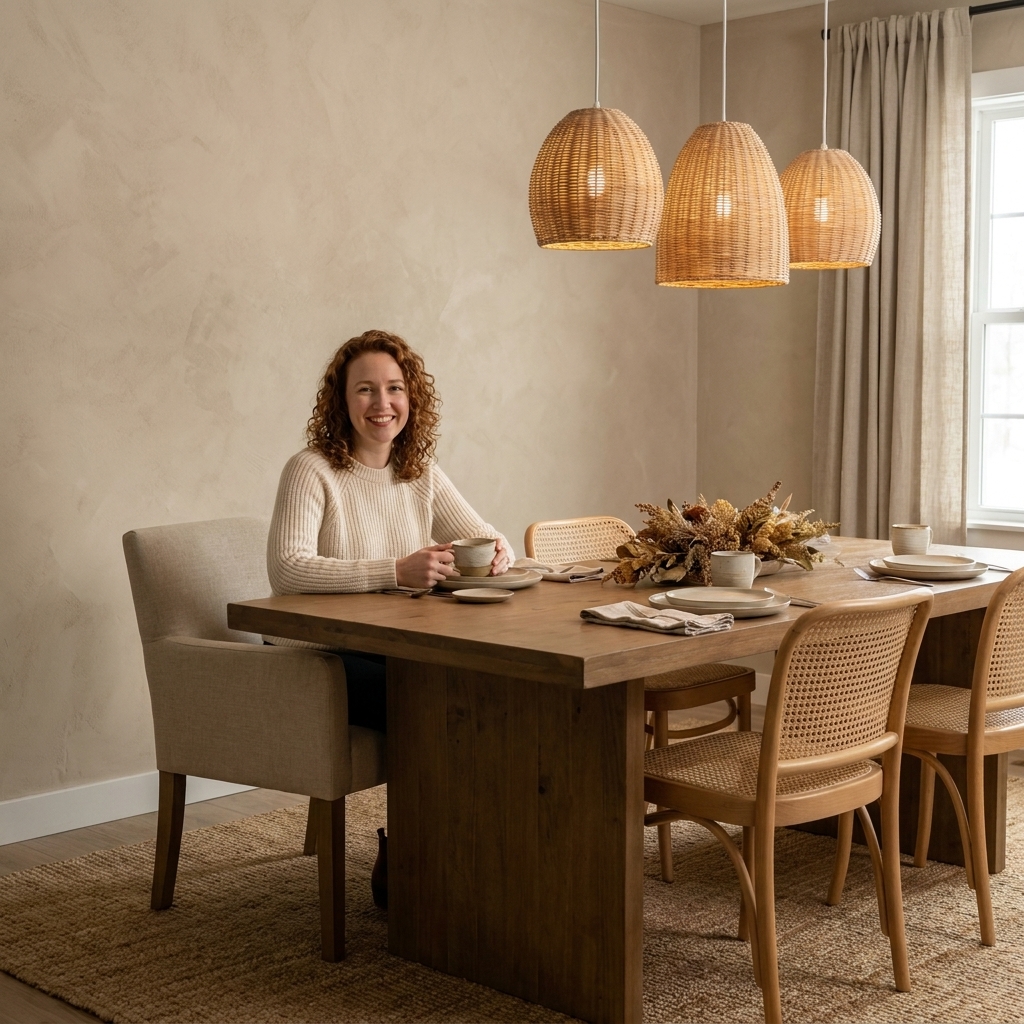
How to balance shapes like a set designer
When I designed theater sets, I learned quickly that the audience reads silhouettes before they read details. Dining chairs are the same. Shape balance is what makes your mix feel calm.
Use one dominant shape language
- Mostly curves: round backs, barrel chairs, bentwood shapes
- Mostly straight lines: ladder backs, Parsons chairs, clean modern frames
You can absolutely mix curves and straight lines, but choose which one is the “majority vote.”
Distribute visual weight evenly
Chunky chairs, arms, thick upholstery, and dark finishes all count as heavier.
- If you have two heavy chairs, place them opposite each other (often as end chairs).
- If you have one heavy chair, give it a counterpart across the table or balance it with a heavier pendant or sideboard nearby.
Mind the negative space
Open-back chairs (spindles, Windsor, ladder backs) create airiness. Solid-back upholstered chairs create presence. Mixing them works best when you alternate on purpose.
Color tricks that make mismatched chairs look “meant to be”
Pick a bridge color and repeat it
A bridge color is the shade that appears in more than one place. It can be subtle.
- Black legs repeated on two chairs and the light fixture
- Cream upholstery repeated with curtains or a rug background
- Warm wood repeated with a bowl, picture frame, or sideboard
Let the table be the neutral
If your chairs are busy, keep the table simple. If your table is busy (heavy grain, ornate base), keep chairs calmer.
Use textiles to unify the whole scene
This is my favorite “instant stylist” move: put a vintage-style rug under the table. It ties finishes together and forgives almost any chair mix.
Rug reality check: go low pile so chairs slide easily, and choose a pattern that can handle crumbs and real life.
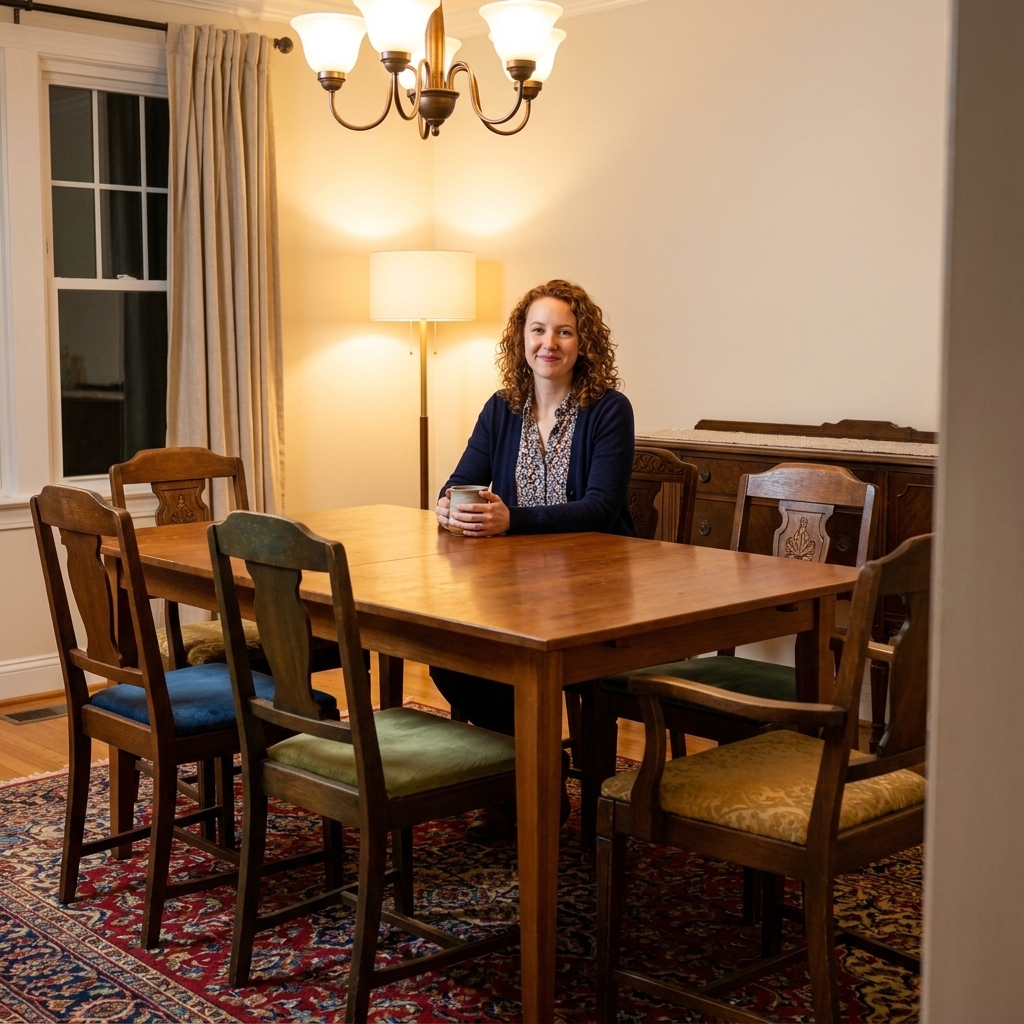
What to do when chair heights do not match
Sometimes you already own the chairs, and they are not cooperating. Here is how to rescue the situation without buying a whole new set.
If one chair is too low
- Add a firm seat cushion (bonus points if it repeats your palette).
- Use furniture leg caps or glides designed to add a touch of height.
- If it is a vintage chair, a pro can sometimes adjust or rebuild the seat padding to sit higher.
If one chair is too high
- Check if the chair is actually a counter-height chair (common mix-up when buying secondhand).
- Consider using it as a “guest chair” pulled in only when needed, or relocate it to a desk or bedroom corner.
If arms hit the table
- Move armchairs to the ends.
- Swap them for armless versions on the sides where clearance matters most.
A quick safety note
- If you add caps, glides, or cushions to adjust height, make sure the chair still feels stable and all legs sit flat. A pretty chair that wobbles is a no.
- If you are on a rug, consider felt pads or protective cups to keep chairs from catching and tipping when they drag.
Room-by-room layout cues
Open-plan dining areas
In open layouts, your dining set is always “on stage.” Keep your mix tighter.
- Use matching end chairs or a consistent finish across all legs.
- Echo one chair color elsewhere in the living area (pillows, art, throws) to make the mix feel deliberate.
Small dining nooks
Small spaces can handle a bolder mix because you see it up close, not from across the room.
- Try two statement chairs and two simple ones.
- Choose lighter visual weight chairs if the nook is tight (open backs, slimmer frames).
Formal dining rooms
You can still go eclectic, just do it with polish.
- Stick to a tighter palette (two neutrals + one accent).
- Choose chairs with similar back heights for a more tailored line.
Common mistakes (and the quick fixes)
- Mistake: Every chair is a different color. Fix: paint or reupholster two chairs to match, or add identical cushions to create repetition.
- Mistake: Too many statement silhouettes. Fix: make one style the majority and let one chair type be the accent.
- Mistake: Mixed undertones (cool gray wood with warm honey oak). Fix: bridge them with a rug that contains both tones, or swap in chairs with a more neutral finish.
- Mistake: Chairs feel cramped. Fix: reduce chair count, switch to armless chairs, or choose slimmer profiles on the long sides.
A few combos I reach for again and again
If you want a shortcut, these are pairings I have used in real homes because they are flexible and forgiving.
- Windsor side chairs + upholstered Parsons end chairs: classic, cozy, and never fussy.
- Black metal café chairs + wood table + linen end chairs: a little modern, a little warm.
- All wood chairs in different shapes, same finish: the easiest collected look.
- Cane chairs + simple upholstered chairs: texture-forward, airy, and friendly in small rooms.
FAQ
How many different dining chair styles is too many?
For most rooms, two to three chair styles is the sweet spot. You can push to four if your palette is tight and at least one element repeats across the whole set (finish, leg color, or upholstery tone).
Should dining chairs match the table?
They do not need to match, but they should relate. I like them to share either undertone (warm with warm, cool with cool) or a repeating material detail (black metal, cane, similar wood tone).
Can I mix armchairs and side chairs?
Yes, and it often looks the most deliberate. Put armchairs at the heads, then keep side chairs slimmer for comfort and spacing.
What is the easiest way to unify mismatched chairs on a budget?
Add matching seat cushions, paint two chairs the same color, or reupholster just the end chairs in one fabric. Small repetition goes a long way.
The takeaway
Mixing dining chairs is not about breaking rules. It is about choosing which rules you are keeping. Pick one anchor (height line, material, or palette), use a simple layout formula, and repeat details like you mean it. Your table will look layered, personal, and welcoming, which is the whole point of a home that feels lived in and loved.