Save this room-by-room clearance guide: the standard inches you need between furniture pieces for easy traffic flow, comfortable seating, and layouts that fe...
Havitza Home
Styling Round, Square, and Rectangular Coffee Tables
Learn how to style round, square, and rectangular coffee tables with easy layouts, scale tips, and decor pairings that fit your table and your real life.

Clara Jenkins
Clara Jenkins is a former theater set designer turned interior styling expert with over a decade of experience transforming everyday spaces into beautiful sanctuaries. Through her work at havitza.com, she shares practical styling tips, accessible furniture layouts, and inspiring color palettes to help anyone create a home they truly love.
Published October 17, 2026
Updated October 17, 2026
In theater, a set designer learns fast: the shape of the stage dictates everything. Where actors enter, how the light moves, where the eye lands. Coffee tables are the same, just with fewer costume changes and more snack bowls.
If your styling has ever felt “almost right” but never quite settled, it might not be your decor at all. It might be geometry. Round, square, and rectangular tables each want a different kind of balance, a different rhythm of objects, and a different approach to negative space.
Before you style: three rules that work on any table
1) Keep the grab zone clear
A coffee table is a working surface, not a museum plinth. Leave a clear landing strip for mugs, the remote, and real life. As a rule of thumb, I reserve about one-third of the tabletop as open space, then style the remaining two-thirds. If your table is small or your household is snack-forward, give yourself more breathing room.
2) Use height on purpose
When everything sits at the same level, the table looks flat. Build a gentle height story: something low (a bowl), something mid (a candle), something taller (a vase or small lamp nearby). On most coffee tables, a good sightline-friendly range for the tallest item is roughly 12 to 14 inches, but adjust based on your sofa height and how often you talk across the table.
3) Contain the small stuff
Trays, shallow bowls, and lidded boxes are the unsung heroes of calm. They create boundaries, which reads as “styled,” and they prevent the little objects from scattering into visual noise.
- Tray for remotes, coasters, matches, and a candle
- Decorative bowl for a quick toss spot (keys, earbuds, hair ties)
- Lidded box for the truly unglamorous items (chargers, meds, pet treats)
How to style a round coffee table
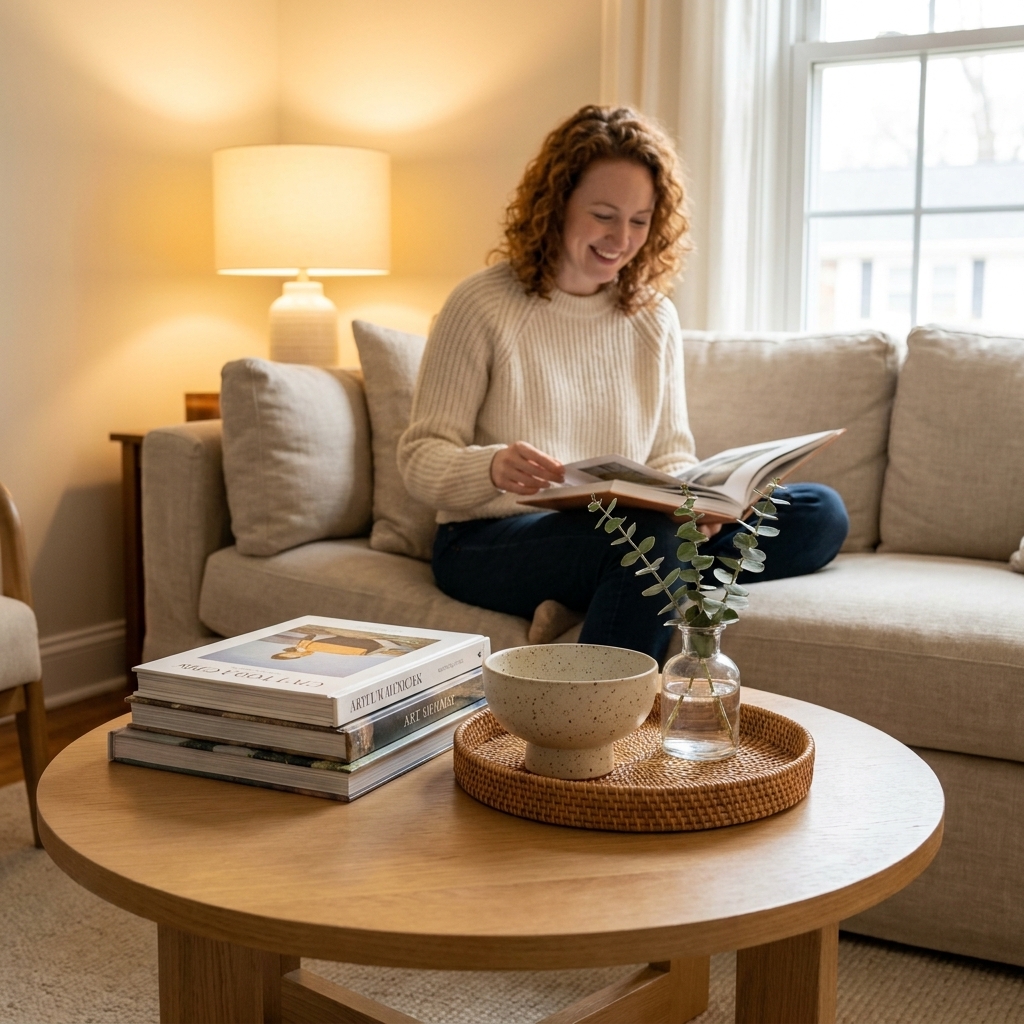
Round tables are friendly. They soften a space, encourage flow, and play beautifully with curved sofas and rounded armchairs. But because they have no corners, they can look messy fast if the styling is too scattered.
Best layout: the centered cluster
Round surfaces want a single, confident moment in the middle. Think of it like blocking a scene: you are placing your focal point where the audience naturally looks.
- Start with one anchor: a round tray or a low bowl placed at center
- Add one vertical element: a bud vase, small arrangement, or a sculptural object
- Finish with one supporting layer: a book stack or a candle to create height variation
Round table pairings that always work
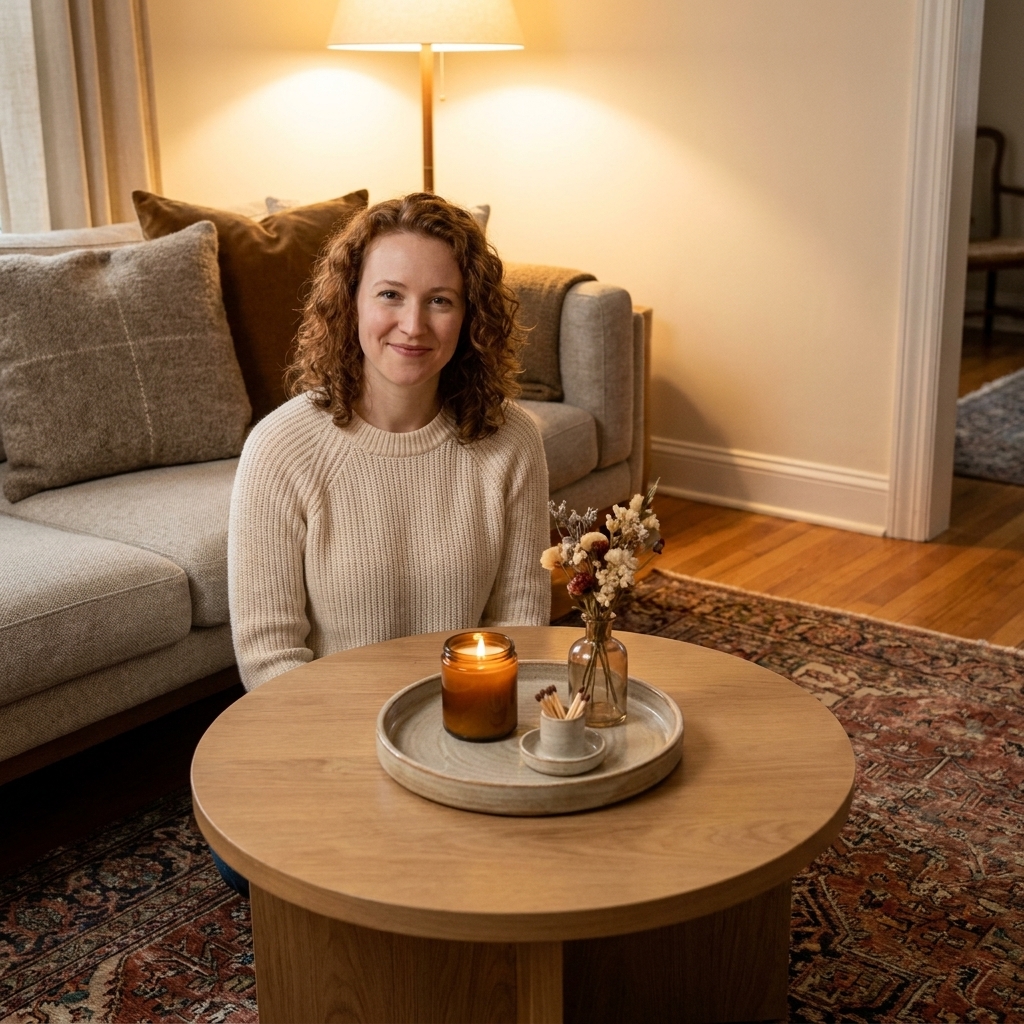
- Round tray + vase + candle: clean, classic, easy to maintain
- Low bowl + matches + coaster stack: functional with a styled finish
- Two books + a small object on top: a simple height boost that reads curated
Proportion tips for round tables
- Go slightly larger than you think with your anchor (tray or bowl). Tiny objects floating on a round surface can look lost.
- Repeat curves (round tray, rounded vase, soft-edged book stack). It creates harmony instead of visual tension.
- Limit to 3 to 5 items total in your main cluster. Round tables prefer restraint.
Quick scale check: if you like numbers, aim for an anchor that covers roughly 40 to 60% of the table diameter. The goal is not math, it is avoiding the “tiny tray adrift at sea” look.
How to style a square coffee table
Square coffee tables are wonderfully grounding, especially in larger seating areas or sectionals. They can handle more objects than a round table, but the risk is that styling becomes too symmetrical and starts to feel stiff, like a hotel lobby vignette.
Best layout: quadrant balance
Mentally divide your table into four quarters. You are not going to fill all four, but this trick helps you distribute visual weight.
- Pick two quadrants to hold most of the styling
- Use one quadrant as your functional zone (remote bowl, coaster stack)
- Leave one quadrant open for drinks, snacks, or a board game moment
Two easy formulas
Formula A: tray + books + bowl
- One square or rectangular tray (yes, contrast is great here)
- A 2-book stack tucked slightly under the tray edge
- A bowl on the opposite side to balance weight
Formula B: two clusters, different heights
- Cluster 1: tray with candle and matches
- Cluster 2: small vase and a sculptural object
This works because the table shape can visually hold two moments without looking chaotic.
Proportion tips for square tables
- Choose one dominant piece (often a tray) that is roughly one-third to one-half of the table width, depending on how much clear space you need day to day.
- Soften the shape with at least one round element: a bowl, a curved vase, or a sphere-like object.
- Avoid mirror symmetry. If you place two candles, make them different heights or group them off-center.
How to style a rectangular coffee table
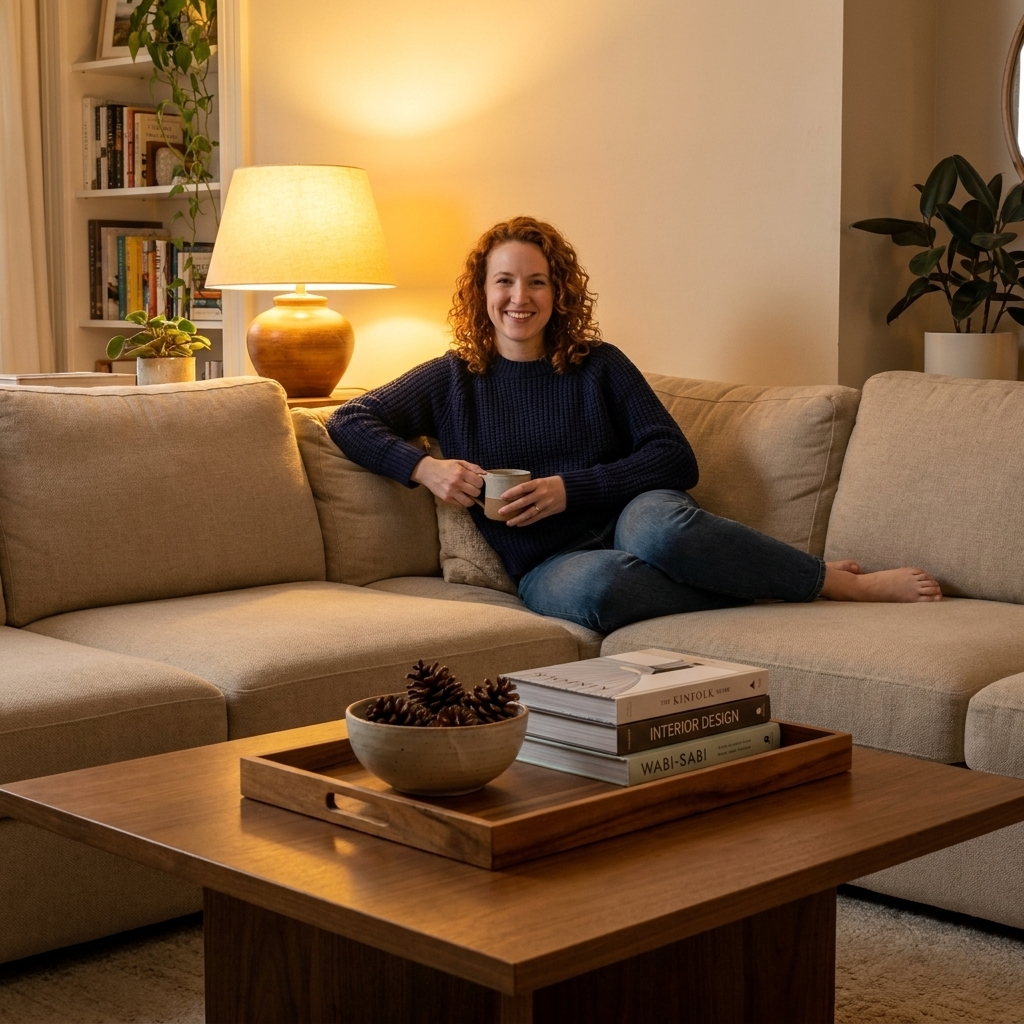
Rectangular tables are the workhorses. They are perfect for long sofas, narrow rooms, and anyone who actually uses their coffee table daily. The styling trick is to keep the long surface from feeling like a runway.
Best layout: three zones
Instead of one centered cluster, think in three beats along the length. This creates rhythm, like scenic design that guides your eye across the stage.
- Zone 1 (one end): a tray with your daily essentials
- Zone 2 (middle): books or a low bowl as the visual bridge
- Zone 3 (other end): a vase, plant, or sculptural object for height
The zones can overlap slightly. The goal is flow, not perfect spacing.
Two easy formulas
Formula A: tray + books + vase
- Tray near the seating side where hands naturally reach
- Book stack centered, rotated slightly for softness
- Vase on the far end to pull the eye through the length
Formula B: one long tray, layered
If you love a clean look, a single elongated tray can unify everything. Layer within it: candle, coaster stack, and a small object, then add one item outside the tray to keep it from feeling too rigid.
Proportion tips for rectangular tables
- Work in odd numbers across the length: three main elements read natural and balanced.
- Vary height gradually. Avoid a tall item at one end and nothing at the other.
- Keep the middle low if people often eat or play games there. Books and low bowls are your best friends.
Quick scale check: keep your main styling footprint to about two-thirds of the table length, then leave a clear strip where life happens, whether that is dinner on the couch or a Sunday puzzle.
Choosing decor by shape
Trays
- Round tables: round tray looks seamless, rectangular tray adds modern contrast
- Square tables: rectangular tray breaks up the grid in a good way
- Rectangular tables: rectangular or elongated tray helps organize the long surface
Books
Books add height and “life lived here” charm, but they should still feel intentional.
- Round tables: keep book stacks small and tight, 1 to 3 books
- Square tables: use books to counterbalance a bowl or tray
- Rectangular tables: books are your bridge between zones
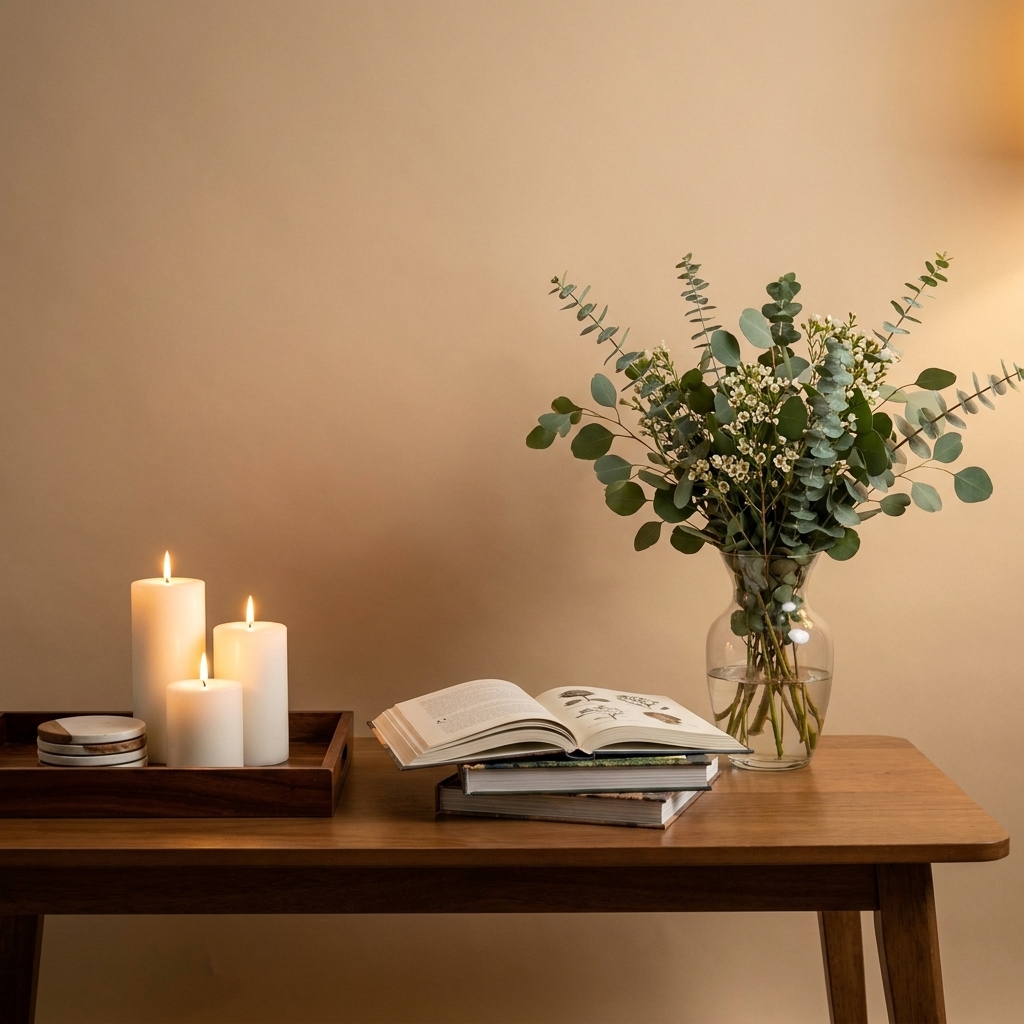
Flowers and greenery
- Best for round tables: a single vase at center, compact arrangement
- Best for square tables: one vase plus one low element to avoid “centerpiece only” vibes
- Best for rectangular tables: a vase near one end, with low pieces through the middle
Candles
If you want instant atmosphere, candles are it. I tend to reach for unscented on dinner nights or in open-concept spaces where fragrance travels, then save scented candles for cozy, low-key evenings.
- Round: one candle plus matches in a small container
- Square: two candles at different heights
- Rectangular: a candle on the tray, plus a second smaller one elsewhere for rhythm
Spacing and sizing
How much table should styling cover?
- Round: style roughly 50 to 65% of the surface in one cluster, more open if your table is small
- Square: style roughly 50 to 70%, leaving one clear corner or quadrant
- Rectangular: style roughly 60 to 75%, leaving a clear center strip or a clear seat-side area
How tall should decor be?
- Most pieces: about 2 to 8 inches (bowls, trays, candles)
- One taller piece: about 10 to 14 inches (vase, small branch arrangement), adjusted for sightlines
- If your sofa back is low: keep decor lower so the room feels open
How far should the coffee table be from the sofa?
For comfort, a common rule of thumb is about 14 to 18 inches between the sofa edge and the coffee table. Close enough to reach your mug, far enough to cross your legs without bruising your shins. If you have long legs, a deep sofa, or a room where everyone walks through that gap, nudge it wider.
Real life: kids, pets, small spaces, clutter
If you have kids (or you are the kid with crayons)
- Skip fragile stacks and choose a sturdy tray with rounded edges.
- Use a lidded box so clean-up is one swoop, not a scavenger hunt.
- Keep one soft item nearby like a folded throw or fabric coaster set to warm up the look without breakables.
If you have pets
- Choose heavier objects that do not tip easily (stone, ceramic).
- Keep greenery simple. If your pet nibbles plants, opt for pet-safe varieties or skip it.
- Be cautious with reed diffusers in high-traffic, bumpable zones like a coffee table, especially with pets or kids. Spills and curious noses are a real thing. A higher shelf or a stable console is usually a safer home.
If your living room is small
- Go low and contained: one tray, one candle, one small bowl.
- Use light-reflecting textures: a brass tray, a glossy ceramic, or a glass cloche-style cover (if you like that look).
- Leave more negative space than you think you need. Airy reads bigger.
If your coffee table becomes a paper pile
This is the most common situation, so you are in good company. Give paper a home that looks intentional.
- One slim basket under the table for mail
- One magazine holder next to the sofa
- One rule: nothing stays on the table unless it lives in the tray or bowl
Color and texture
My theater brain always asks: what is the mood of this scene? Your coffee table styling should echo what the room is already saying.
Three easy palette approaches
- Neutral and warm: wood tray, cream candle, tan book covers, a touch of brass
- Moody and layered: black or walnut tray, dark pottery, deep green stems, matte textures
- Soft and airy: pale oak, glass, white ceramic, one gentle color accent like blush or sage
Texture is what makes it feel expensive
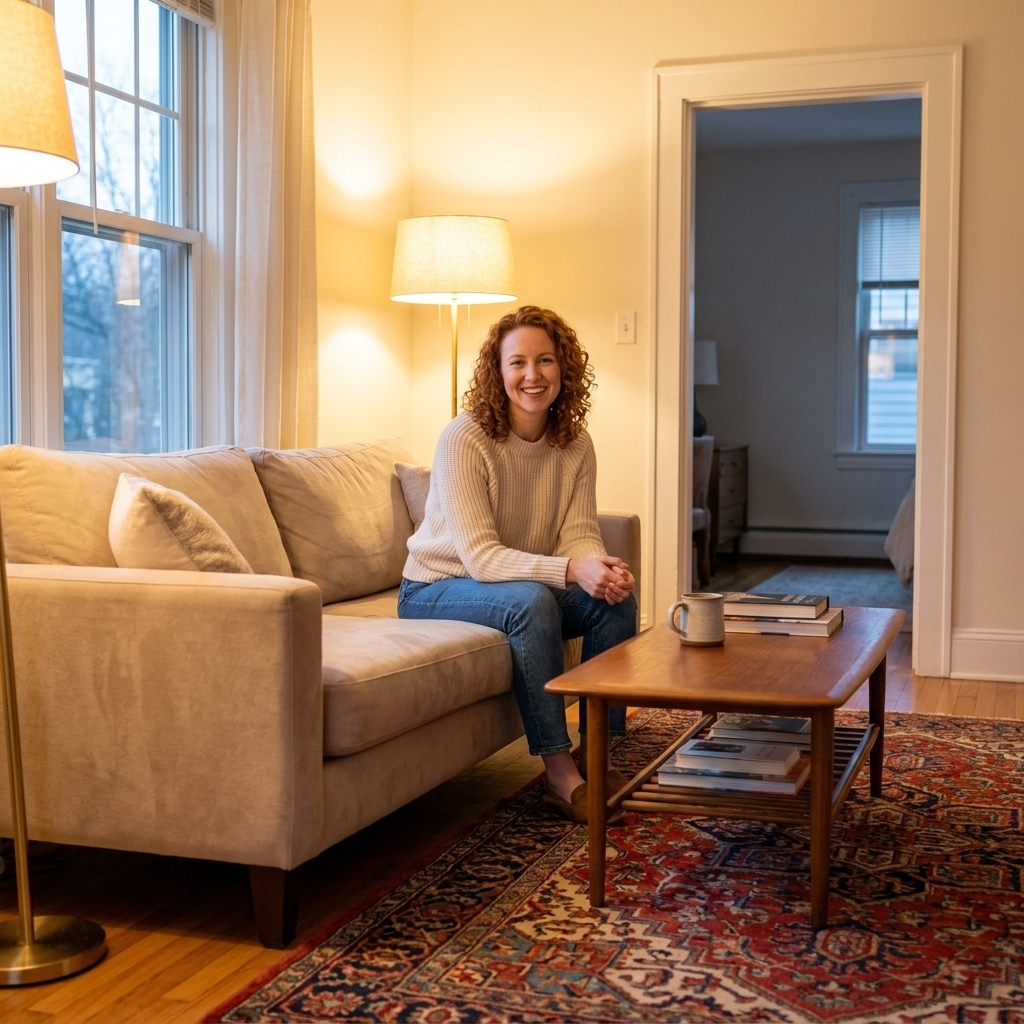
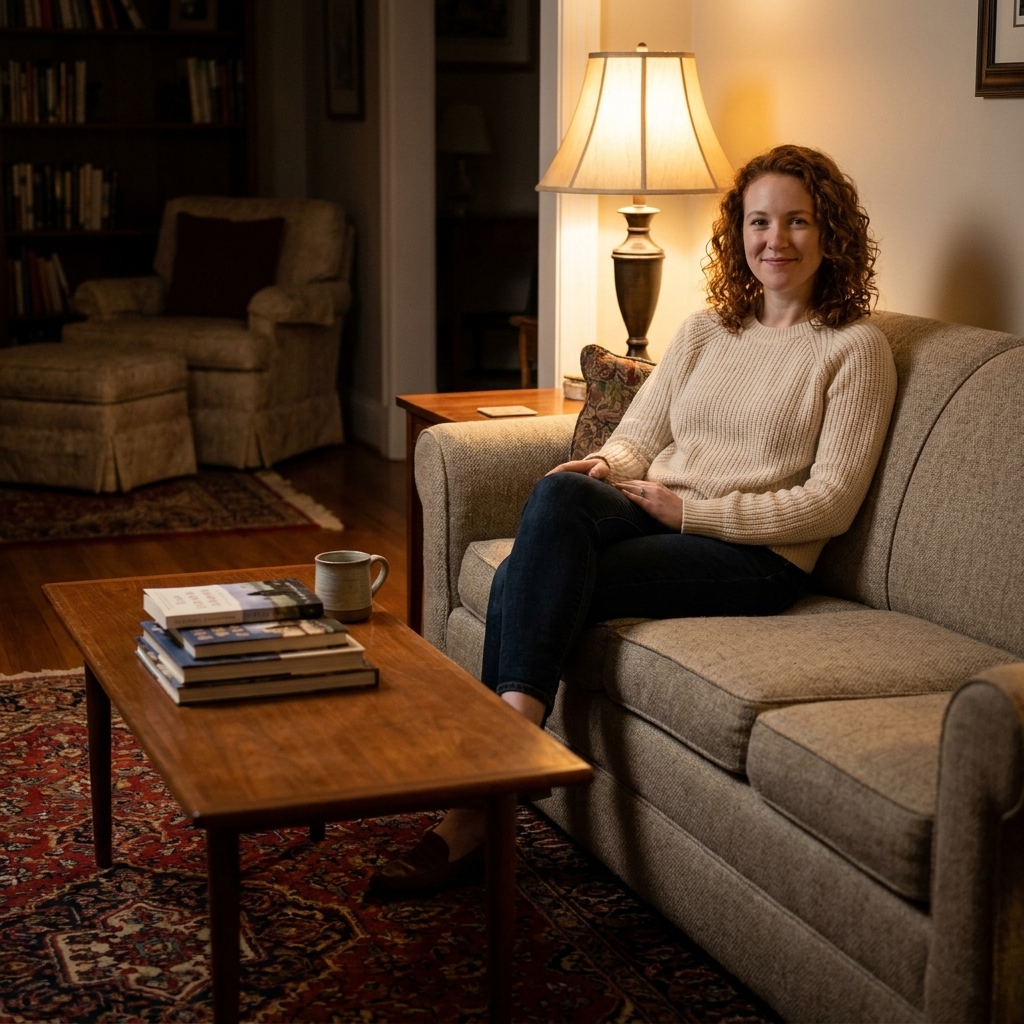
You do not need pricey pieces. You need a mix: something glossy, something matte, something woven, something tactile. If there is one thing I am slightly obsessed with, it is how a vintage rug plus warm lighting plus a nubby fabric instantly makes even simple decor feel intentional.
Quick-start recipes
Round table: 10-minute reset
- Round tray
- One candle
- Small vase (even a single stem)
- Coasters tucked inside the tray
Square table: balanced and cozy
- Rectangular tray
- 2-book stack
- Round bowl on the opposite side
- One small object (match striker, bead strand, sculptural piece)
Rectangular table: long and streamlined
- Tray at one end for daily items
- Low bowl or books in the middle
- Vase or plant at the other end
FAQ
Should my coffee table decor match my room exactly?
It should belong to the room, not copy it. Repeat one or two finishes you already have (wood tone, black metal, brass), then add one contrasting texture so it feels layered.
How do I style a glass coffee table without it looking cluttered?
Go fewer, larger. Choose one tray (it visually grounds items), keep your palette tight, and avoid lots of tiny objects that create visual static through the glass.
What if my coffee table is also my dining table sometimes?
Keep styling in one contained tray that can move to a side table quickly. Choose low pieces so you can still set down plates without a full teardown.
Do I have to use books?
No. Books are just an easy height tool. You can swap in a low wooden riser, a shallow bowl, or a woven tray for the same layered effect.
Any tips for wood, marble, ottomans, or nesting tables?
Yes, and they are mostly about making the table work harder without looking harder.
- Wood: use coasters and avoid placing icy glasses directly on the surface. A tray does double duty here by protecting the finish.
- Marble or stone: treat it like a beautiful but sensitive costume. Coasters matter, and a small tray helps prevent rings and etching from acidic drinks.
- Upholstered ottoman coffee tables: a tray is your best friend. It creates a stable plane so the styling reads crisp, not lumpy.
- Nesting tables: either style them as a set (one main cluster on the larger table, one small functional piece on the smaller) or keep one table mostly clear so the “nesting” stays useful.
Final designer trick: style for how you live
When I helped friends decorate their first apartments, the happiest homes were never the most expensive. They were the ones where the table styling made sense for their routines. Coffee. Game night. A candle at 7 p.m. when the overhead lights finally go off.
Choose the layout that suits your table shape, then edit until there is breathing room. When in doubt, remove one item and add one soft light source nearby. Warm lighting forgives almost everything, and it makes the whole room feel like a deep exhale.