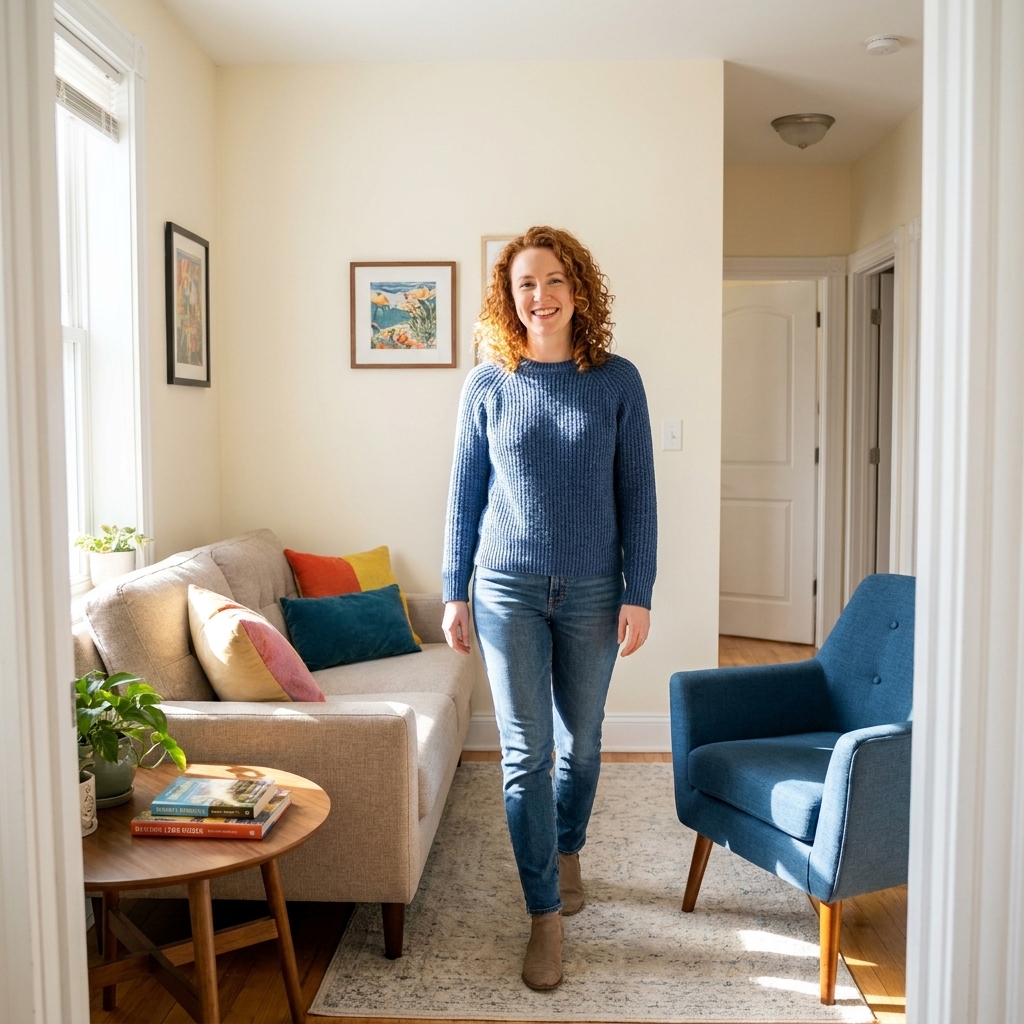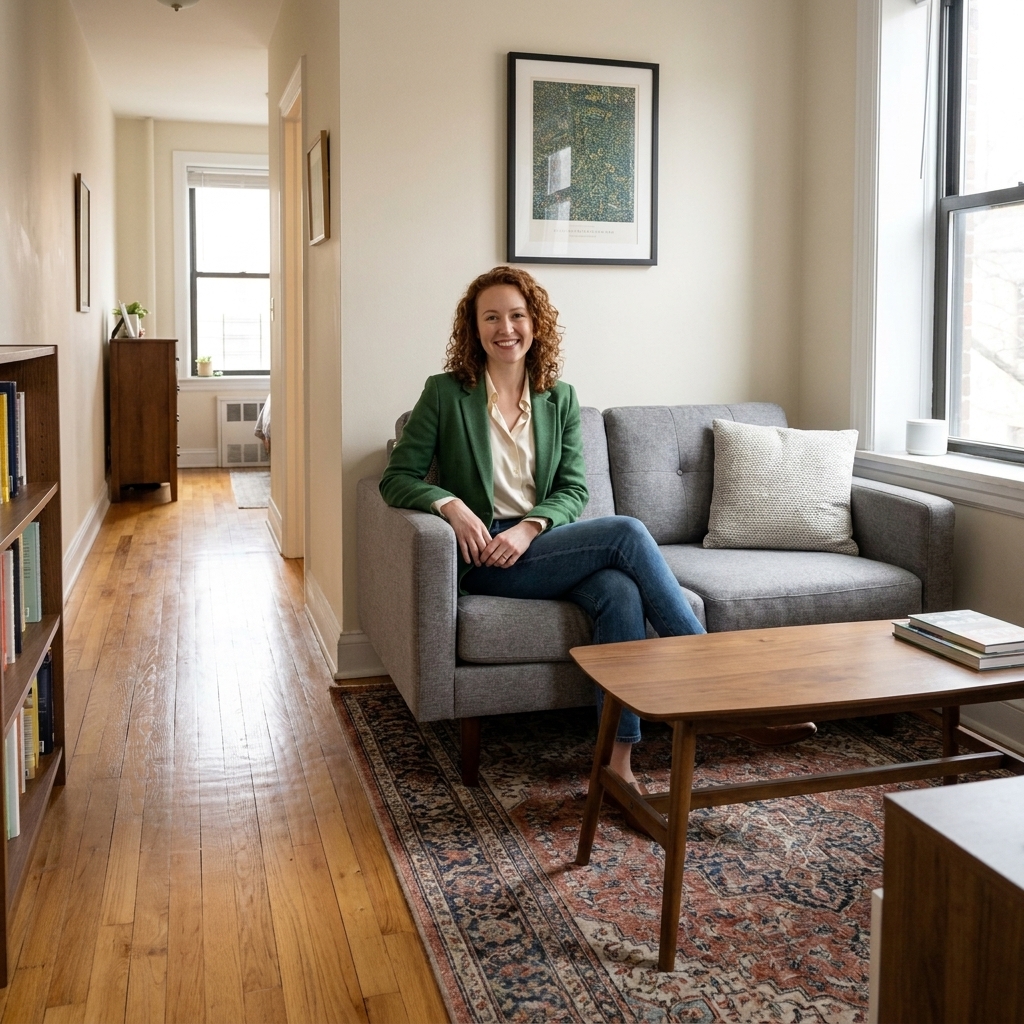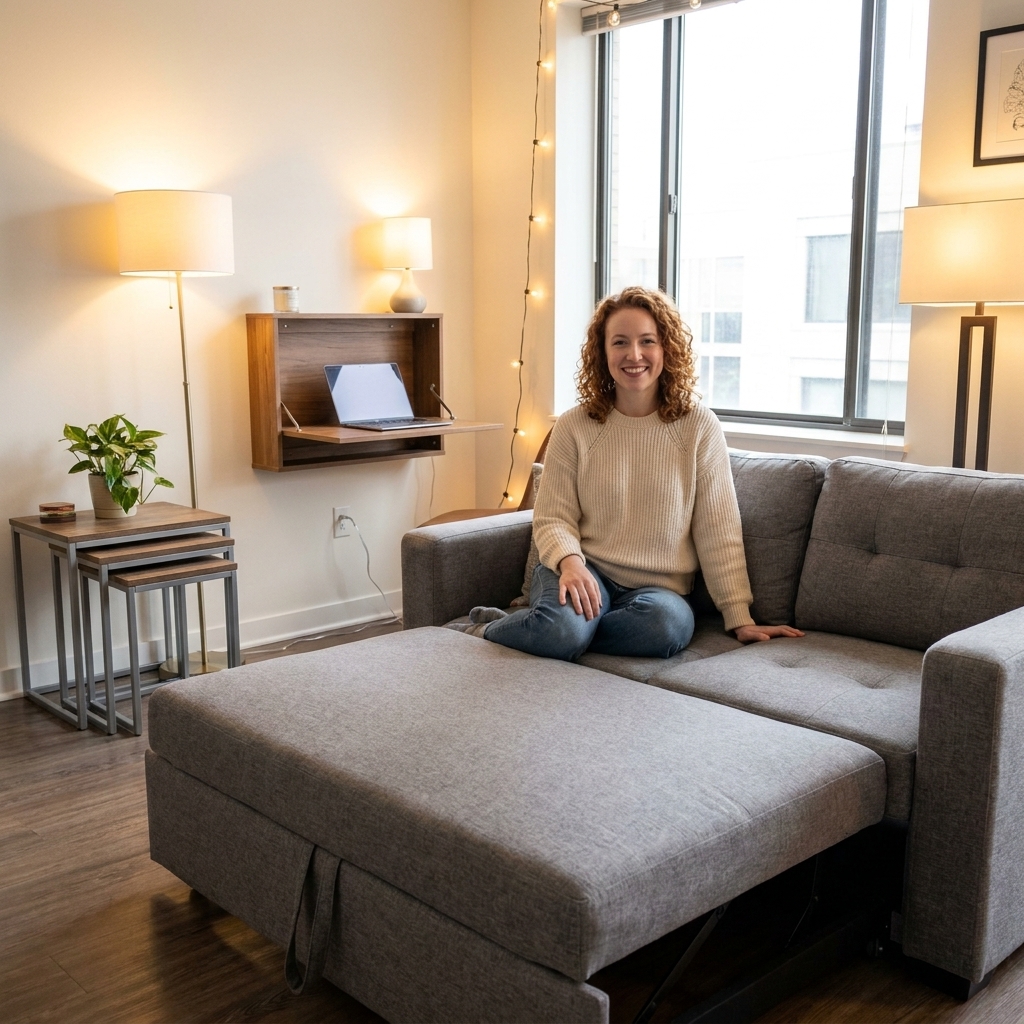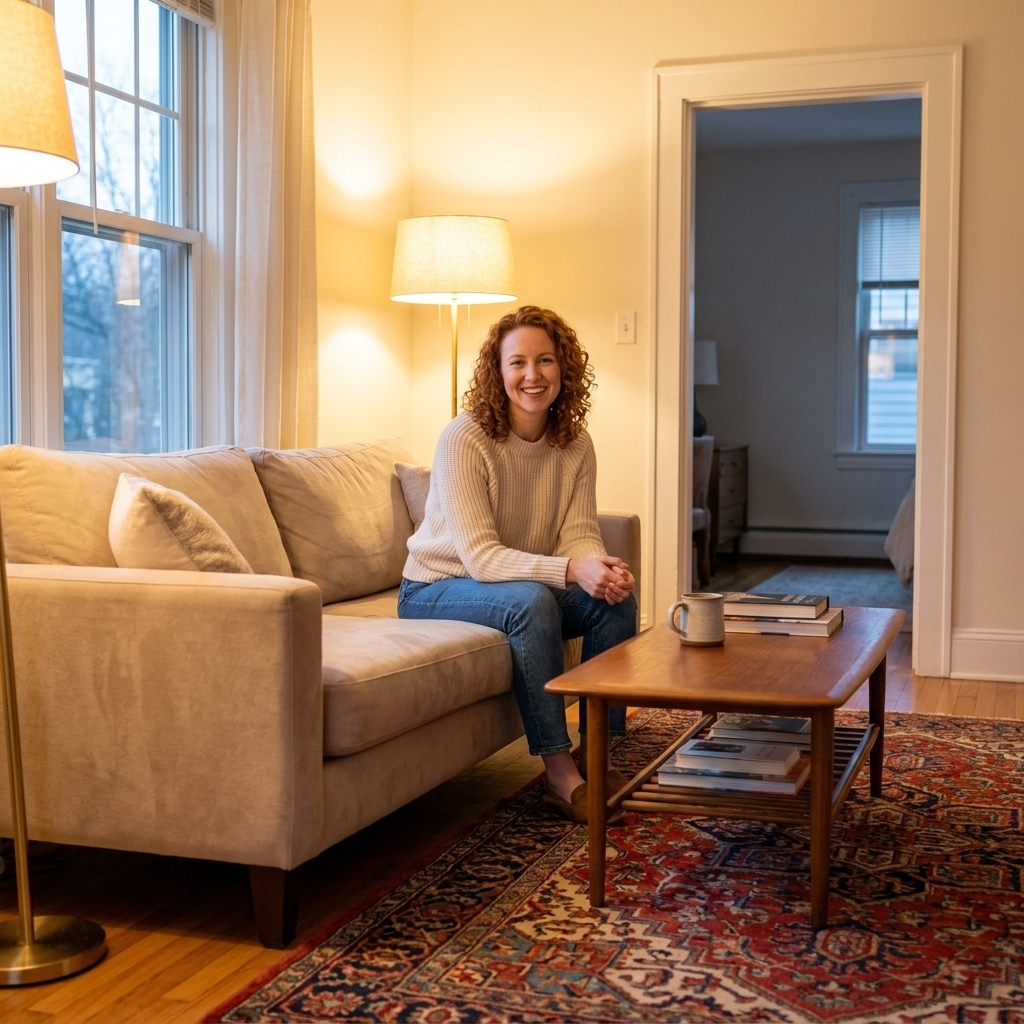
Save this room-by-room clearance guide: the standard inches you need between furniture pieces for easy traffic flow, comfortable seating, and layouts that fe...
Havitza Home
Feng Shui Furniture Placement: 5 Rules for Better Energy Flow
Use these 5 beginner-friendly Feng Shui furniture placement rules to create a calmer, more supportive bedroom and living room, with simple layout fixes you can do today.

Clara Jenkins
Clara Jenkins is a former theater set designer turned interior styling expert with over a decade of experience transforming everyday spaces into beautiful sanctuaries. Through her work at havitza.com, she shares practical styling tips, accessible furniture layouts, and inspiring color palettes to help anyone create a home they truly love.
Published October 17, 2026
Updated October 17, 2026
When I was designing theater sets, we used layout like a silent script. Where you entered, where you paused, what you could see first, and where the light landed. Feng Shui is different in tradition and language, but the goal feels surprisingly familiar: arrange your space so it supports the life happening inside it.
You can start without a compass, special cures, or a full redesign. Many modern, Western approaches begin with comfort, sightlines, and giving your body a clear sense of safety and ease. (More classical schools may lean harder on direction and compass readings, but you do not have to start there to make meaningful changes.)
This guide stays focused on furniture placement, not bagua mapping or advanced cures. Below are five simple, actionable rules you can use right now, especially in the living room and bedroom.
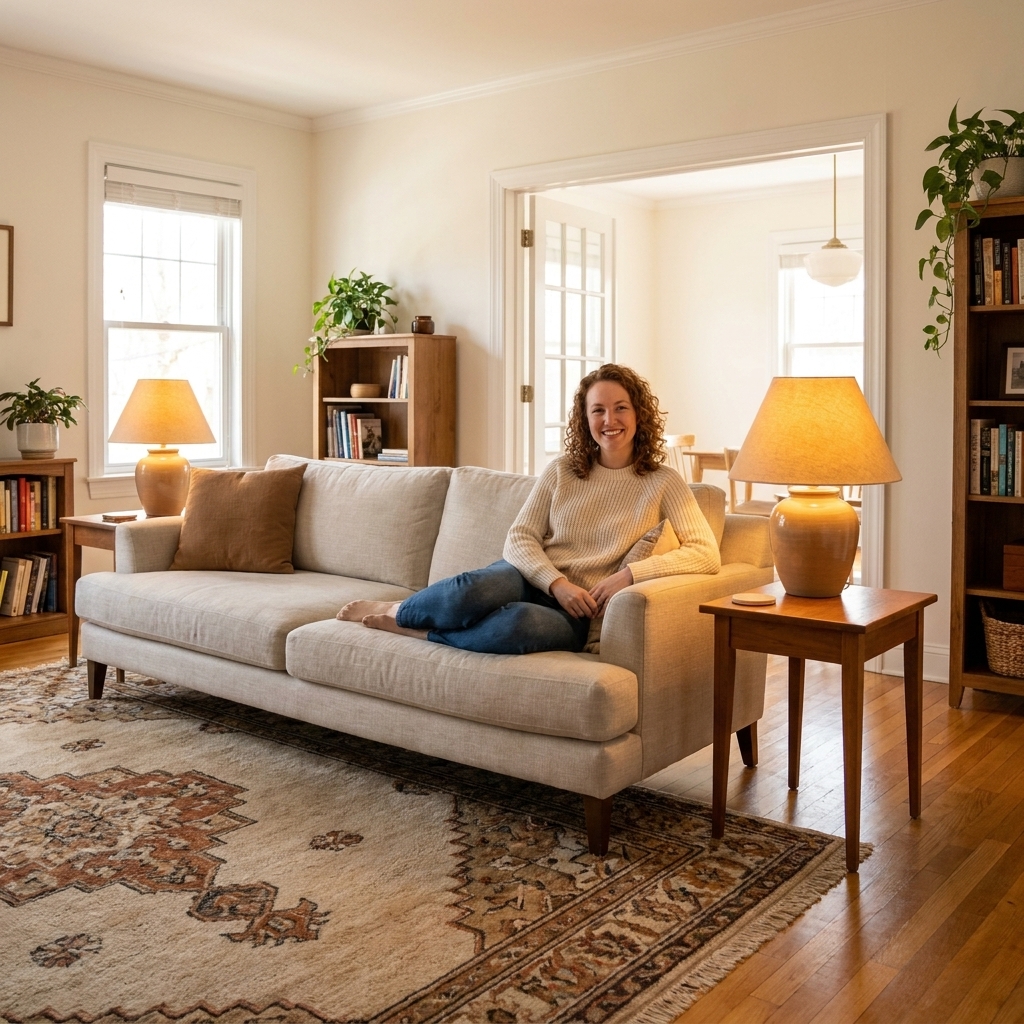
Rule 1: Use the command position
The “command position” is the Feng Shui workhorse, and it is commonly taught across many schools. It means the most important seat or sleeping spot should feel protected and in control. Practically, it looks like this:
- You can see the door from the bed or primary sofa seat.
- You are not directly in line with the door.
- Your back is supported by a solid wall, not floating in space.
In the bedroom
Place the bed so you can see the bedroom door while lying down, but avoid having your feet pointing straight at the door if you can. Ideally, the headboard sits against a solid wall. If the headboard wall must share space with a door, choose the most solid option and compensate with a tall, sturdy headboard.
In the living room
Try to position the sofa so it faces into the room with a view of the main entry. If your sofa must float, create “support” with a console table behind it, a narrow bookcase, or even a long bench that visually and physically defines a boundary.
Quick fix: If your sofa is stuck with its back to the entry, place a mirror where you can subtly see the doorway from the main seat. Choose one that feels intentional, not like a security camera.
Mirror note: Some traditions discourage mirrors facing the bed, and some people sleep poorly with reflected light or movement. If a mirror near the bedroom makes you restless, skip it and prioritize a solid headboard, curtains, and lighting instead.
Rule 2: Keep pathways clear
In Feng Shui terms, you are helping chi (life force, or energy) circulate. In real-life terms, you are making your home easier to live in. A room with pinched walkways and furniture you have to shimmy around will always feel a little tense.
- Keep main walkways comfortably wide where possible. As a practical design guideline, many people aim for roughly 30 to 36 inches, but your space and needs come first.
- Avoid forcing people to walk through the middle of a conversation area to get across the room.
- Let doors open fully without bumping into a chair, hamper, or side table.
In the bedroom
Aim for access on both sides of the bed. Even if one side is tighter, try not to fully trap one partner against the wall if you can help it. It can affect how the room feels, and how mornings feel. Also, do not sacrifice basic safety: keep a clear path to the door and do not block vents, returns, or radiators.
In the living room
Do not let the coffee table become a hurdle. If you constantly hit your shins, the table is too large, too close, or the seating is too cramped. Many living rooms feel best with about 14 to 18 inches between the sofa and the table, but let comfort be the final vote. Consider a smaller round table or an upholstered ottoman that softens the edges.
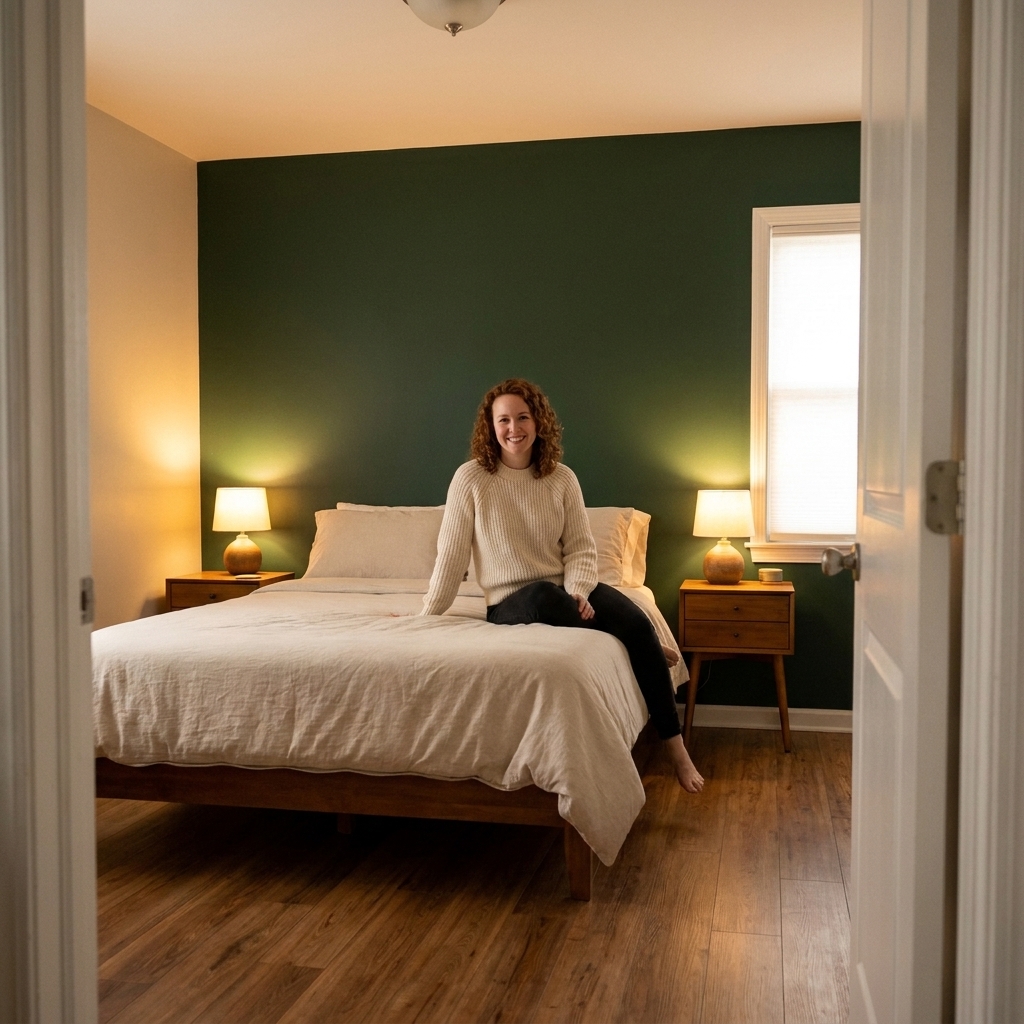
Rule 3: Add solid backing
This is my favorite Feng Shui principle because it aligns so well with how humans relax. We settle when we feel supported. In Feng Shui, that solid backing is sometimes described as having a “mountain” behind you.
Easy ways to add support
- Bed: A substantial headboard, ideally wood or upholstered with a sturdy frame.
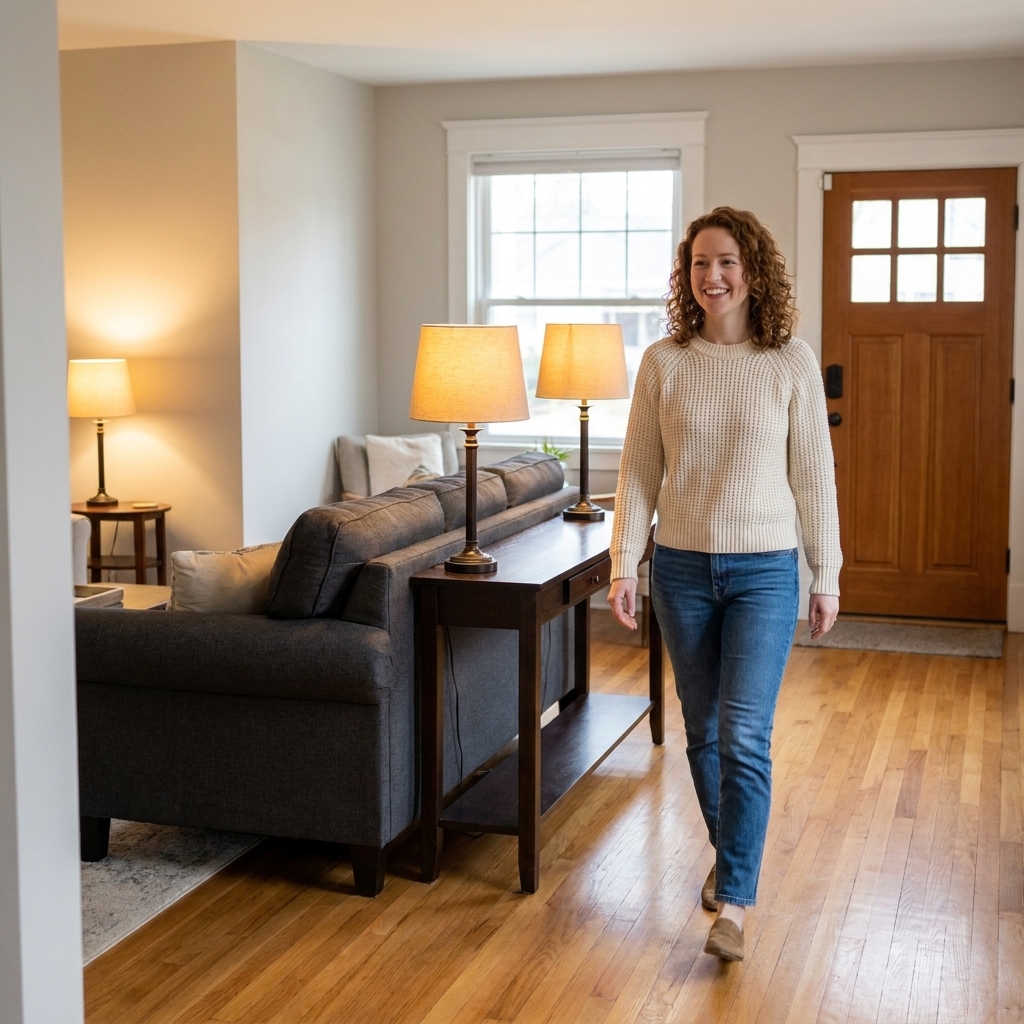
- Sofa: Place it against a wall, or add a sofa table behind it with a lamp to create visual weight and stability.
- Desk (bonus): If you work from home, avoid sitting with your back to the door when you can. If you cannot move the desk, use a high-backed chair and add a small mirror angled to reflect the entry.
My tip: If the only wall available is a window wall, you are not “doing it wrong.” Use lined curtains, a strong headboard, and warm lighting to create that anchored feeling. Comfort counts.
Rule 4: Balance pairs
Feng Shui often emphasizes balance, and the easiest place to practice it is with pairs. Not because everything must match, but because many people find symmetrical weight calming, especially in a room meant for rest.
In the bedroom
- Use two nightstands if you can, even if they are small.
- Use two bedside lights for even, flattering light.
- Keep the bed visually centered on its wall when possible.
If you only have space for one nightstand, balance the other side with a wall-mounted sconce and a small floating shelf, or a slim stool that can slide under a ledge.
In the living room
You can create “pair energy” without matching end tables. Try two similar lamps, two pillows in related tones, or two chairs that visually bookend the sofa.
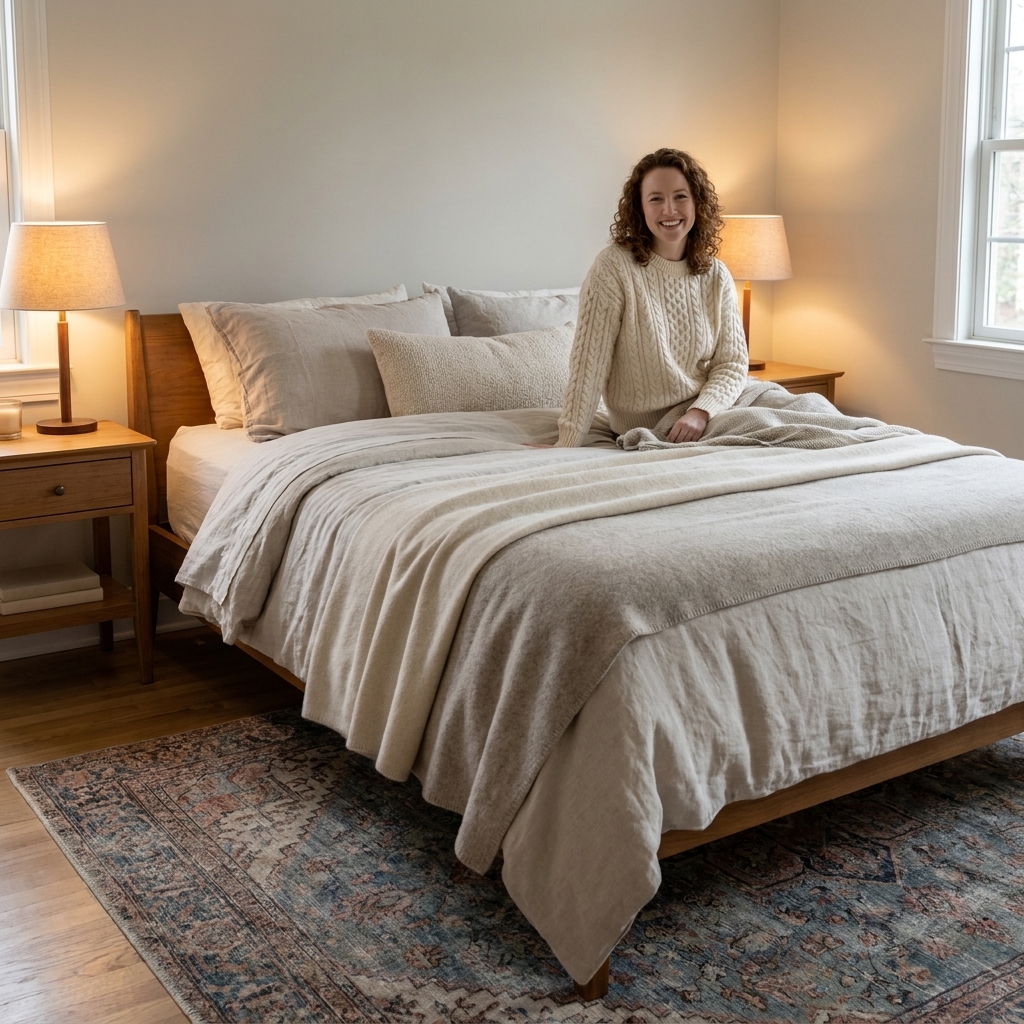
Rule 5: Soften sharp corners
In Feng Shui, harsh angles aimed at where you rest are often called “poison arrows.” You do not need to fear your furniture. Just notice what feels pokey, aggressive, or visually loud.
Common pressure points and fixes
- Coffee table corners aimed at knees: Swap to a round or oval table, or pull it a few inches away from the main path.
- A dresser corner aimed at the bed: Angle the dresser slightly, add a plant to soften the edge, or drape a textile runner to reduce the sharp feel.
- Bed under a heavy shelf: If you cannot move the bed, move the shelf. If the shelf must stay, keep it shallow, secure it properly, and avoid storing heavy items overhead.
- Overcrowded seating: Give each piece breathing room. Even a small shift can change the mood of the room.
My design translator: If a corner makes you tense when you walk past it or lie near it, it is worth adjusting. Your body is excellent at Feng Shui.
Room checklists
Bedroom checklist
- Bed has a solid headboard and solid wall support when possible.
- You can see the door from bed, but you are not directly in line with it.
- Clear paths on both sides of the bed, even if one side is tighter.
- Balanced elements: nightstands, lighting, and visual weight.
- No heavy objects overhead, and sharp corners are softened.
Living room checklist
- Main sofa seat can see the entry to the room.
- Seating is anchored with a rug large enough for at least the front legs of key pieces.
- Walkways are open and intuitive, with no obstacle course feeling.
- Support exists behind seating, either a wall or a console.
- Lighting is layered: at least two warm lamps plus overhead as needed.
Common layout issues
My bed has to go under a window
This is incredibly common, especially in apartments. Use a tall, sturdy headboard, add substantial curtains or shades, and keep the window area tidy. The goal is to restore that grounded, protected feeling.
My sofa must face away from the door
Add a console table behind it and place a lamp (or two) there. If it still feels uneasy, position a mirror so the seated spot has a view of the entry without turning your living room into a funhouse.
I have an open plan and everything feels floaty
Rugs are your best friend. Use one to define the living zone. Then close the loop with furniture that invites conversation: sofa plus chairs facing inward, not all pieces pushed to the perimeter like wallflowers.
My room is tiny. Does Feng Shui still apply?
Yes, maybe even more. Focus on the two biggest wins: clear pathways and a well-placed, anchored bed or sofa. Tiny rooms love intentional editing.
A 20-minute reset
- Minute 1 to 5: Clear the main walkway and remove anything that blocks a door.
- Minute 6 to 10: Sit on your sofa and lie on your bed. Can you see the door? Do you feel exposed?
- Minute 11 to 15: Add backing: move the bed to a solid wall if possible, or place a console behind the sofa.
- Minute 16 to 20: Soften one sharp corner and add one warm light source (a lamp with a soft bulb can change everything).
Feng Shui is not about perfection. It is about making your home feel like it has your back. Start with one room, one rule, one small shift, and notice how your body responds. That response is your best design compass.