A step-by-step method for placing sofas, chairs, and tables in compact living rooms so you get clear walkways, cozy conversation zones, and a bigger-feeling ...
Havitza Home
Finished Basement Layouts for Multiple Zones
Turn a big open basement into a cozy, functional space with clear living, gaming, and work zones. Use rugs, modular shelving, lighting, and smart furniture placement to define each area.

Clara Jenkins
Clara Jenkins is a former theater set designer turned interior styling expert with over a decade of experience transforming everyday spaces into beautiful sanctuaries. Through her work at havitza.com, she shares practical styling tips, accessible furniture layouts, and inspiring color palettes to help anyone create a home they truly love.
Published October 17, 2026
Updated October 17, 2026
One of the funniest things about a finished basement is that it can feel too open. Like a blank stage waiting for the set to arrive. The good news is you do not need walls to create rooms. You need boundaries your body understands: a rug under your feet, a light over your head, a “back” to the space, and pathways that make sense. (If your feet step onto a rug and your eyes land under a pendant or lamp, your brain says, “this is the room.”)
Below are my favorite, real-life ways to zone a large open basement into a living area, a gaming hangout, and a work zone, without making it feel chopped up or cluttered.
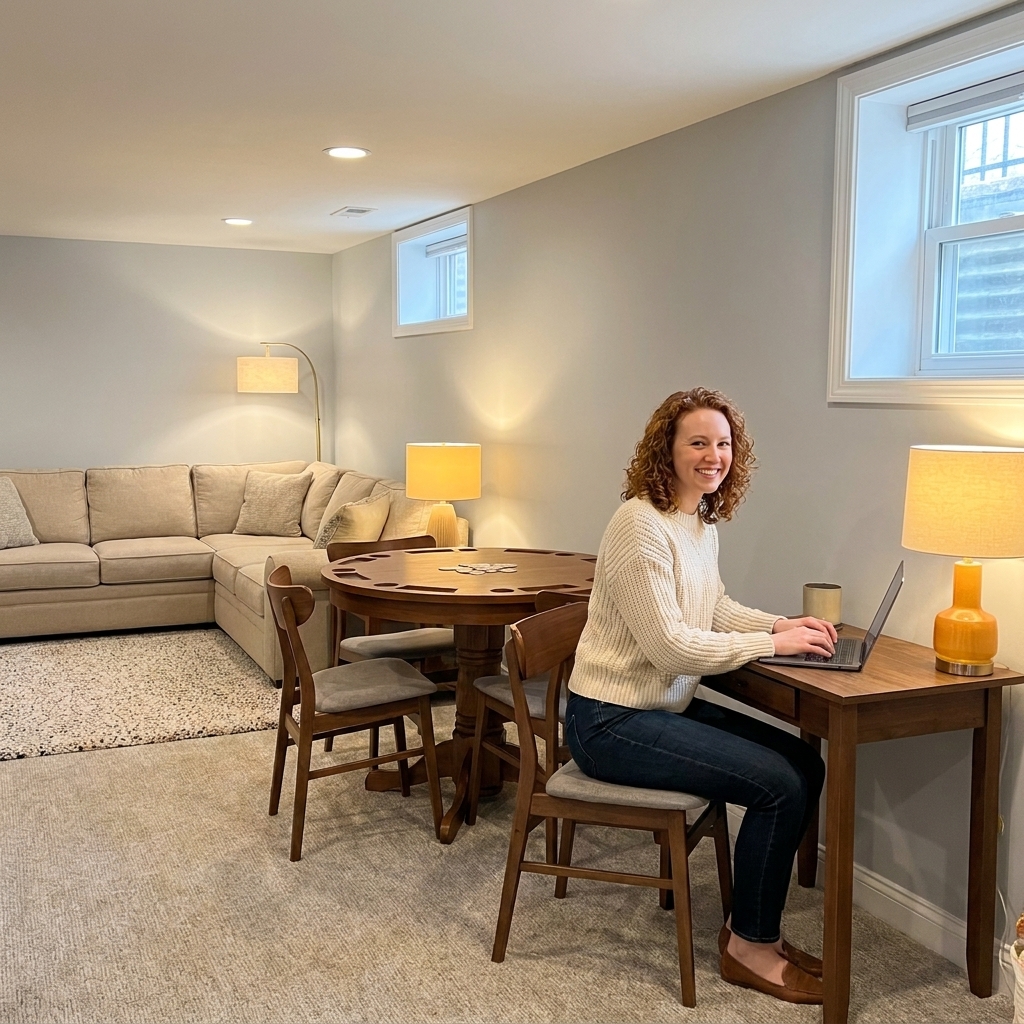
Start with a zoning plan
In theater, we block movement first, then dress the scene. Same idea here. Before you commit to furniture, decide how people will actually move through the space.
Step 1: Find your traffic lanes
Most basements have a few non-negotiables: the stairs landing, an exterior door, a bathroom, a utility closet, and sometimes a support post. Your goal is to keep a clear main pathway between these points so the room does not feel like an obstacle course.
- Main path: A good target is a 36-inch-wide walkway where possible. If you need wheelchair access or you are moving bulky items through here often, go wider.
- Secondary paths: Around 30 inches can work between zones, especially in a basement where people are mostly lounging.
Step 2: Choose your anchor zone
Pick the zone that will visually lead the room. For most families, that is the living zone (sofa, TV, conversation). Place it in the most comfortable spot, usually the area with the best ceiling height, the fewest soffits, and the cleanest wall for a media setup.
Step 3: Give each zone a job and a sound level
This tiny exercise prevents layout regret.
- Living zone: relaxing, talking, movie nights (medium sound)
- Gaming zone: active, louder, more movement (higher sound)
- Work zone: focused, quiet, task lighting (low sound)
Whenever possible, place the work zone farthest from the gaming zone. If that is not possible, use shelving, soft materials, and lighting to buffer it.
Area rugs: easy “walls”
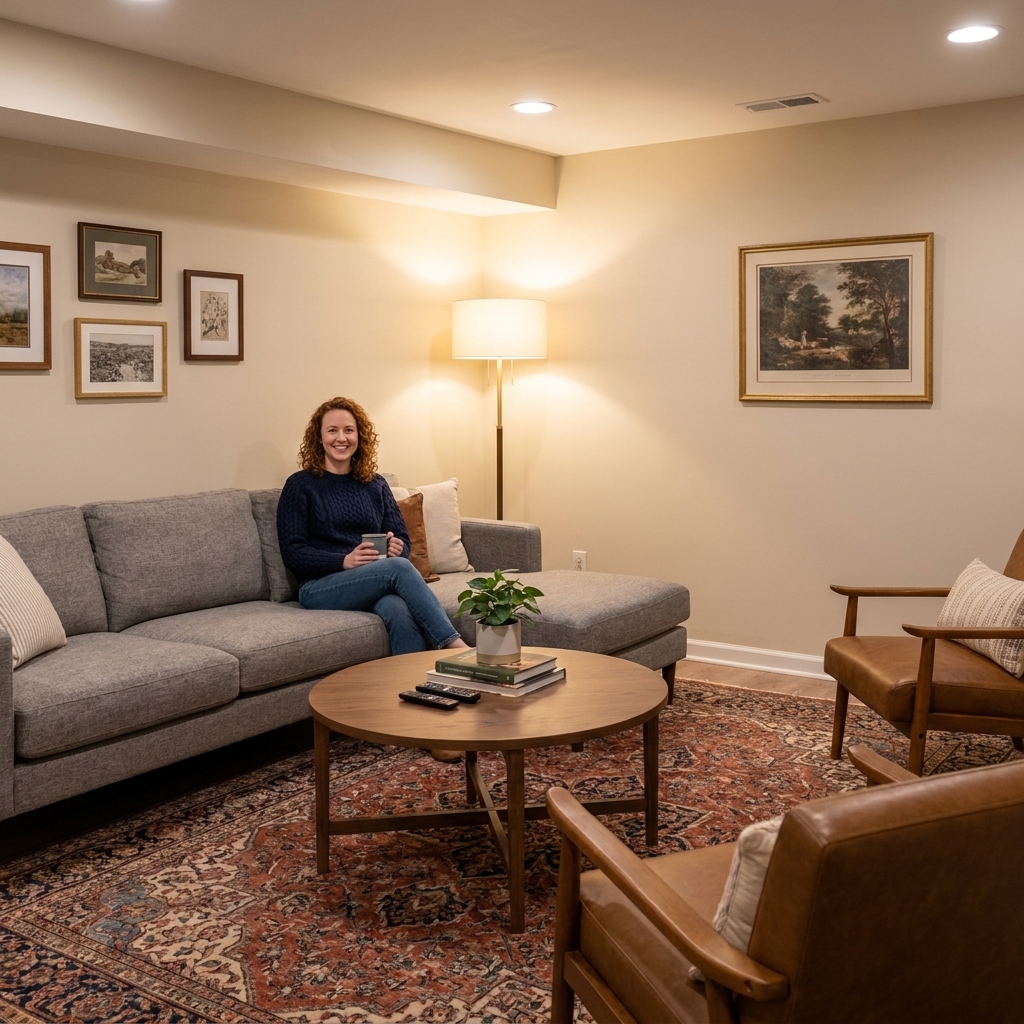
If you take only one idea from this article, let it be this: rugs tell your brain where one room ends and another begins. They also make basements feel warmer, both visually and literally.
Basement-specific note: if you have any moisture or humidity issues, handle that first (dehumidifier, sealing, drainage). Then choose rug materials and pads that will not trap moisture, and skip anything that smells musty the minute the weather changes.
Living zone rug rules
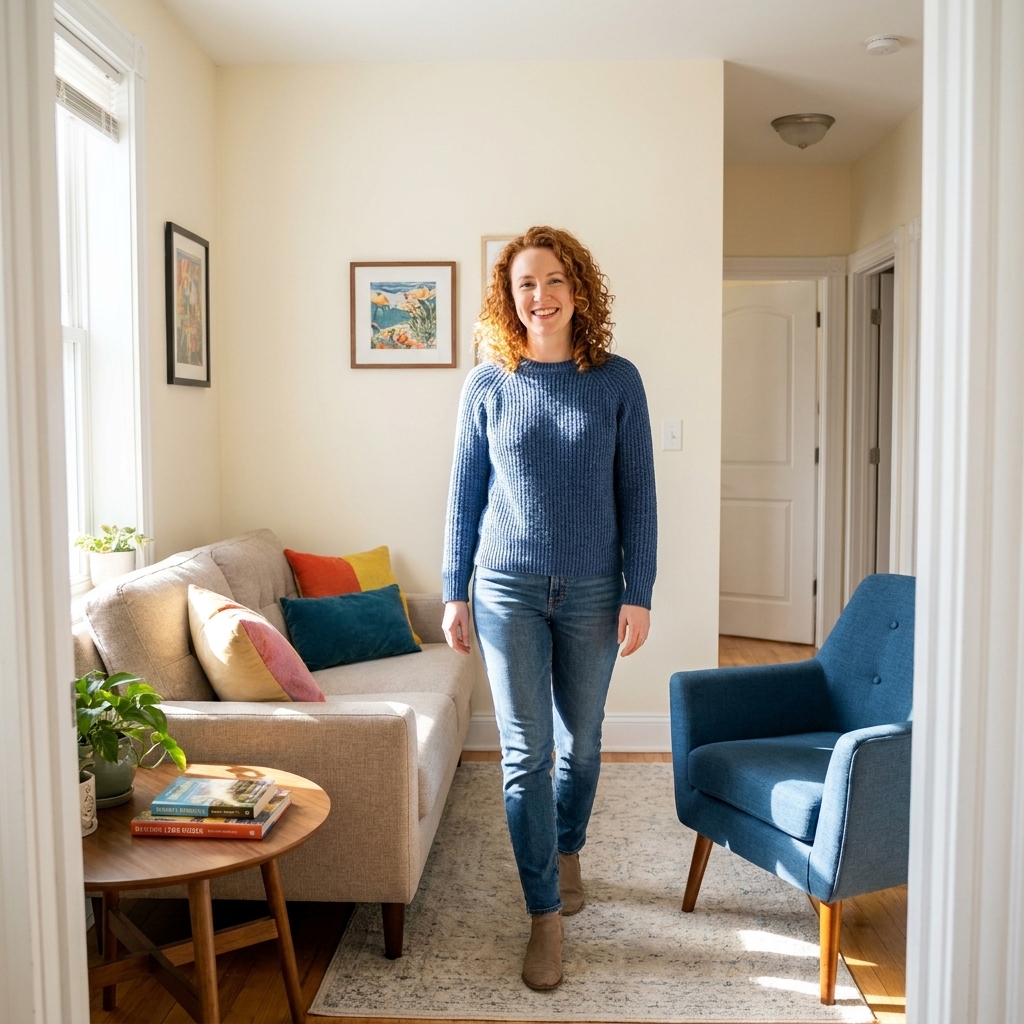
- Go bigger than you think. In an open basement, a too-small rug makes the seating area look like it is floating.
- Front legs on. At minimum, the front legs of the sofa and chairs should sit on the rug. Ideally, all legs are on.
- Use size as a shortcut. In many basements, an 8x10 works for a smaller seating group, while a 9x12 (or larger) is often the sweet spot for a sectional or wider layout.
- Texture matters. Flatweaves and low-pile rugs are great for basements because they are easier to vacuum and maintain.
Gaming zone rug rules
- Choose durable, forgiving fibers. Think low-pile, indoor-outdoor styles, or tight weaves that can handle snack crumbs and rolling chairs.
- Define the play footprint. The rug should fit the table or gaming setup plus enough space to pull out chairs comfortably.
Work zone rug rules
- Use a thinner rug if you have a rolling chair. Or use a chair mat on top of a low-pile rug.
- Visually quieter is better. A subtle pattern helps the work zone feel calm even if the rest of the basement is lively.
Modular shelving: divide without closing
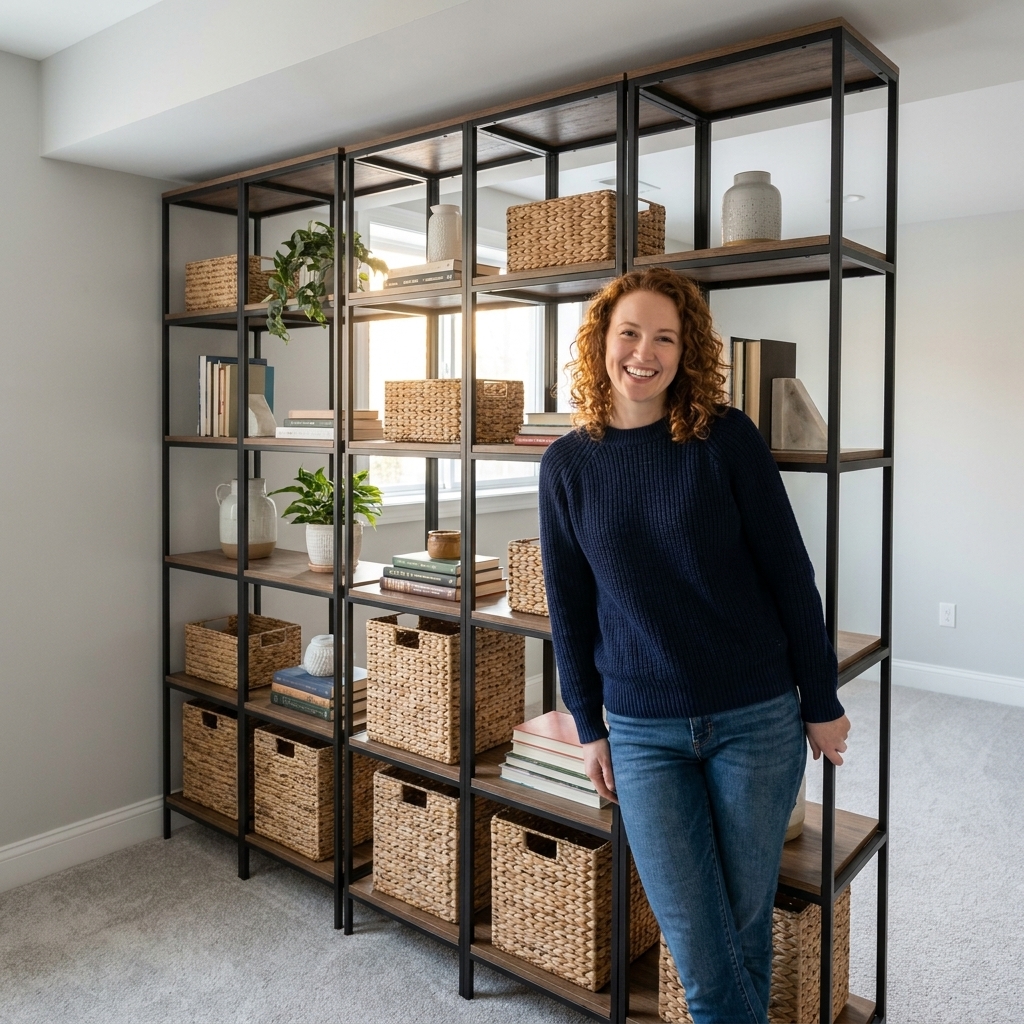
Modular shelving is my favorite way to create separation in a basement because it acts like architecture, but it still lets light travel. It is also flexible. Your basement will change as your life changes, and modular pieces can adapt with you.
Where modular shelving works best
- Between living and gaming: A low, open shelf can hold board games and baskets while subtly signaling, “new zone starts here.”
- Behind a sofa: A console-height shelf gives the seating area a “back wall” feeling, which instantly makes it cozier.
- As a work zone boundary: A taller open shelf can screen your desk from the rest of the room while still feeling airy.
Style it so it looks intentional
- Use matching bins. Basements collect stuff. Lidded baskets or fabric bins make it look styled, not stored.
- Repeat a material. Black metal, light oak, or warm walnut. Pick one and echo it across zones for cohesion.
- Leave breathing room. A shelf stuffed edge-to-edge will feel like a storage room divider. Aim for about one third open space.
Furniture placement: make rooms
Furniture placement is your floor plan. In an open basement, the backs of sofas, the orientation of chairs, and the direction of a desk can do the job of walls.
Create a U or L in the living zone
A sectional is wonderful down here, but it is not the only option. The goal is to form a shape that holds conversation.
- Option A: Sofa plus two chairs facing each other
- Option B: Sectional plus one swivel chair to soften the angles
- Option C: Sofa facing TV, loveseat perpendicular to create a clear edge
Pro tip: swivel chairs are magic in multi-use basements because they can pivot from TV watching to conversation to keeping an eye on the gaming table.
Let the gaming zone live where it can be a little messy
If you are choosing between the prettiest corner and the most practical corner, give practical to gaming. You want easy access to storage, snacks, and outlets. A game table, arcade machine, or console setup tends to bring accessories with it.
- Clearance: A good target is 36 inches around tables for chair pull-out and movement. If it is also a main thoroughfare, 42 inches feels even better.
- Reduce glare: Face screens away from windows and strong overhead cans.
Turn the work zone so your back is protected
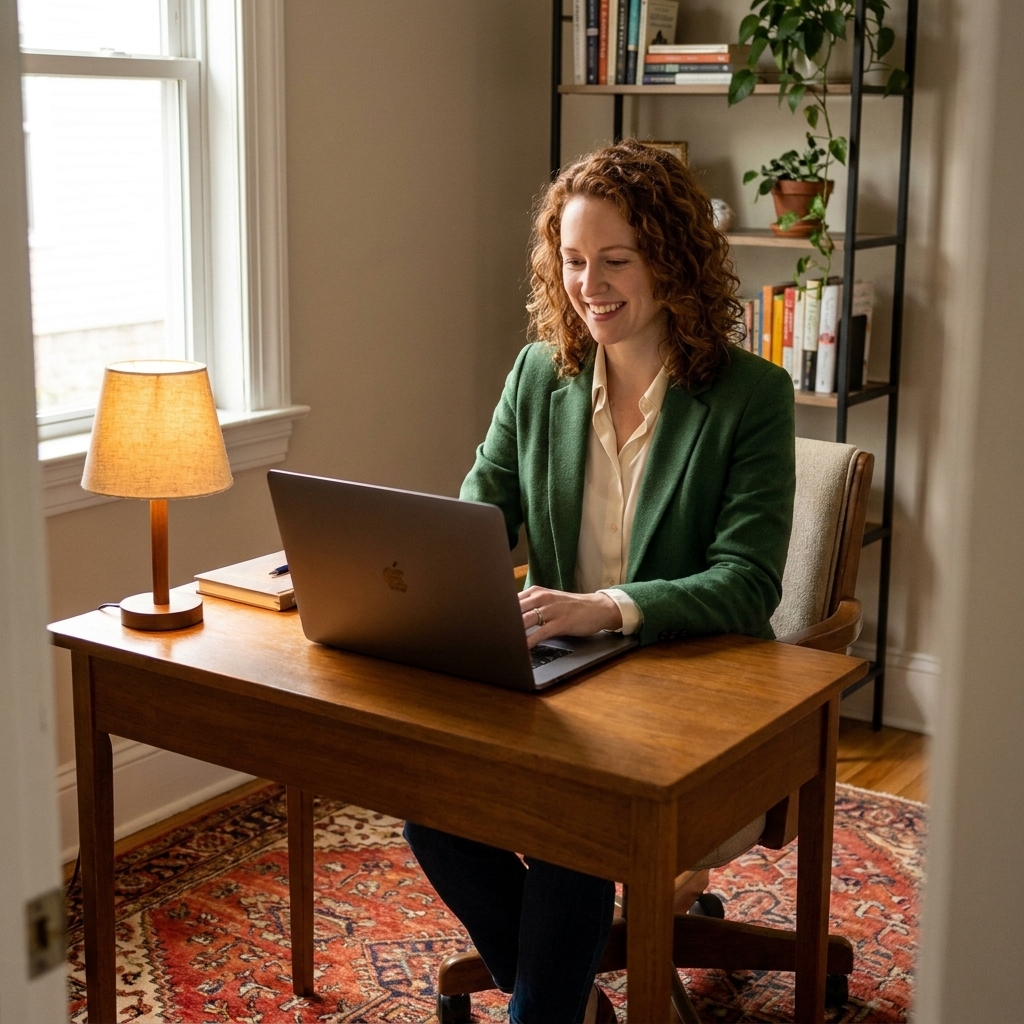
A desk floating in the middle of a basement feels exposed. Whenever possible, place the desk so your back is to a wall or shelving unit. If you cannot, use a tall bookcase behind the chair to create that supported feeling.
If you want extra privacy (or a cleaner video-call background), add a folding screen, a ceiling-mounted curtain track, or a slatted divider that still lets light through.
One more basement reality: plan power before you finalize furniture. Put the desk and gaming setup where outlets actually are, or plan a clean solution (a cord channel, a mounted power strip under the desk, and an Ethernet run if Wi‑Fi gets spotty downstairs).
Lighting: set the mood
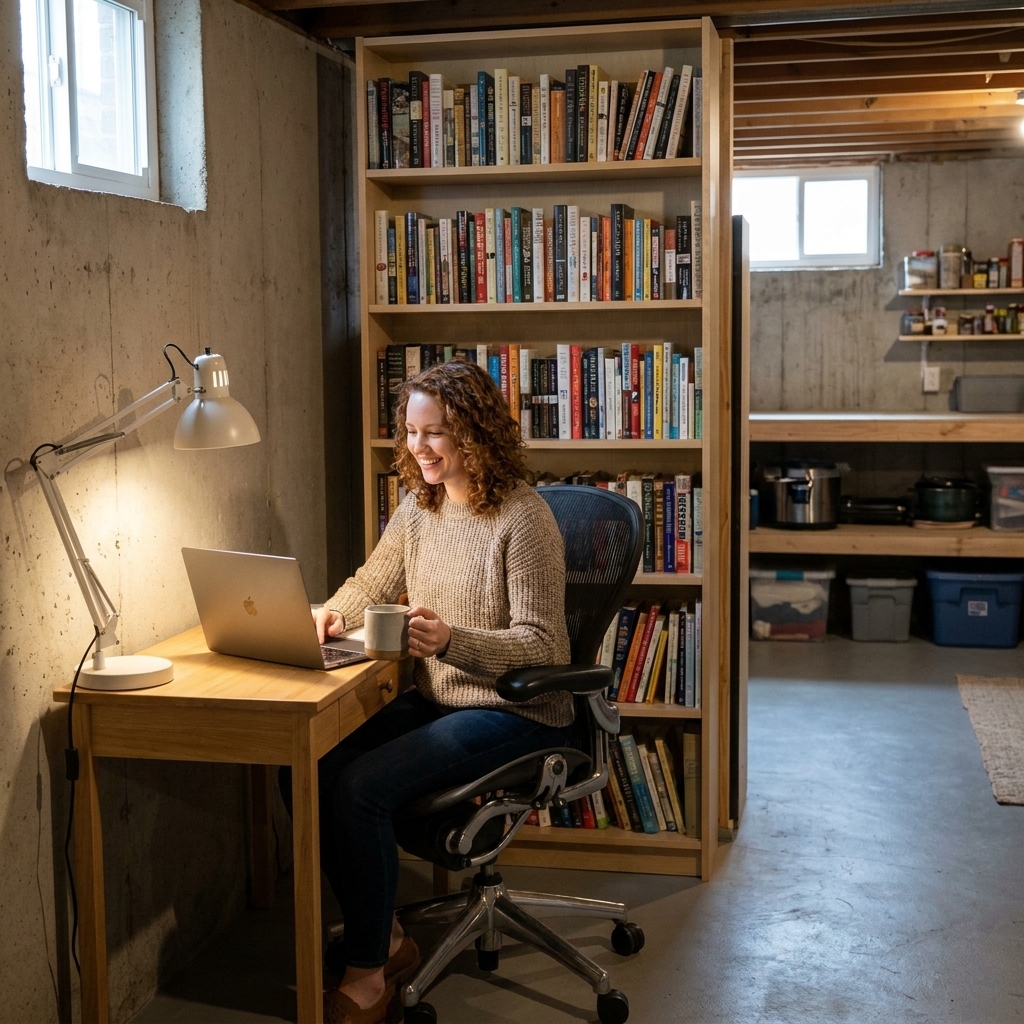
Basements often rely on overhead lighting that makes everything feel like one big multipurpose room. The fastest way to create distinct zones is to layer lighting so each area has its own glow.
My simple lighting formula
- Living zone: one floor lamp + one table lamp + optional wall sconces
- Gaming zone: overhead light on a dimmer + a focused lamp for the table
- Work zone: dedicated task lamp + soft ambient light nearby so it does not feel harsh
Warm bulbs (around 2700K to 3000K) make a basement feel more like a living space and less like a utility area. 2700K reads cozy-warm, while 3000K can feel a touch more neutral in some rooms. If you only change one thing, change your bulbs.
Low ceilings or soffits? Choose low-profile flush mounts, slim floor lamps, and sconces that hug the wall so the light feels intentional without eating up headroom.
Sound and comfort: reduce echo
Open basements can get echoey, and that warehouse feel makes every zone less enjoyable. Soft materials are not just cozy, they are functional. They will not turn your basement into a recording studio, but they do take the edge off.
- Add curtains even if they are mostly decorative. They soften sound and add height.
- Upholstered pieces help like a fabric sofa, padded ottoman, or even a tufted bench in the gaming area.
- Wall decor matters like large framed art, textile hangings, or a gallery wall. Bare drywall bounces sound.
- For a real upgrade: consider an extra-thick rug pad, acoustic panels that look like art, or a few fabric-wrapped boards placed near the TV area.
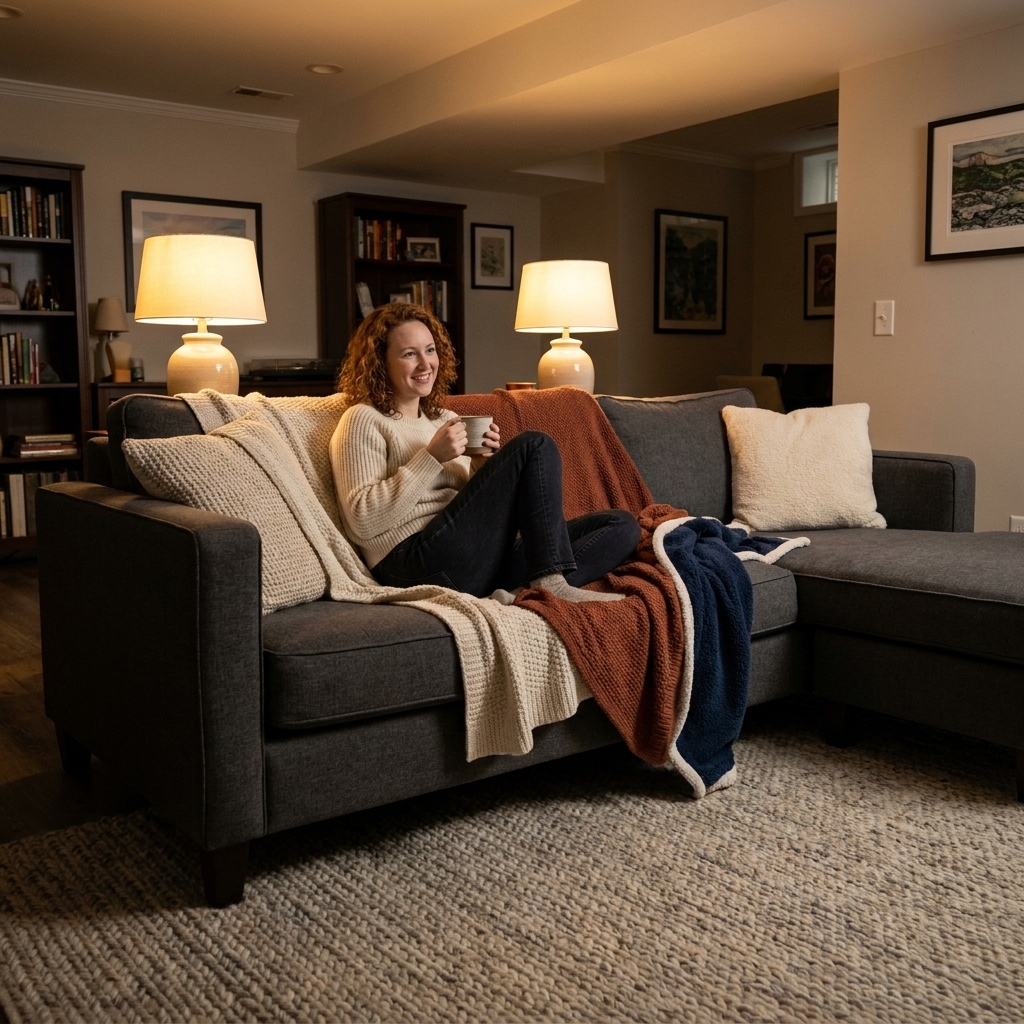
Three layout ideas
Every basement is different, but these three layouts handle the most common challenges: long rectangles, central support posts, and wide open squares.
1) Anchor + wings
Best for: long rectangular basements
- Place the living zone at one end with the TV on the short wall.
- Put the gaming zone in the middle where it can be social and flexible.
- Create a quieter work zone at the opposite end, using a tall shelf or screen to define it.
2) Back-of-sofa divider
Best for: basements with the stairs dropping into the middle of the space
- Float the sofa with its back toward the stairs to create a clear entry moment.
- Put a console table or low modular shelf behind the sofa for drop-zone storage.
- Place the gaming zone beyond the seating area so it feels like a destination.
3) Post as pivot
Best for: basements with one or two support columns
- Treat the support post like a natural corner.
- Use it to separate living and gaming, then add a rug under each zone.
- Add a floor lamp or small round table near the post to make it feel intentional.
Zoning mistakes
Mistake: pushing everything to the walls
Do this instead: Float the seating area on a rug. Create a real room in the middle, then let the edges host storage, a bar cart, or a slim console.
Mistake: using one tiny rug in each zone
Do this instead: Use fewer, larger rugs. If budgets are tight, prioritize a generously sized living zone rug and use smaller, durable options elsewhere.
Mistake: mixing too many furniture styles
Do this instead: Repeat two to three finishes across the whole basement, like black metal, warm wood, and a creamy upholstery. Then let your textiles do the personality work.
Mistake: forgetting storage near the activity
Do this instead: Put closed storage right where the mess happens. Baskets near the sofa for blankets. Cabinets near gaming for controllers and cards. A drawer unit by the desk for cords and paper.
Quick shopping checklist
- One large living zone rug
- One durable gaming zone rug
- One low-pile rug or mat solution for the work zone
- Modular shelving unit (open or mixed open/closed)
- At least three lamps total (two for living, one for work)
- Closed storage bins or baskets
- One flex piece: an ottoman, nesting tables, or a pouf for extra seating
- Cord management basics: a cable tray, cord channel, and a mounted power strip
FAQ
How do you divide a finished basement without building walls?
Use a combination of area rugs, open modular shelving, and furniture orientation. The back of a sofa can define a living zone, while a tall open shelf can screen a work zone without blocking light.
How big should a rug be in a basement living area?
Big enough that at least the front legs of all seating sit on it. In large open basements, going up a size usually looks more polished and helps the seating feel grounded. As a starting point, 8x10 works for many standard groupings, and 9x12 is often better for larger seating or sectionals.
Where should a home office go in an open basement?
Place it in the quietest corner, ideally away from the TV and gaming area. If the basement has any natural light, that is a great spot for the desk. Use shelving behind or beside the desk to create a visual boundary, and consider a screen or curtain if you need more privacy.
What is the easiest way to make a basement feel cozy?
Layer warm lighting and soft texture. Add lamps (not just overheads), a substantial rug, and tactile fabrics like chunky throws, velvet pillows, or a vintage-style patterned rug. Those three moves change the mood instantly.
If you are staring at your open basement wondering how to make it feel like more than one big room, start with rugs and lighting. Once your zones have clear footprints and their own glow, the furniture decisions become so much easier. And if you want a little extra magic, you already know what I am going to say: a vintage rug never hurts.