Mix patterns, textures, and sizes like a stylist. These 10 throw pillow combinations make any living room sofa look more layered, welcoming, and pulled toget...
Havitza Home
How to Layer Textures in a Neutral Room
Keep a neutral room from feeling flat by layering textures: cozy textiles, warm woods, subtle metals, and natural fibers. Easy, budget-friendly styling steps you can do in a weekend.

Clara Jenkins
Clara Jenkins is a former theater set designer turned interior styling expert with over a decade of experience transforming everyday spaces into beautiful sanctuaries. Through her work at havitza.com, she shares practical styling tips, accessible furniture layouts, and inspiring color palettes to help anyone create a home they truly love.
Published October 18, 2026
Updated October 18, 2026
Neutral rooms are my favorite kind of blank canvas. In theater, a “quiet” set only worked if it had depth up close, things that caught light, softened sound, and made the space feel lived in. Your home is the same. If your beige, ivory, greige, or soft white room is feeling a little… flat, it usually is not the color. It’s the texture story.
Texture is what makes a neutral room feel warm, intentional, and inviting. It is the nubby throw that makes the smooth sofa look richer. The veining in stone that keeps a white kitchen from reading sterile. The way a brushed metal lamp turns a corner into a gentle glow.
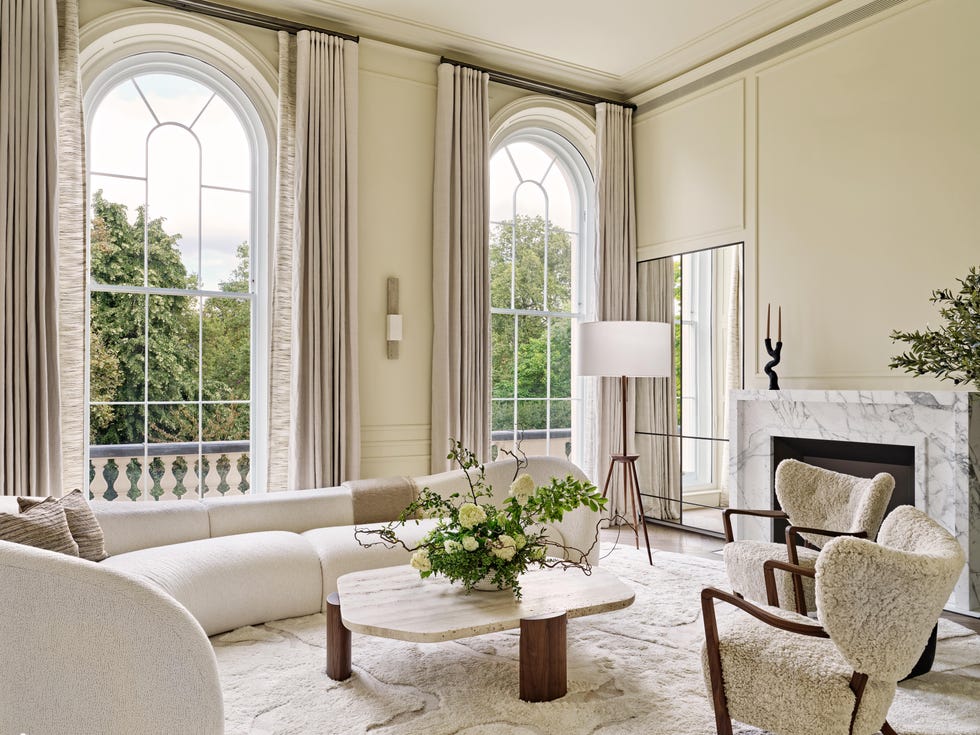
Below, I will walk you through how to layer fabrics, woods, metals, and natural fibers so your neutral space feels dimensional, cozy, and beautifully collected.
Start with one palette
If you want a neutral room that feels serene, keep your colors in the same family, then create contrast through finishes and hand-feel.
- Pick your base neutral: warm (cream, oatmeal, camel) or cool (soft white, stone, gray-beige). Mixing warm and cool can be gorgeous, but do it intentionally.
- Choose 2 to 3 supporting shades: think ivory + sand + mushroom, or soft white + taupe + charcoal.
- Build variety with texture, not louder color: boucle, linen, wool, cane, aged wood, matte ceramic, honed stone.
Design shortcut from my set days: when the palette is quiet, the camera (your eye) needs something to read. Texture is the detail work that makes the scene believable.
Five texture families
When a neutral room feels unfinished, it usually leans too hard on one texture family. The fix is to intentionally mix a few different ones.
1) Soft textiles
These are your cozy, touchable pieces, and they are the fastest way to add warmth.
- Linen and cotton: relaxed, breathable, slightly rumpled in a charming way.
- Wool and felt: instant depth, especially in rugs and throws.
- Boucle and sherpa: adds a pillowy look that reads modern and inviting.
- Velvet: yes, even in neutrals. It catches light and adds a little theatrical depth.
My rule of thumb: in one seating area, I like at least three textile textures, for example a smooth sofa, a nubby throw, and a mixed-weave pillow.
2) Woods
Wood is the texture that keeps neutrals from feeling cold. If your room is mostly white, cream, and light upholstery, wood is the brown sugar that makes the recipe taste finished.
- Light woods: oak, ash, beech for airy softness.
- Medium woods: walnut and teak for richness without heaviness.
- Weathered or reclaimed: adds instant character and a little history.
Mixing tip: you can mix wood tones if you repeat each tone at least once more somewhere else. For example: walnut coffee table + walnut frame, plus oak side table + oak tray. It is a simple way to make variety feel cohesive.
3) Metals
Metals are what make a neutral room feel styled, not just furnished. They bring a subtle shine that plays beautifully with warm lighting.
- Brass: warm, cozy, slightly vintage.
- Blackened metal: adds contrast and structure.
- Nickel or chrome: cooler, crisp, and modern.
Keep it calm: if you are not sure where to start, aim for one dominant metal and one supporting metal. I often think of it as a 70 to 30 split, but it is a guideline, not a law. The goal is to avoid the “hardware store sample wall” effect.
4) Natural fibers
Jute, sisal, rattan, seagrass, cane, and woven baskets are the easiest way to add earthy texture without adding visual clutter.
- Rugs: a jute rug under a softer patterned rug is a classic layering move.
- Storage: baskets for throws, toys, or extra pillows add texture and function.
- Seating and accents: a cane chair, rattan pendant, or woven bench adds airy structure.
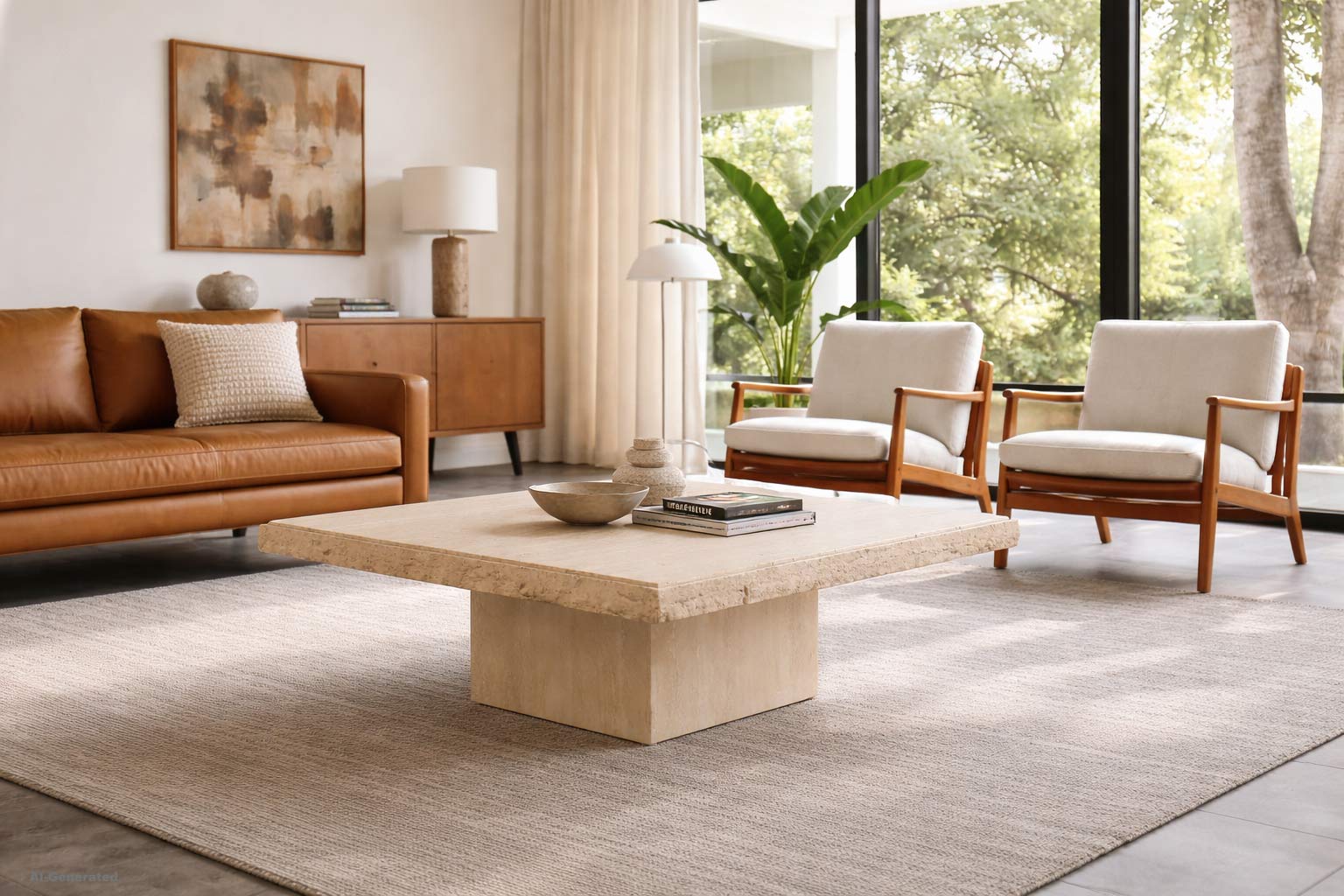
5) Stone and ceramic
Stone and ceramic keep neutrals from turning overly sweet. They introduce weight, temperature contrast, and that beautiful matte-to-gloss variation.
- Stone: travertine, marble, limestone, concrete, or even a stone-look tray.
- Ceramics: matte vases, glossy lamps, hand-thrown bowls with irregular edges.
A layering order
If you are staring at a neutral room thinking, “Where do I even start?” use this order. It is basically the set designer approach: build the base, then add the props that tell the story.
Step 1: Anchor with a rug
Even if it is a solid color, choose something with a looped pile, subtle pattern, or mixed fibers. A rug is a huge visual field, so it does a lot of heavy lifting. It also helps with sound, which is one reason neutral rooms with big rugs feel calmer.
- If your sofa is smooth: go for a rug with more texture (wool loop, vintage style pattern, jute blend).
- If your rug is flatwoven: add texture elsewhere, like a chunky throw and tactile pillows.
Step 2: Add pillows and a throw
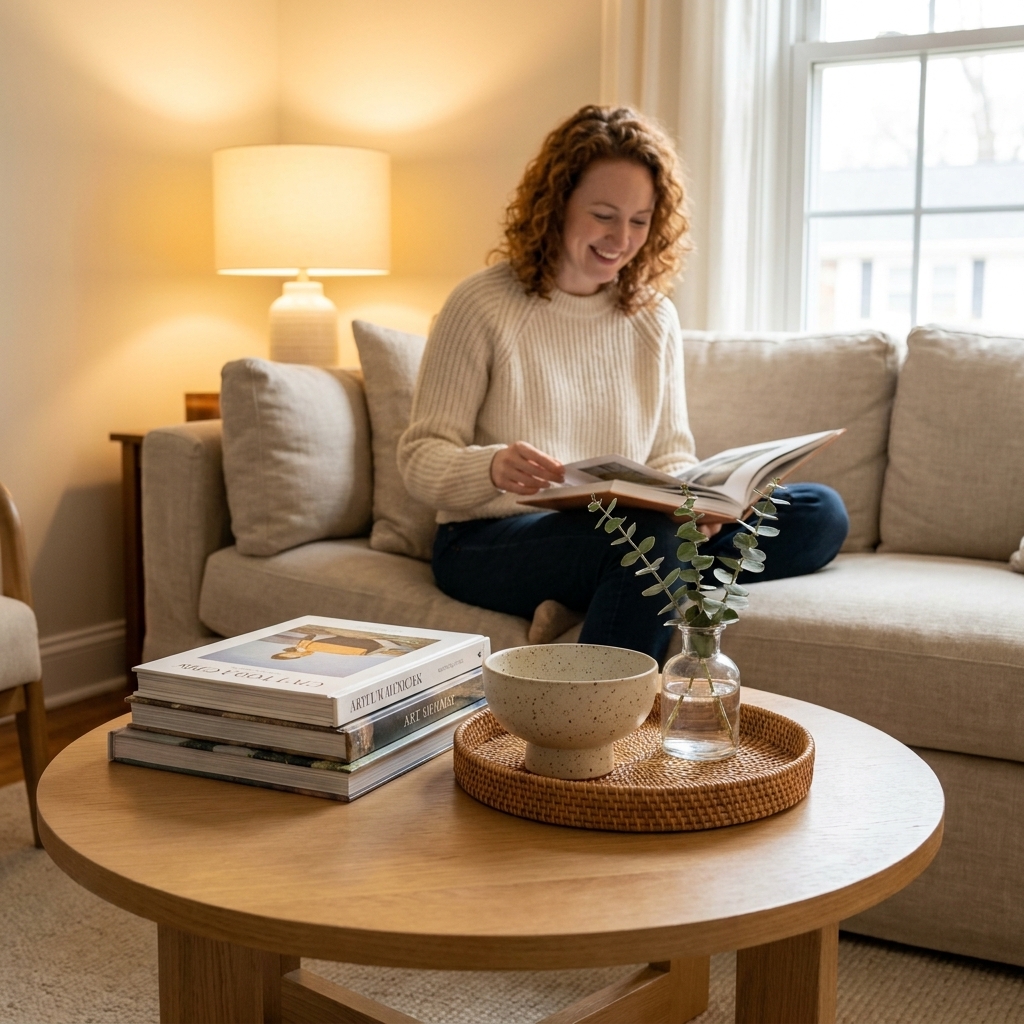
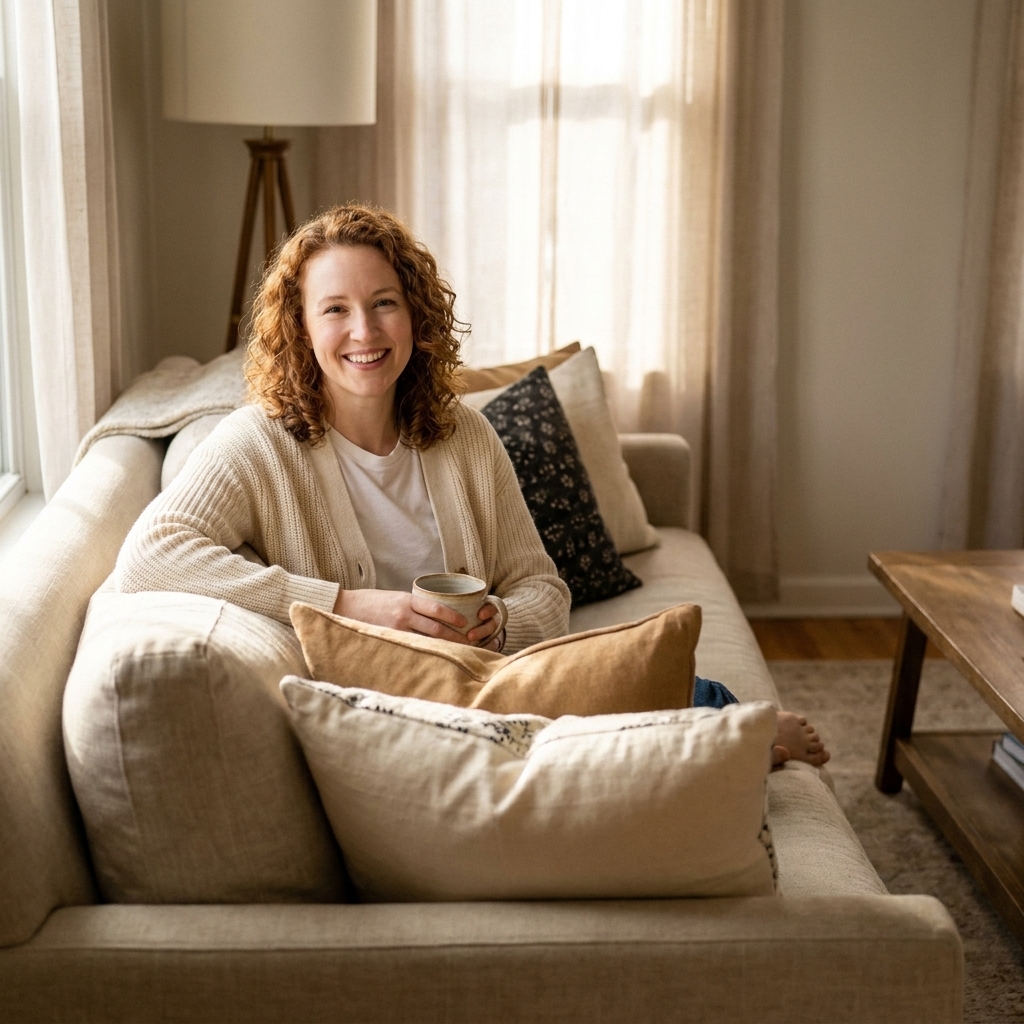
This is where neutrals come alive. Mix sizes and textures so it feels collected, not matchy.
- One structured pillow (linen, cotton canvas)
- One nubby pillow (boucle, wool, slub weave)
- One patterned neutral pillow (thin stripe, tiny check, tonal block print)
- One cozy throw (chunky knit, brushed wool, alpaca blend, or a soft cotton weave)
Step 3: Bring in a warm wood surface
Think coffee table, side table, console, or even a large wood tray on an ottoman. Wood breaks up upholstery-on-upholstery and adds depth immediately.
Step 4: Add one shine moment
A neutral room needs a place for the light to land. Choose one or two pieces that gently reflect.
- Brass pharmacy lamp
- Glass vase on a matte table
- Metal frame mirror
- Small metallic bowl on a shelf
Step 5: Finish with woven and ceramic
These are the final textures that make the room feel intentional: a basket for throws, a woven tray, a ceramic lamp, or a pair of pottery vases.
Easy texture pairings
If you want the fastest wins, these pairings do the work for you. They are balanced, easy to shop, and forgiving if you are building slowly.
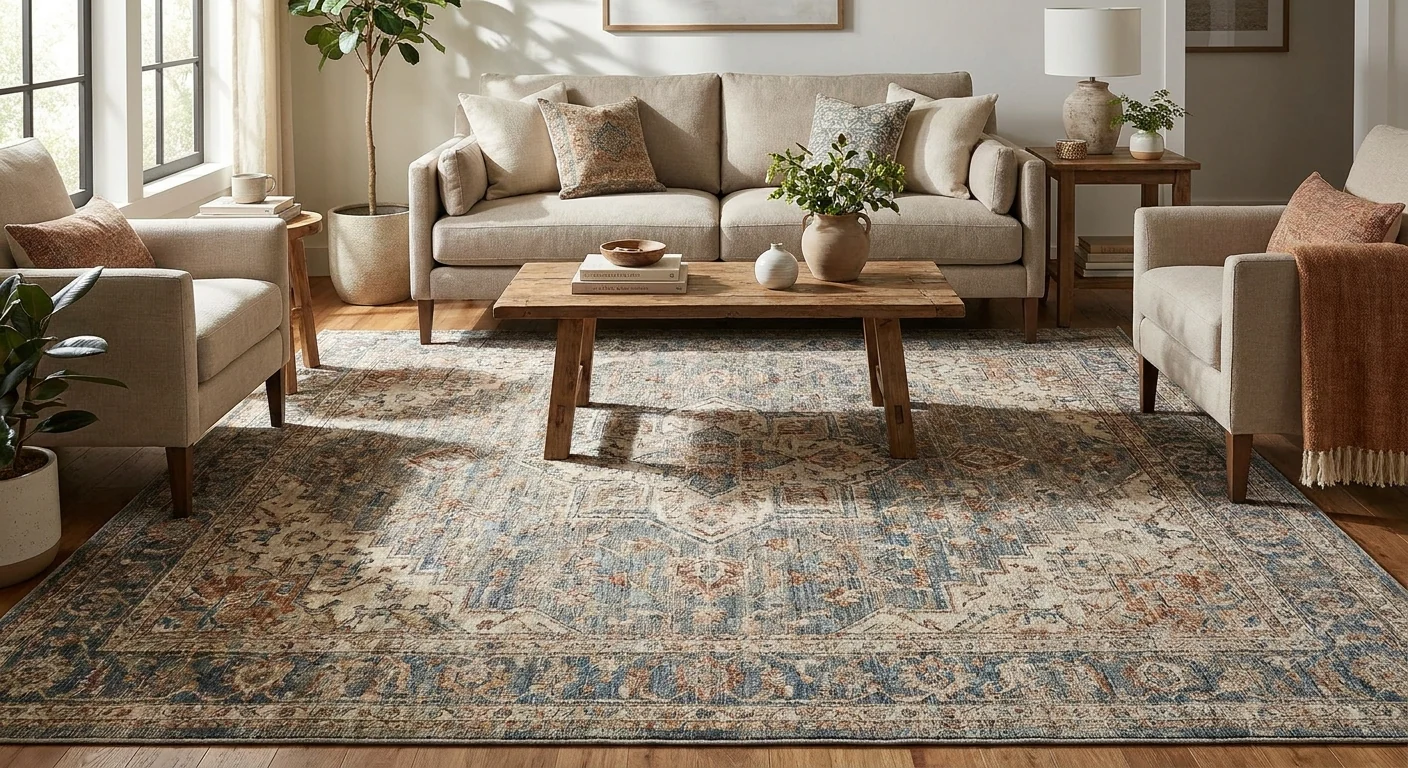
- Linen sofa + vintage rug: relaxed plus character, a forever combination.
- Boucle chair + wood side table: soft and sculptural against warm and grounded.
- Jute rug + wool throw: rougher fiber underfoot, cozy softness up top.
- Matte ceramic lamp + brass accent: quiet and earthy with a little glow.
- Cane or rattan + crisp cotton: airy texture paired with clean simplicity.
High-low texture
You do not need expensive pieces to get a layered look. What you need is contrast and a few materials that read tactile.
Budget-friendly upgrades
- Swap pillow covers: look for slub linen, woven stripes, or wool blends.
- Add a secondhand rug: a vintage-style rug brings pattern without loud color.
- Use baskets as decor: they add texture and hide clutter, which is honestly the best kind of styling.
- Change one lampshade: a linen shade softens light and adds a gentle, tailored texture.
- Style with wood: a simple wood stool, tray, or cutting board can warm up a room fast.
Worth-it investments
- A great rug pad: it makes even a budget rug feel thicker, keeps it from sliding, and helps it wear better.
- One truly cozy throw: a throw you actually want to use is both styling and daily comfort.
- Lighting with warm bulbs: neutral rooms come alive under warm light, and texture looks richer.
Real life notes
Texture is gorgeous, but it should also survive your actual life. A few practical flags I have learned the hard way:
- Jute and sisal: beautiful, but they can shed and they do not love moisture. Consider them for lower-spill zones, or layer a softer rug on top where you sit.
- Boucle with pets: it can snag. If you love the look, consider a tighter boucle, a performance fabric, or use it on a piece your cat cannot claim.
- Velvet: performance velvet is surprisingly durable and easier to clean than people assume. In neutrals, it also hides texture variation nicely.
- Sound: rugs, curtains, and upholstered pieces do more than look soft, they help a room feel quieter. If your neutral space echoes, start with a larger rug and fuller drapery.
Wall texture counts
If your furniture textures are in a good place but the room still feels flat, look up. Vertical texture adds depth without adding clutter.
- Curtains: linen or cotton panels instantly soften a room (and the acoustics).
- Art and framing: a large piece with a linen mat, a wood frame, or a textured canvas gives neutrals something to lean on.
- Subtle wall finishes: limewash, plaster-look paint, or even a softly textured wallpaper can add dimension. If you are renting, a big textile wall hanging can do a similar job.
Common mistakes
If your room is reading more “waiting room” than “sanctuary,” one of these is usually the culprit.
- Everything is the same finish: all matte, all shiny, or all smooth. Mix finishes for depth.
- Too many small decor items: texture needs breathing room. Fewer, larger pieces read more intentional.
- No contrast at all: even a neutral room benefits from a little black or deep brown for structure (frames, hardware, lamp base).
- Rug is too small: a too-small rug makes everything float and feel unfinished. If possible, get at least the front legs of seating on the rug.
- Cold lighting: most people prefer warm light for cozy neutrals. 2700K is very warm, 3000K is warm-white. Your best choice depends on your daylight, paint undertone, and how warm you like a room to feel.
Quick room recipes
Neutral living room
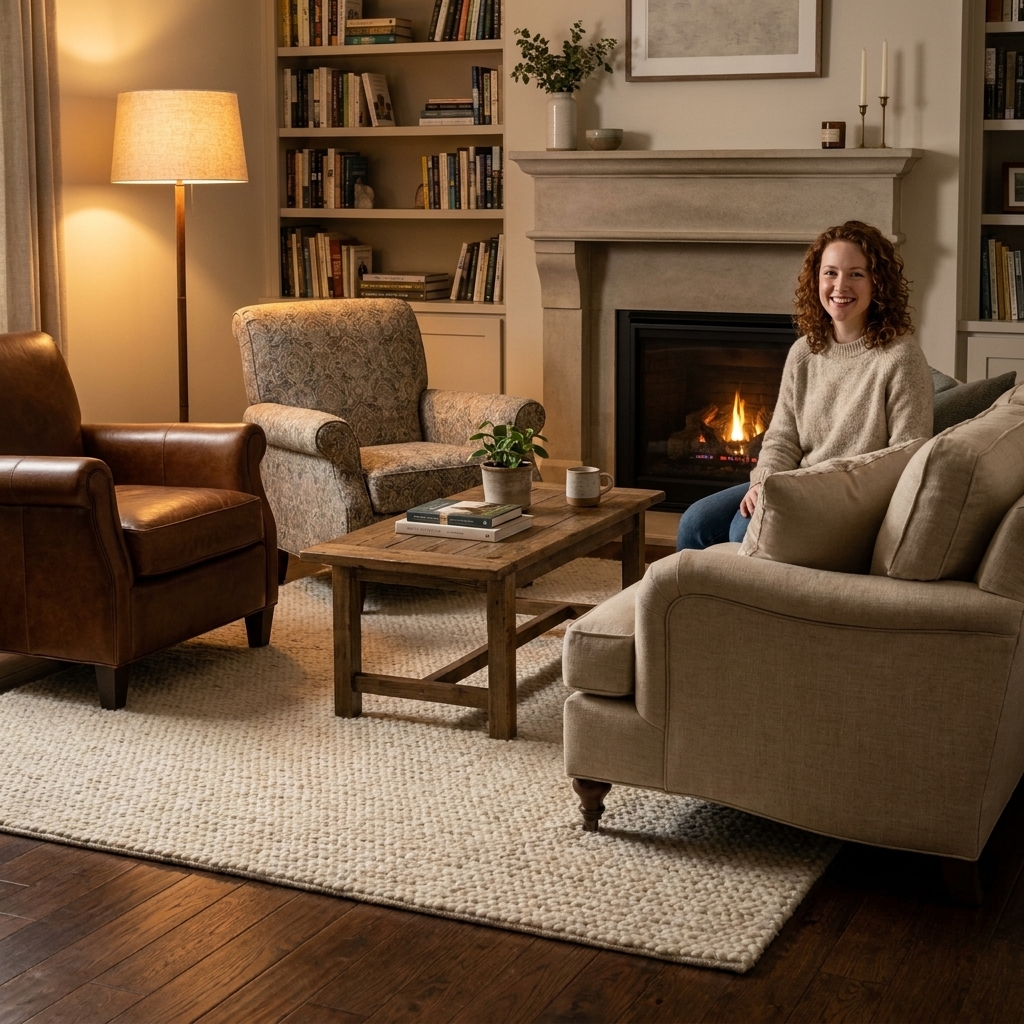
- Textured rug (looped wool or vintage style)
- Linen or cotton sofa
- Boucle or leather accent chair
- Wood coffee table
- Two pillow textures plus one subtle pattern
- One brass or black metal lamp
- Woven basket and one ceramic vase
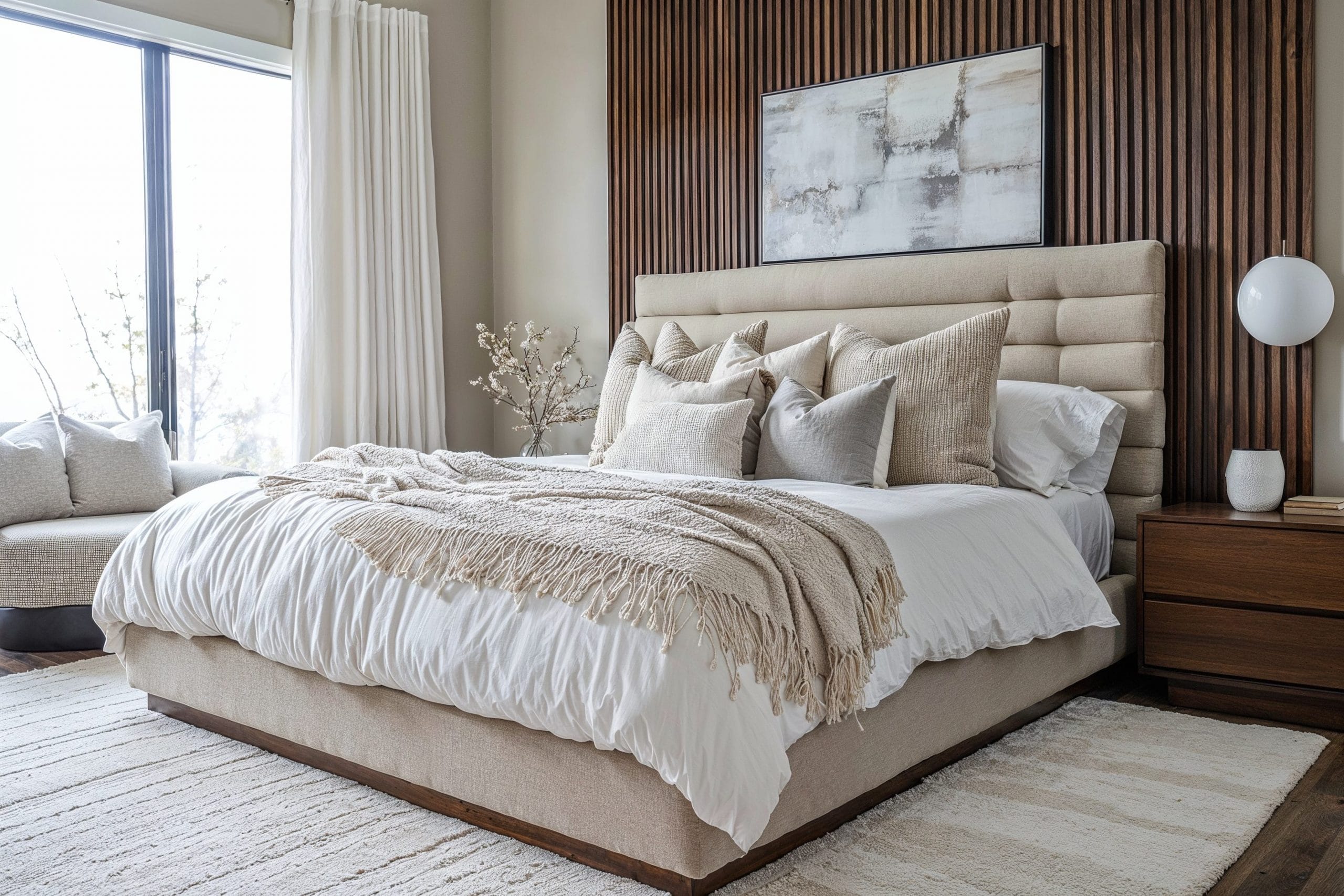
Neutral bedroom
- Cotton percale sheets (crisp base)
- Linen duvet cover (soft, breathable texture)
- Quilt or coverlet (adds dimension at the foot)
- Velvet or knit throw (cozy accent)
- Wood nightstands
- Fabric lampshades for warm, diffused light
FAQ
How many textures should be in a neutral room?
Aim for a mix across the whole space: one rug texture, two to three textile textures, one wood element, and at least one accent texture (metal, ceramic, stone, or woven fiber). If you want a simple target, five is a solid starting point. More is fine, as long as the palette stays calm.
Can I mix warm and cool neutrals?
Yes, and it often looks more natural. The trick is to repeat the temperature at least twice. If you introduce a cool stone gray, echo it again in a pillow, artwork mat, or vase so it feels deliberate.
What is the easiest way to add texture without buying new furniture?
Change what you touch and what you see up close: pillow covers, a throw, a larger rug, a woven basket, and a linen lampshade. Those five swaps can completely shift the mood.
How do I keep textured neutrals from looking messy?
Use consistent undertones (mostly warm or mostly cool), and keep your shapes simple. Let the texture do the talking, not a hundred tiny accessories.
A final nudge
If your neutral room feels flat, do not panic and repaint. Walk through and ask: Where is something soft? Where is something woven? Where is something reflective? Where is something grounded? Once you can point to each of those, the room starts to feel like a real place to land.
And if you happen to be vintage rug curious, consider this your gentle push. A slightly faded rug is basically a shortcut to instant texture and soul.