A former set designer’s guide to making open shelving beautiful and functional, with shelf formulas, color tricks, safety notes, and real-life storage solu...
Havitza Home
Style a Bookshelf Like a Pro: 7 Foolproof Formulas
Learn how to style a bookshelf step by step with seven easy formulas. Mix books, art, and decor for balanced, beautiful shelves that still feel livable.

Clara Jenkins
Clara Jenkins is a former theater set designer turned interior styling expert with over a decade of experience transforming everyday spaces into beautiful sanctuaries. Through her work at havitza.com, she shares practical styling tips, accessible furniture layouts, and inspiring color palettes to help anyone create a home they truly love.
Published October 17, 2026
Updated October 17, 2026
A well-styled bookshelf is a little bit set-design and a little bit real life. It should tell a story, look balanced from across the room, and still let you grab a cookbook without triggering an avalanche of ceramics.
Whenever I’m styling shelves for a friend’s first apartment or polishing up built-ins in a forever home, I follow the same approach: start with the big anchors, build in layers, then edit. Below are seven foolproof formulas you can repeat shelf by shelf, plus a simple step-by-step process so you never feel stuck staring at an empty grid.
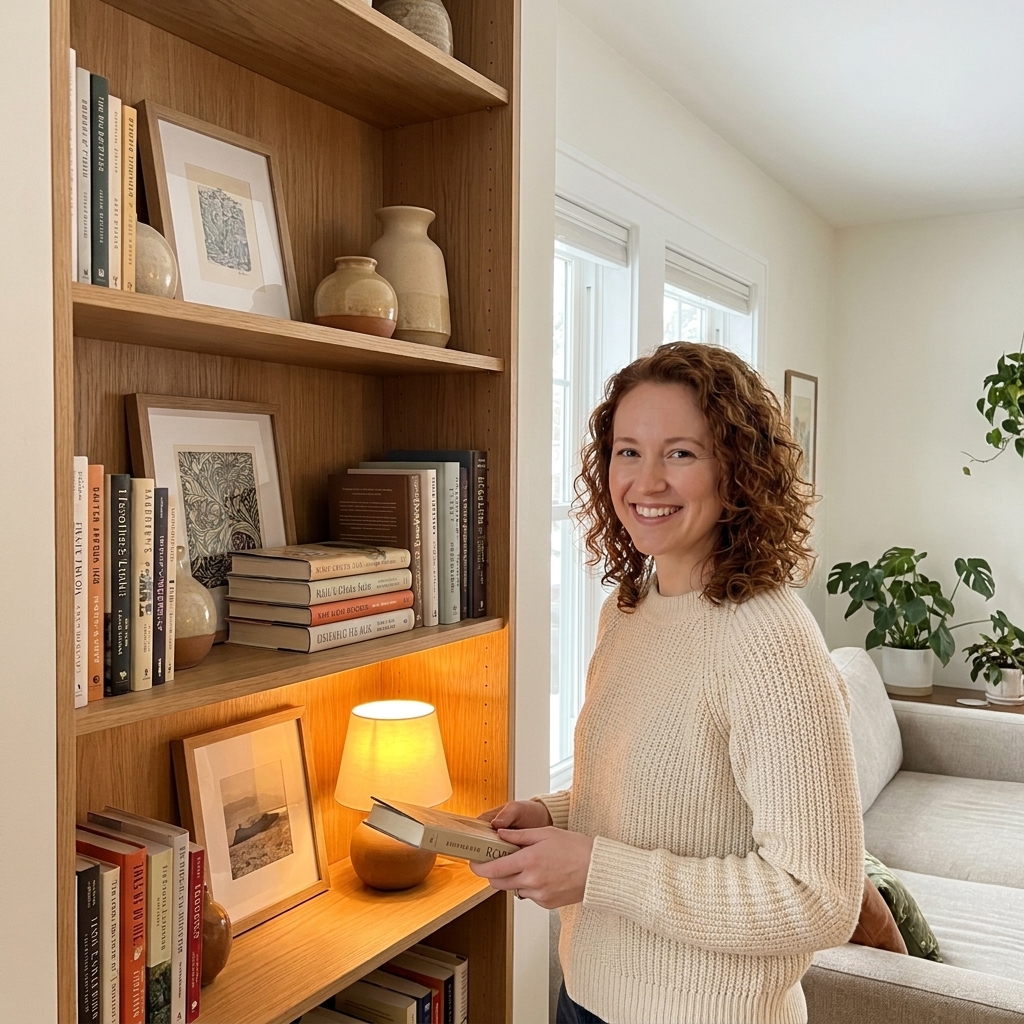
Before you style: a 15 minute setup
1) Empty, clean, and measure
Yes, fully empty if you can. Dust the shelves, then measure the shelf height and depth once. Knowing you have, say, 11 inches of height helps you avoid buying objects that look perfect online but do not fit in real life.
2) Pick your palette in one sentence
You do not need a strict theme. You just need a gentle guardrail. Try one of these:
- Warm neutrals + one accent (cream, wood, black, with moss green)
- Earthy vintage (terracotta, brass, walnut, worn book spines)
- Light and airy (white, pale oak, glass, a soft blue)
This keeps your shelf from feeling like a yard sale, even when the objects are sentimental and mismatched.
3) Gather your shelf actors in three piles
- Books: hardcovers, paperbacks, magazines
- Frames and art: framed prints, photos, small paintings, sculptural wall objects
- Objects: bowls, vases, baskets, bookends, candles, small plants
If you are short on objects, steal from around the house first. A pretty lidded box from your bedroom, a wooden salad bowl from the kitchen, or a small lamp you are not using is often the fastest upgrade.
The pro rules
Rule 1: Build in three heights
Every shelf needs something tall, something medium, and something low. That is how you get rhythm instead of a flat line of same-sized decor.
Rule 2: Group in odd numbers
Threes and fives often read relaxed and collected. If you love pairs, make them feel intentional by varying height or placing them on a tray.
Rule 3: Leave negative space on purpose
A shelf packed edge to edge looks busy, even if every object is beautiful. As a rule of thumb, aim for roughly 20 to 30 percent of each shelf to stay visually open. That breathing room is what makes it feel designed.
Rule 4: Repeat a finish at least three times
Choose one finish you can echo throughout the unit: matte black, brass, warm wood, clear glass, or creamy ceramic. Repetition is what ties a mixed collection together.
Rule 5: Vary book direction
All vertical reads like a library, which can be lovely, but sometimes a little stiff. Mix in a few horizontal stacks so the eye can rest and you can perch small objects on top.
7 bookshelf styling formulas
Pick one formula and repeat it across shelves, or rotate two or three formulas for a collected look. The key is to keep the overall shape consistent, then swap colors and objects within that shape.
Formula 1: The Classic Triangle
Best for: beginners, open shelves, anything that currently feels random.
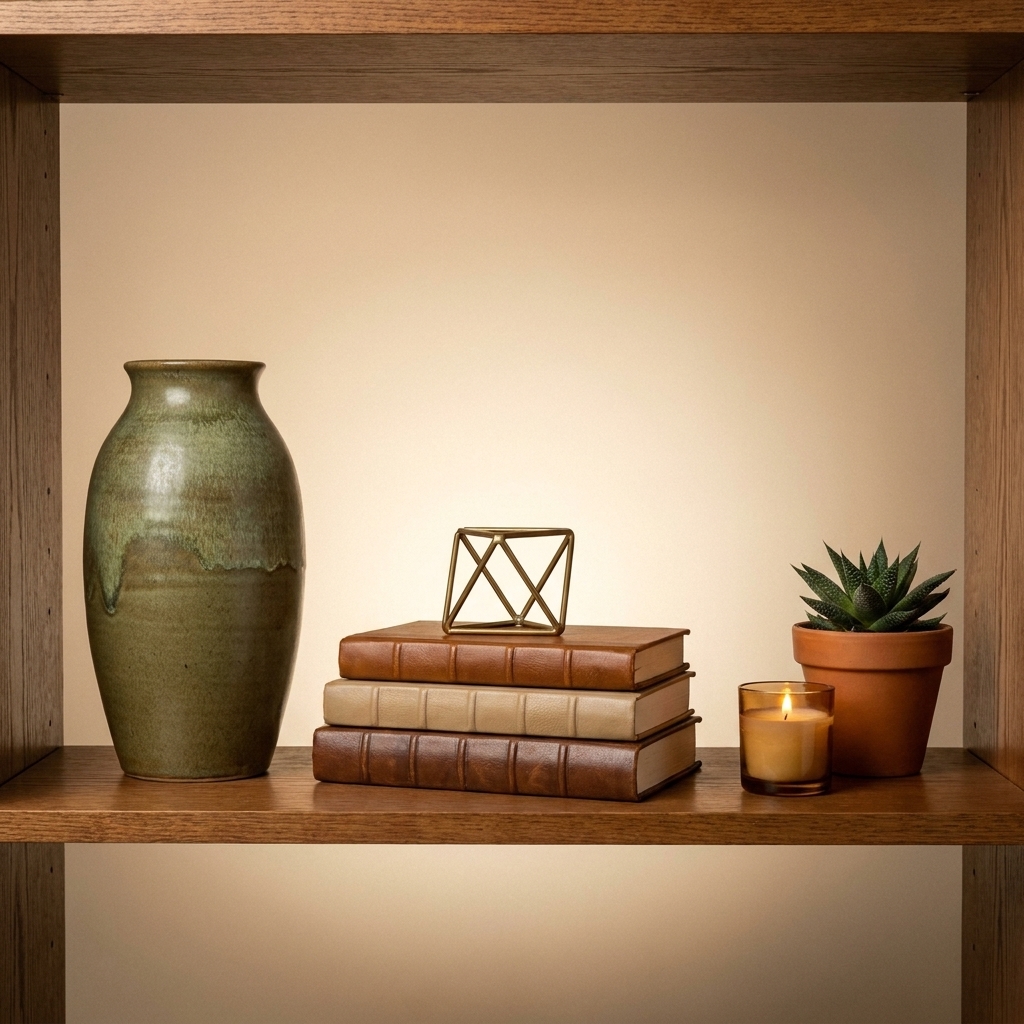
- Place a tall anchor on one side (vase, lamp, tall sculpture)
- Add medium height in the center (stacked books with a small bowl)
- Finish with low height on the opposite side (short object, small plant, candle)
From far away, your shelf makes a gentle triangle shape, which feels stable and intentional.
Formula 2: Books + Bookend + Treasure
Best for: shelves that need to function, like family rooms or home offices.
- Line up upright books to fill about half the shelf
- Anchor the end with a solid bookend (stone, metal, wood)
- On the remaining space, place one special object with personality (a vintage camera, small sculpture, hand-thrown pot)
This formula reads clean because it is mostly books, but the treasure keeps it from feeling sterile.
Formula 3: The Leaning Gallery
Best for: deep shelves, built-ins, and anyone who loves art but hates committing to nails.
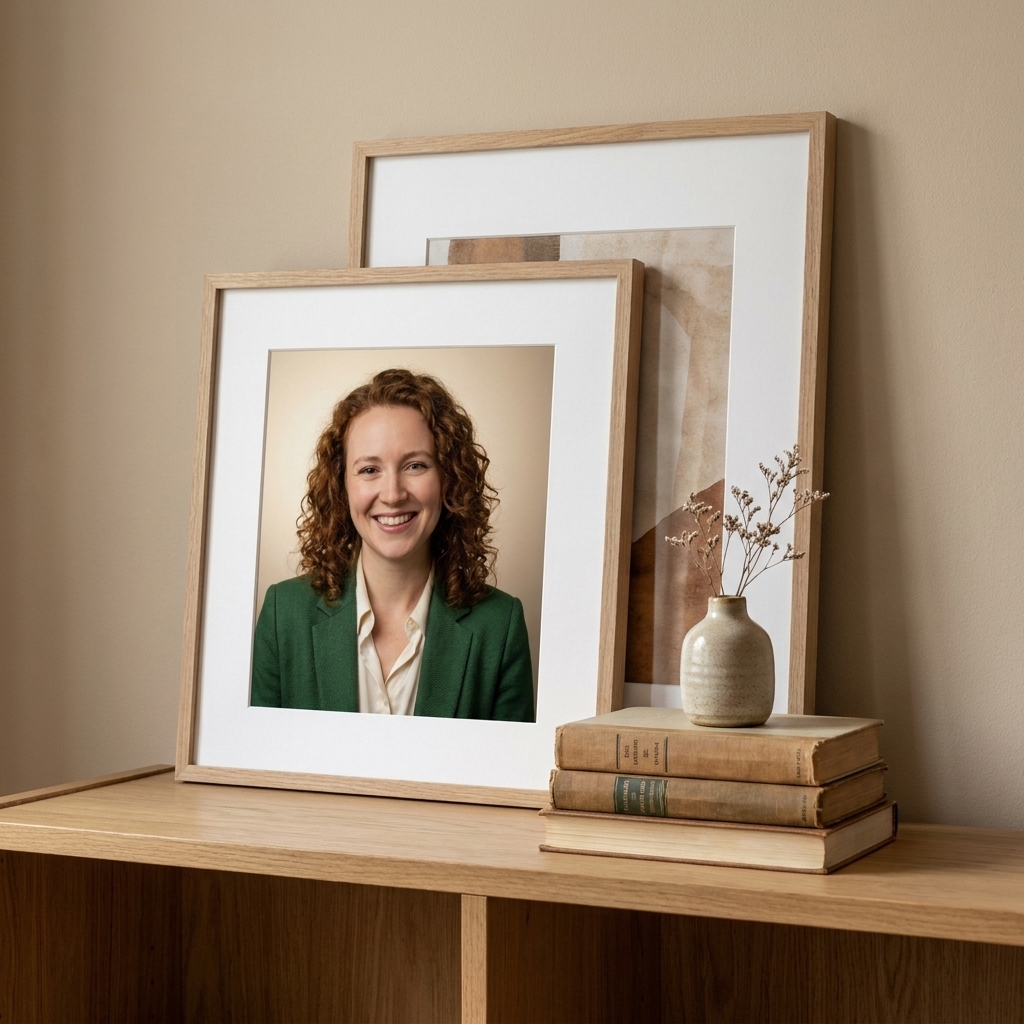
- Lean one medium to large frame against the back
- Layer a smaller frame slightly in front, off to one side
- Add a short stack of books and a small object in front (bead garland, paperweight, tiny vase)
Pro tip from my theater days: the magic is in the overlap. A little layering creates depth the way a stage set does.
Formula 4: The Basket Base
Best for: families, small homes, or anyone with chargers, remotes, and mystery cords.
- Place a lidded basket or box on the shelf (or two matching baskets side by side)
- Add a simple book stack next to it
- Finish with one softening element (small plant, woven coaster stack, candle)
Baskets bring texture and calm. They also let you keep the shelf pretty while still living in your house like a human.
Formula 5: The Color Block
Best for: modern spaces and anyone craving visual order.
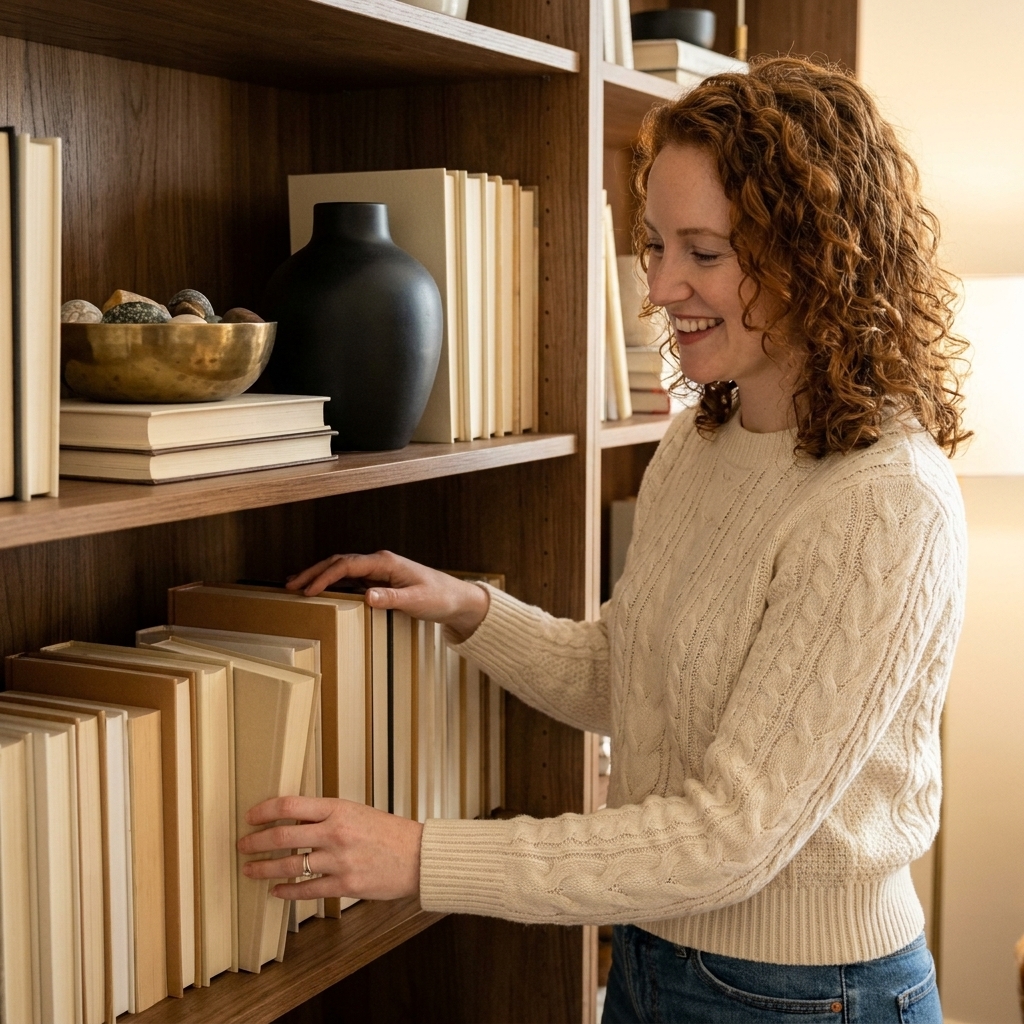
- Sort books into 2 to 4 color families (creams, blacks, blues, warm tones)
- Create one section of mostly one color family, then repeat that family elsewhere
- Break up the block with one contrasting object (black vase in the cream section, brass bowl in the dark section)
This reads designer without becoming overly curated. If you hate organizing by color, do it by spine tone (light to dark) instead.
Formula 6: Sculptural Pair + Book Stack
Best for: minimalists and small shelves where too many items look cluttered fast.
- Create a horizontal stack of 3 to 6 books
- Place a sculptural object on top (stone knot, wood chain, small ceramic form)
- Add a second sculptural piece beside the stack at a different height
Two objects is enough if the shapes are strong. Think curves plus straight lines, matte plus a little shine.
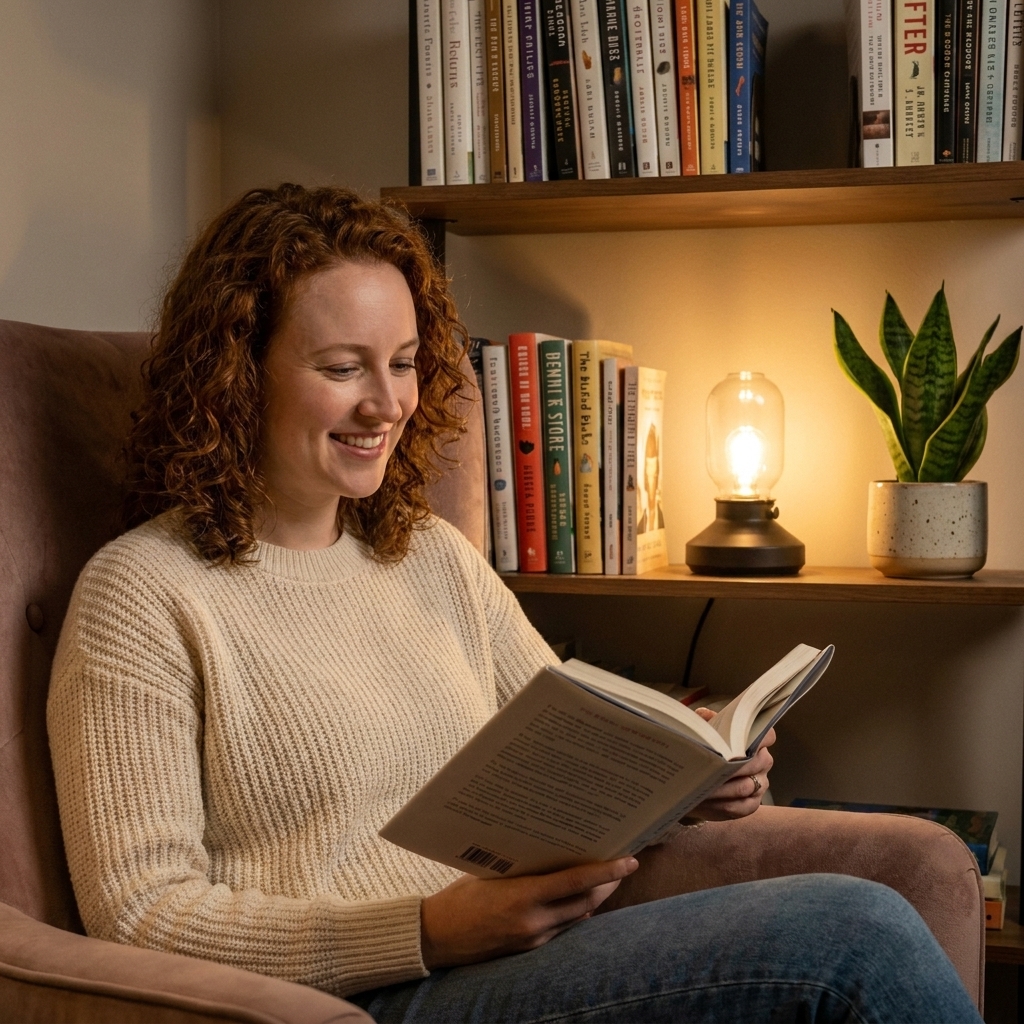
Formula 7: The Reading Nook Shelf
Best for: making built-ins feel cozy, not showroom perfect.
- Add a small lamp or picture light for a warm pool of light
- Style upright books beside it (this is your library moment)
- Include something alive (plant cutting in water, small potted plant, fresh branch in a vase)
Lighting is the secret ingredient. In theater, lighting tells you where to look. At home, it tells you where to exhale.
Step-by-step: style a whole bookcase
Step 1: Start with anchors on every other shelf
Pick 2 to 4 larger pieces to distribute first: a tall vase, a lamp, a basket, a substantial frame. Place them on alternating shelves so the visual weight feels balanced.
Step 2: Add books in chunks
Create three types of book moments and repeat them:
- Vertical row (with bookend or heavy object at the end)
- Horizontal stack (3 to 6 books)
- Magazine pile (especially good on lower shelves)
Step 3: Layer art behind objects
Lean frames behind shorter items to build depth. If your shelf back is busy (like bold wallpaper), keep frames simpler and let the pattern be the star.
Step 4: Fill gaps with texture, not more stuff
If a shelf looks flat, add texture before adding quantity: a woven box, a ribbed ceramic, a piece of driftwood, or a small brass dish.
Step 5: Walk away, then edit
Take a photo on your phone from across the room. Photos reveal clutter and awkward spacing instantly. If it feels crowded, remove one item from a shelf and see if everything else suddenly looks more important. Often, less is the upgrade.
Practical details people forget
Anchor tall bookcases
If your bookcase is freestanding, secure it to the wall, especially in homes with kids or pets. It is also a good reason to keep heavy objects on lower shelves and avoid top-heavy stacks.
Hide lamp cords
If you add a shelf lamp, route the cord straight down a corner and use clear cord clips or a paintable cord cover. A tidy cord makes the whole shelf look calmer.
Keep daily reads within reach
Put the books you actually grab where your hand naturally lands. Save coffee-table art books and rarely used pieces for higher shelves.
Choices that look expensive
Go bigger than you think
Undersized decor is the most common reason shelves look fussy. One larger bowl beats three tiny trinkets.
Add one vintage element
I am biased, but a worn book, a small brass find, or a vintage piece brings soul. New items look better next to something with history.
Use warm lighting
A lamp on the shelf, a plug-in picture light above, or even a small rechargeable accent light makes the whole arrangement feel intentional at night.
Common mistakes
Everything is the same height
Fix: Add one tall piece, then one low piece. Contrast helps immediately.
Too many tiny objects
Fix: Corral them on a tray or in a shallow bowl, or keep just one and let it breathe.
It feels cluttered even though you like everything
Fix: Increase negative space. Pull back about 20 percent and spread items out.
All your books look loud
Fix: Turn a few around so the pages face out, mix in neutral objects, or group bold spines into one controlled section.
Quick FAQ
How many items should be on one shelf?
Enough to create 2 to 3 moments. Practically, that often looks like one book group, one object group, and a little open space between them.
Should you decorate every shelf?
No. Some shelves can be mostly books, some mostly decor, and some intentionally sparse. Variety reads collected, not copy-and-paste perfection.
Do you have to remove book jackets?
Only if you love the look. Jackets can add color and personality. If they feel busy, try removing just a few and mixing bare linen covers into the row.
My favorite finishing touch
Once your shelves look right, add one small, cozy signal that the space is meant to be used: a tiny reading lamp, a match striker, a favorite framed photo, or a bowl that actually holds your keys. Beautiful shelves are great. Beautiful shelves that support your everyday life are the goal.